Helmut Newton
Helmut Newton Prints, Iconic Nudes, and Original Photography
Acquire Helmut Newton art prints, rare vintage photographs, and limited editions at ArtLife Gallery - trusted by collectors and investors worldwide. Known for black-and-white glamour, eroticism, and influential fashion imagery spanning decades, Newton’s work is both culturally iconic and commercially strong. Explore ArtLife’s curated Helmut Newton collection and acquire a piece of photographic history from one of the most influential artists of the 20th century.
Artwork
Sell Your Newton with ArtLife
Sell your authenticated Helmut Newton artwork or screenprint with ArtLife through a discreet, expert-led process connecting you with global collectors. Submission is free with no obligation to sell.
- FREE MARKET-LED VALUATION
- ACCESS TO SERIOUS COLLECTORS
- DISCREET PRIVATE SALES
- EXPERT HANDLING OF THE ARTWORKS
- STRATEGIC TIMING AND PLACEMENT
- GLOBAL REACH, PERSONAL APPROACH
Biography
Helmut Newton—born Helmut Neustädter—was born in Berlin to a wealthy Jewish family in 1920. He attended the Heinrich von Treitschke Realgymnasium school and the American School in Berlin and first became interested in photography after buying his first camera at the age of 12. Four years later, Newton started working for the German fashion and portrait photographer Yva, whose style would heavily influence his own.
The increasingly oppressive regulations Jews faced as a result of the Nuremberg Laws forced Newton’s family to flee Germany in November 1938. The next month, after being issued a passport on account of turning 18, Newton tried to emigrate to China but instead ended up in Singapore, where he briefly worked as a photographer for the Straits Times.
In September 1940, Newton was detained by British authorities and sent to Australia. He was held at the Tatura internment camp in north-eastern Victoria until 1942, before enlisting in the Australian army as a truck driver. Once the war ended in 1945, he became a British subject and changed his name to Newton in 1946. Two years later, he married an Australian woman called June Brown, who subsequently became a successful photographer under the pseudonym Alice Springs.
Newton’s arrival in Australia also kickstarted his photography career. In 1946, he set up a studio in Melbourne and began working on fashion, theatre, and industrial photography. In May 1953, Newton shared his first exhibition with Wolfgang Sievers, called New Visions in Photography. He then went into partnership with Henry Talbot, a fellow German Jew émigré.
Newton’s growing reputation as a fashion photographer earned him an opportunity at Vogue magazine, which led to a year-long contract with British Vogue in 1957. However, he left London before the contract was up, moving to Paris to work for various French and German magazines. In March 1959, he returned to Melbourne to work for Vogue Australia.
Newton and his wife finally settled in Paris in 1961, where his images appeared in magazines like Vogue Paris and Harper’s Bazaar. It was during the 1960s that he began to really hone his distinctive style and began exploring the voyeuristic and sadomasochistic themes that would go on to define him.
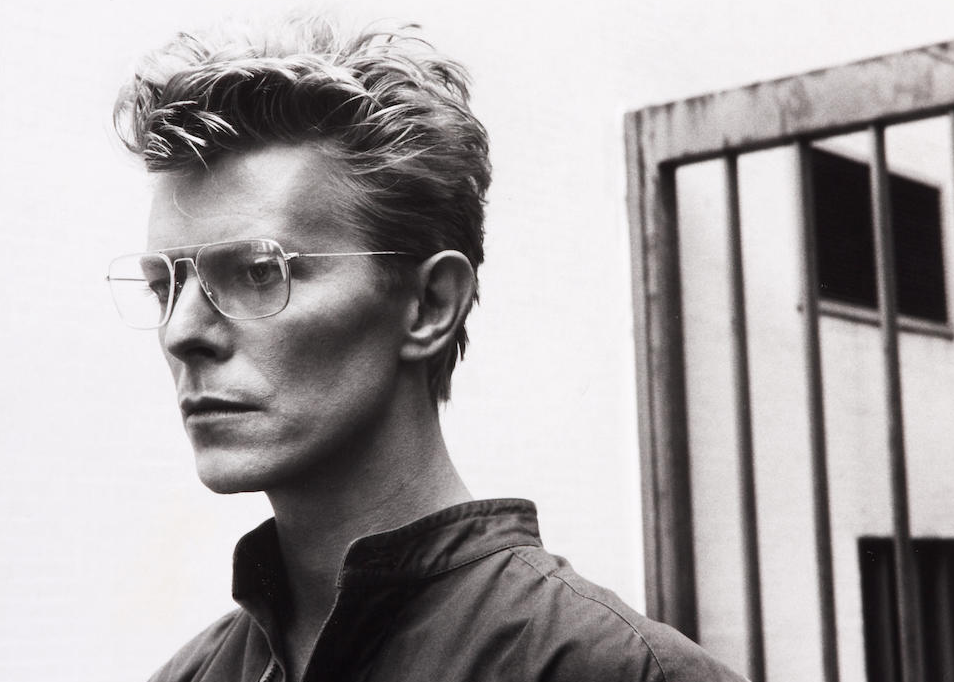
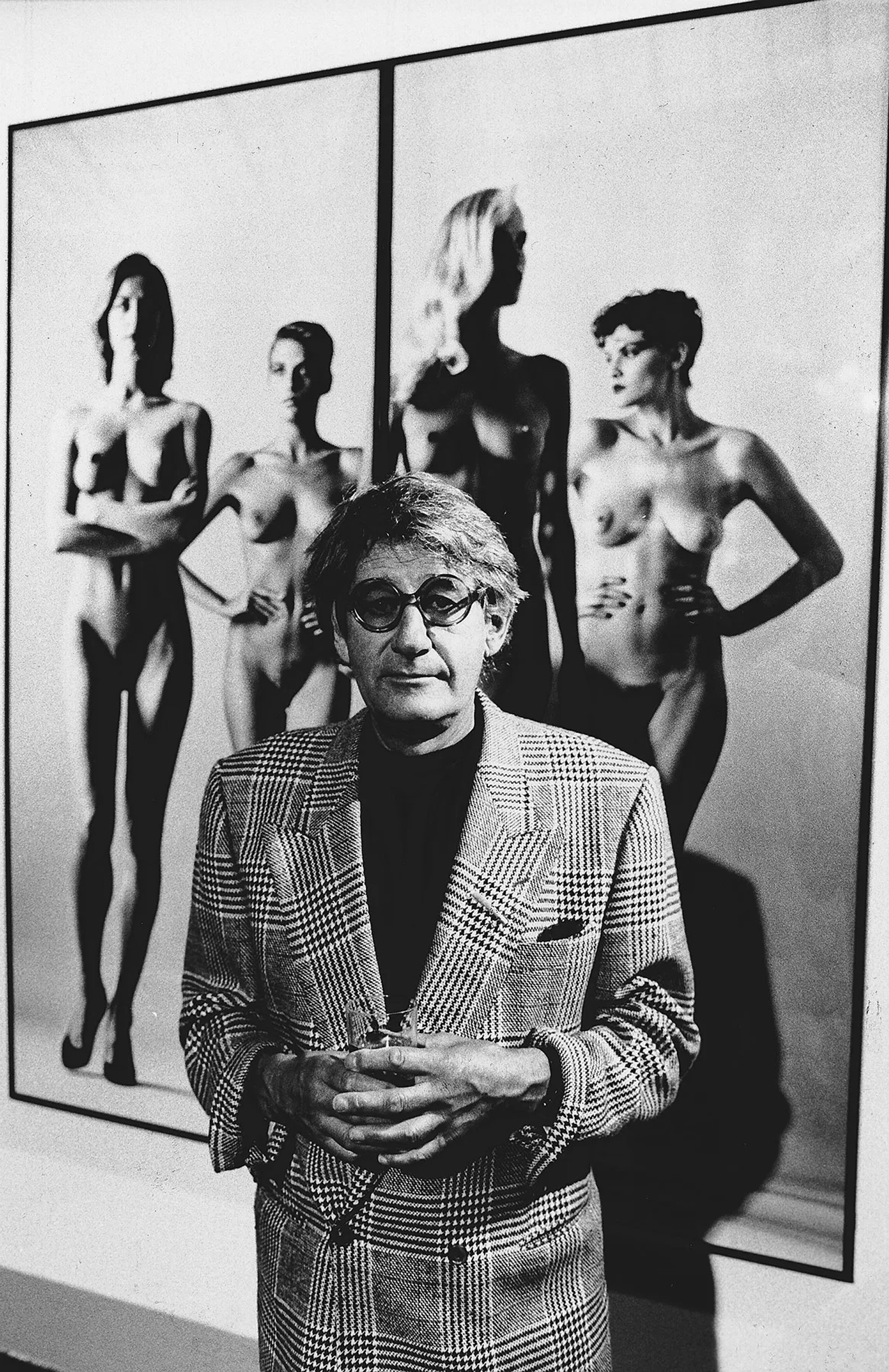
A heart attack in 1970 left him unable to work and, for a while, it was unclear whether he would ever regain his energy and enthusiasm for photography. However, spurred on by his wife, Newton began to work on erotic picture stories for American adult magazines Oui Playboy. In 1980, he released his iconic Big Nudes series, considered by many to be his finest work. Throughout the 80s, he became noted for his celebrity portraits, photographing everyone from Andy Warhol, Madonna, David Bowie and even Margaret Thatcher.
The late stages of Newton’s career earned him a significantly greater level of recognition. In 1990, he was awarded the Grand Prix National de la Photographie in France, while in 1992 he received the Das Grosse Verdienstkreuz for services to German culture. He lived interchangeably between Los Angeles and Monte Carlo before his untimely death in 2004, following injuries sustained in a car accident.
Newton’s career was ignited by the financial security he gained in the early 1960s, as this allowed him to produce the kind of photography he wanted to, unshackled by the constraints imposed on him by those he worked for. From then onwards, his work combined the glamour and decadence of high-fashion with erotic voyeurism and sadomasochistic fetishism. Explaining what drew him to this subject matter, Newton told an interviewer: “I love vulgarity. I am attracted by bad taste—it is a lot more exciting than supposed good taste, which is nothing more than a standardised way of looking at things.”
Newton largely eschewed the studio, instead preferring to stage his models in grandiose mansions, opulent villas, or esteemed hotels. This helped him create an elaborate and elegant mise-en-scène and bring a journalistic feel to his work.
While Newton’s work has attracted some criticism for being misogynistic, the artist has argued that his models used his photography to channel their own sexuality. By portraying them as independent and in control, his images can be seen as empowering rather than demeaning. This approach transformed the art of fashion photography from something safe and conventional to a much more provocative form of expression.
Some of Newton’s main influences include erotica, cinema, journalism, and art, helping to blur the lines between high and low brow forms. His love of cinema is most clearly encapsulated in his preference for black and white film, while his desire to convey human emotion in his photographs reflected his journalistic background.As well as the acclaim Newton received during his lifetime, his work remains relevant today. A major retrospective of his photography took place in Amsterdam in 2016, while in 2018 his work was featured in the The Getty Museum’s Icons of Style exhibition. The Helmut Newton Foundation, set up in 2003, continues to cement his legacy by regularly exhibiting his and his wife’s work.
How to Buy Newton Art with Confidence
Browse Helmut Newton prints, iconic Helmut Newton nudes, and original photography for sale at ArtLife Gallery, a trusted destination for collectors and investors. Our curated selection includes signed vintage prints, limited editions, and posters — all fully authenticated and investment-grade. Start by exploring available works, checking edition numbers and signature status, and verifying provenance.
ArtLife offers secure purchases, insured shipping, and expert guidance to ensure a confident acquisition. Collectors can also schedule virtual viewings or visit the gallery to experience the scale and detail of Helmut Newton artworks firsthand. Discover and acquire museum-quality Helmut Newton art for sale today.
Understanding Helmut Newton Print Editions & Authentication
Understanding Helmut Newton print editions is key for collectors. Signed prints carry the highest value, while unsigned prints and limited editions remain collectible depending on condition and edition size. Smaller editions are rarer and often more valuable. Authenticity is crucial — all works must come with verified certificates, as fake documents are common.
ArtLife specialists authenticate provenance and condition, ensuring investment-grade quality. Certification bodies may experience backlogs, so sourcing pre-certified prints is recommended. Explore and buy authenticated Helmut Newton prints, Helmut Newton nudes, and original artworks securely at ArtLife Gallery today.
Notable Helmut Newton Works & Market Highlights
Helmut Newton created a series of iconic images that continue to define fashion photography and command attention in the art market. Signature works such as Big Nudes, Sie Kommen, and French Kiss are widely recognized for their bold composition, eroticism, and cultural impact.
Limited edition Helmut Newton prints of these images frequently achieve strong results at auction, reflecting sustained collector demand. Other celebrated pieces include portraits of high-fashion models, celebrity portraits, and striking Helmut Newton nudes, many of which are available in signed or estate-limited prints. Explore these investment-grade works and acquire authentic Helmut Newton art for sale at ArtLife Gallery.
Why Collect Helmut Newton – Value & Demand Insights
Authentic Helmut Newton art is highly sought after by collectors worldwide due to its scarcity, cultural significance, and enduring visual impact. Signed prints, vintage photographs, and limited editions are increasingly rare, making them attractive as both aesthetic and investment assets.
The market for Helmut Newton prints and Helmut Newton nudes remains strong, with consistent demand at auctions and in private sales. Collectors value his work for its iconic black-and-white glamour, provocative imagery, and historical importance in fashion and contemporary photography. Investing in Helmut Newton artworks through trusted galleries like ArtLife ensures authenticity, provenance, and long-term market confidence.
Frequently Asked Questions
Collectors can purchase Helmut Newton prints, original photographs, and limited-edition posters through reputable galleries and specialist platforms. ArtLife Gallery offers a curated selection of authentic works, ensuring provenance, condition, and investment-grade quality for serious collectors.
Yes. ArtLife provides a secure online platform where collectors can browse and acquire Helmut Newton artworks globally. From iconic signed prints to rare vintage photographs and limited-edition posters, each piece is fully authenticated and ready for acquisition.
Original Helmut Newton photographs are one-of-a-kind works, often produced as limited vintage prints and commanding the highest market value. Helmut Newton prints and lithographs, including signed editions, offer accessible entry points while still preserving investment potential. ArtLife guides collectors in selecting pieces with both aesthetic and market value.
Authentic prints include signed vintage prints, estate editions, and limited-edition posters produced under the artist’s authorization. Unsigned or reproduction prints without verified provenance are not considered investment-grade. ArtLife specialists ensure every piece we offer is legitimate and museum-quality.
Authentication relies on provenance, edition documentation, and condition assessment. ArtLife Gallery rigorously verifies each Helmut Newton print, lithograph, or poster, providing collectors with certificates of authenticity and confidence in their purchase.
Yes. Limited-edition Helmut Newton prints, signed works, and vintage photographs are highly sought after, maintaining consistent demand among collectors. Investing through ArtLife ensures that works are authentic, well-documented, and positioned for long-term value growth.
Absolutely. ArtLife assists collectors in selling Helmut Newton artworks, whether prints, lithographs, or original photography. We provide authentication, provenance verification, and access to serious buyers, helping you achieve the artwork’s full market value safely.
Start Your Helmut Newton Collection
Looking to acquire a Helmut Newton? ArtLife Gallery provides curated access to investment-grade canvases, works on paper, and prints. Connect with our specialists to explore available works.