
Campbell’S Soup Can (Tomato) Black And White
by Andy Warhol
Year: 1978
Medium: Screen print on Lenox Museum Board
Size: 30 x 21.5 in (76.2 x 54.61 cm)
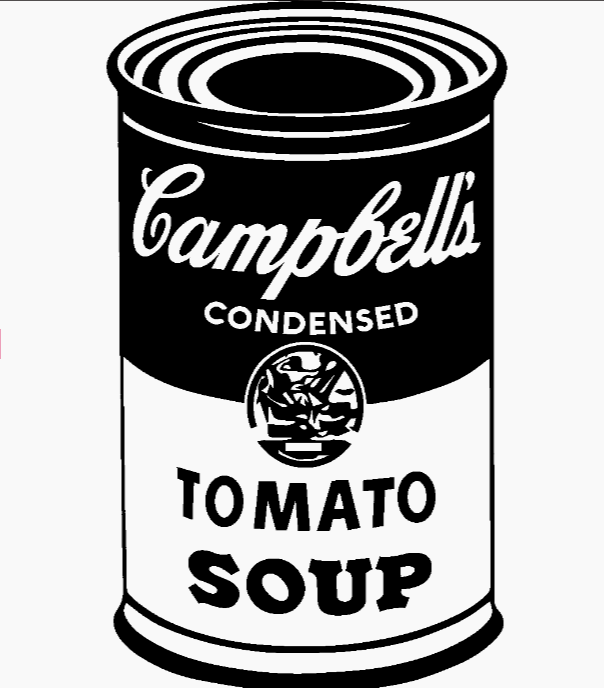
Revisiting one of the defining images of American Pop Art, Andy Warhol’s Campbell’s Soup Can (Tomato) Black and White (1978) distils consumer culture into a crisp, instantly recognisable emblem. This 30 × 21.5-inch screenprint on Lenox Museum Board offers a monochromatic variation on Warhol’s celebrated soup imagery. Its graphic clarity, cultural resonance, and museum-board presentation make it an attractive work for discerning collectors.
Campbell’s Soup Can (Tomato) Black and White by Andy Warhol traces directly to his breakthrough Campbell’s Soup Can imagery, first shown at Ferus Gallery in Los Angeles in 1962. Warhol transformed a familiar grocery product into fine art, challenging ideas of originality, consumer culture, and American identity. The black-and-white treatment strips the package to its graphic essentials, making the everyday object feel almost iconic. There is no recognized street-graffiti version; Warhol developed the image through studio-based painting and screen-printing, not street practice.
For collectors, Campbell’s Soup imagery remains among Warhol’s most recognizable and marketable work. Black-and-white examples can be especially compelling for their graphic clarity, while edition, condition, provenance, and authentication remain central to value and rarity.
From our gallery perspective, this work shows why Warhol changed the art market: he made a mass-produced object feel scarce, desirable, and culturally important.
The image belongs to Warhol’s early Pop period and connects to the Campbell’s Soup series, later Dollar Signs, Flowers, and other consumer-driven works. For collectors seeking a defining Warhol image with lasting museum and market appeal, this is a strong entry point into his legacy.
More Andy Warhol Works to Explore
Campbell’S Soup Can (Tomato) Black And White
by Andy Warhol
Year: 1978
Medium: Screen print on Lenox Museum Board
Size: 30 x 21.5 in (76.2 x 54.61 cm)
Revisiting one of the defining images of American Pop Art, Andy Warhol’s Campbell’s Soup Can (Tomato) Black and White (1978) distils consumer culture into a crisp, instantly recognisable emblem. This 30 × 21.5-inch screenprint on Lenox Museum Board offers a monochromatic variation on Warhol’s celebrated soup imagery. Its graphic clarity, cultural resonance, and museum-board presentation make it an attractive work for discerning collectors.
Campbell’s Soup Can (Tomato) Black and White by Andy Warhol traces directly to his breakthrough Campbell’s Soup Can imagery, first shown at Ferus Gallery in Los Angeles in 1962. Warhol transformed a familiar grocery product into fine art, challenging ideas of originality, consumer culture, and American identity. The black-and-white treatment strips the package to its graphic essentials, making the everyday object feel almost iconic. There is no recognized street-graffiti version; Warhol developed the image through studio-based painting and screen-printing, not street practice.
For collectors, Campbell’s Soup imagery remains among Warhol’s most recognizable and marketable work. Black-and-white examples can be especially compelling for their graphic clarity, while edition, condition, provenance, and authentication remain central to value and rarity.
From our gallery perspective, this work shows why Warhol changed the art market: he made a mass-produced object feel scarce, desirable, and culturally important.
The image belongs to Warhol’s early Pop period and connects to the Campbell’s Soup series, later Dollar Signs, Flowers, and other consumer-driven works. For collectors seeking a defining Warhol image with lasting museum and market appeal, this is a strong entry point into his legacy.