
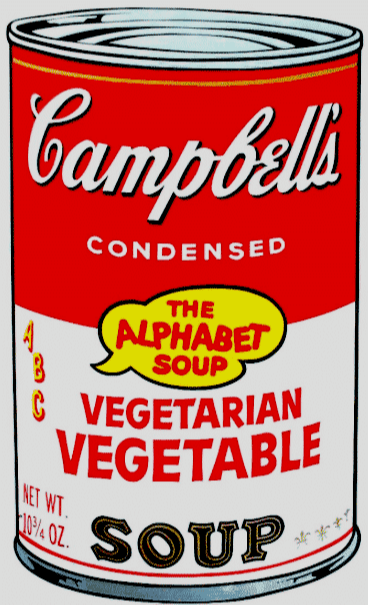
Campbell’S Vegetarian Vegetable Soup
by Andy Warhol
Year: 1968
Medium: Screenprint
Size: 35 x 23 in (88.9 x 58.42 cm)
Edition: 250
Signed
Rooted in the visual language of American consumer culture, Andy Warhol’s Campbell’s Vegetarian Vegetable Soup (1968) elevates an everyday grocery icon into a defining Pop Art image. This 35 × 23-inch screenprint, from an edition of 250, is signed by the artist. Its crisp commercial aesthetic and cultural resonance make it a compelling addition to collections focused on Warhol and postwar American art.
Campbell’s Vegetarian Vegetable Soup is part of Andy Warhol’s defining Campbell’s Soup imagery, first shown publicly in 1962 at Ferus Gallery in Los Angeles. By elevating an everyday grocery product into fine art, Warhol challenged the boundary between advertising, consumer culture, and the museum.
There is no original street-graffiti version. Warhol worked through commercial drawing, painting, and silkscreen methods rather than public-wall intervention. Yet the clean label, bold typography, and instantly readable design helped establish the visual language that later influenced street and graphic art.
The Vegetarian Vegetable label carries themes of repetition, familiarity, abundance, and American consumer life. Warhol’s choice of a humble supermarket staple turns ordinary packaging into a symbol of mass culture and modern identity.
For collectors, Campbell’s Soup works remain among Warhol’s most recognizable and marketable images. Rarity, edition, condition, colour, and provenance can make a major difference in value and demand.
From our gallery perspective, this variant has a particular charm: it feels familiar at first glance, then reveals Warhol’s deeper idea that everyday objects can become cultural icons.
It belongs to Warhol’s breakthrough early-1960s Pop period and relates closely to his other Campbell’s Soup variants, Coca-Cola imagery, and later consumer-brand works. For collectors, it offers an accessible route into one of the most important movements in modern art.
More Andy Warhol Works to Explore
Campbell’S Vegetarian Vegetable Soup
by Andy Warhol
Year: 1968
Medium: Screenprint
Size: 35 x 23 in (88.9 x 58.42 cm)
Edition: 250
Rooted in the visual language of American consumer culture, Andy Warhol’s Campbell’s Vegetarian Vegetable Soup (1968) elevates an everyday grocery icon into a defining Pop Art image. This 35 × 23-inch screenprint, from an edition of 250, is signed by the artist. Its crisp commercial aesthetic and cultural resonance make it a compelling addition to collections focused on Warhol and postwar American art.
Campbell’s Vegetarian Vegetable Soup is part of Andy Warhol’s defining Campbell’s Soup imagery, first shown publicly in 1962 at Ferus Gallery in Los Angeles. By elevating an everyday grocery product into fine art, Warhol challenged the boundary between advertising, consumer culture, and the museum.
There is no original street-graffiti version. Warhol worked through commercial drawing, painting, and silkscreen methods rather than public-wall intervention. Yet the clean label, bold typography, and instantly readable design helped establish the visual language that later influenced street and graphic art.
The Vegetarian Vegetable label carries themes of repetition, familiarity, abundance, and American consumer life. Warhol’s choice of a humble supermarket staple turns ordinary packaging into a symbol of mass culture and modern identity.
For collectors, Campbell’s Soup works remain among Warhol’s most recognizable and marketable images. Rarity, edition, condition, colour, and provenance can make a major difference in value and demand.
From our gallery perspective, this variant has a particular charm: it feels familiar at first glance, then reveals Warhol’s deeper idea that everyday objects can become cultural icons.
It belongs to Warhol’s breakthrough early-1960s Pop period and relates closely to his other Campbell’s Soup variants, Coca-Cola imagery, and later consumer-brand works. For collectors, it offers an accessible route into one of the most important movements in modern art.