
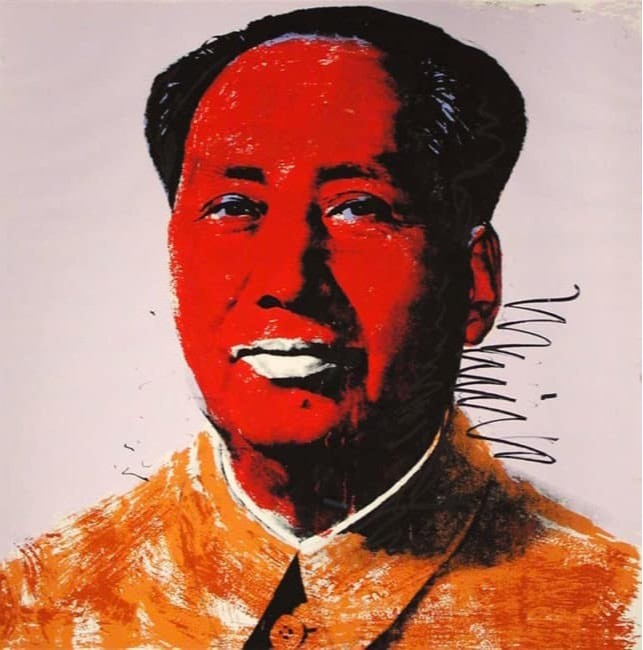
Mao 96
by Andy Warhol
Year: 1972
Medium: Screenprint
Size: 36 x 36 in (91.44 x 91.44 cm)
Edition: 250
Signed
Few images capture Warhol’s fascination with power and celebrity as vividly as Mao 96 (1972). This 36 × 36-inch screenprint transforms Mao Zedong’s official portrait into a bold Pop Art statement, reflecting the era’s tension between politics, mass media, and consumer culture. Signed and issued in an edition of 250, the work offers collectors a notable example of Warhol’s celebrated Mao series and its enduring cultural relevance.
Mao 96 belongs to Andy Warhol’s landmark Mao series, created in 1972 after President Richard Nixon’s historic visit to China. Warhol based the portrait on an official image of Mao Zedong and transformed a symbol of political authority into a Pop art icon. The series first appeared in Warhol’s major European presentations in the mid-1970s, bringing politics, celebrity, and mass-media imagery together.
There is no original street-graffiti version. Warhol created the Mao works through his studio silkscreen process, using repetition, vivid colour, and expressive marks to challenge the idea of a fixed political image.
The portrait explores power, propaganda, celebrity, and image control. By treating Mao like a Hollywood star, Warhol blurs the line between political leadership and media celebrity. The tension between the official portrait and Warhol’s playful treatment is central to the work.
For collectors, Mao 96 has strong market importance as part of one of Warhol’s key 1970s series. Colour, rarity, condition, scale, and provenance can greatly influence desirability.
From our gallery experience, the strongest Mao works have remarkable authority on the wall. Mao 96 combines historical weight with unmistakable Pop energy.
The series fits Warhol’s mature 1970s period, alongside Mick Jagger, Ladies and Gentlemen, and other celebrity portraits. For collectors seeking a sophisticated Warhol with political depth, Mao 96 is a compelling choice.
More Andy Warhol Works to Explore
Mao 96
by Andy Warhol
Year: 1972
Medium: Screenprint
Size: 36 x 36 in (91.44 x 91.44 cm)
Edition: 250
Few images capture Warhol’s fascination with power and celebrity as vividly as Mao 96 (1972). This 36 × 36-inch screenprint transforms Mao Zedong’s official portrait into a bold Pop Art statement, reflecting the era’s tension between politics, mass media, and consumer culture. Signed and issued in an edition of 250, the work offers collectors a notable example of Warhol’s celebrated Mao series and its enduring cultural relevance.
Mao 96 belongs to Andy Warhol’s landmark Mao series, created in 1972 after President Richard Nixon’s historic visit to China. Warhol based the portrait on an official image of Mao Zedong and transformed a symbol of political authority into a Pop art icon. The series first appeared in Warhol’s major European presentations in the mid-1970s, bringing politics, celebrity, and mass-media imagery together.
There is no original street-graffiti version. Warhol created the Mao works through his studio silkscreen process, using repetition, vivid colour, and expressive marks to challenge the idea of a fixed political image.
The portrait explores power, propaganda, celebrity, and image control. By treating Mao like a Hollywood star, Warhol blurs the line between political leadership and media celebrity. The tension between the official portrait and Warhol’s playful treatment is central to the work.
For collectors, Mao 96 has strong market importance as part of one of Warhol’s key 1970s series. Colour, rarity, condition, scale, and provenance can greatly influence desirability.
From our gallery experience, the strongest Mao works have remarkable authority on the wall. Mao 96 combines historical weight with unmistakable Pop energy.
The series fits Warhol’s mature 1970s period, alongside Mick Jagger, Ladies and Gentlemen, and other celebrity portraits. For collectors seeking a sophisticated Warhol with political depth, Mao 96 is a compelling choice.