
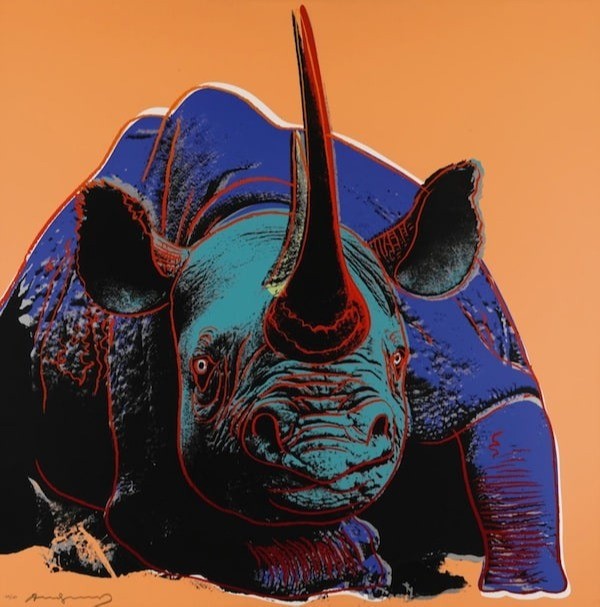
Rhinoceros
by Andy Warhol
Year: 1983
Medium: Screen print on Lenox Museum Board
Size: 38 x 38 in (96.52 x 96.52 cm)
Edition: 150
Signed
Commanding in scale and graphic impact, Andy Warhol’s Rhinoceros (1983) brings the animal kingdom into the artist’s celebrated Pop Art vocabulary. Executed as a screenprint on Lenox Museum Board, the 38 × 38-inch work comes from a signed edition of 150. Its striking subject, bold composition, and established place in Warhol’s late career make it a compelling work for discerning collectors of modern art.
Rhinoceros is associated with Andy Warhol’s animal imagery of the 1980s and his growing interest in endangered wildlife. The subject connects closely to his 1983 Endangered Species portfolio, which brought threatened animals into his signature silkscreen language. Warhol transformed wildlife photography into bold, highly graphic portraits that made conservation part of the Pop conversation.
There is no original street-graffiti version. Warhol developed these animal images through his studio silkscreen practice, not public-wall art. The rhinoceros itself becomes a powerful symbol of strength and vulnerability: its imposing form contrasts with its endangered status, creating a tension between power and fragility.
For collectors, Warhol’s animal works offer an appealing alternative to his better-known celebrity images. Rarity, edition details, condition, and provenance are key factors, while the Endangered Species theme gives the work lasting cultural relevance.
From our gallery experience, animal subjects often attract collectors who want Warhol with greater emotional depth. Rhinoceros has a strong graphic presence and works particularly well in contemporary collections.
The work reflects Warhol’s mature 1980s practice, alongside Camouflage, Ads, and his late celebrity portraits. For collectors seeking a distinctive Warhol beyond Marilyn and Campbell’s Soup, Rhinoceros offers visual strength, Pop history, and enduring appeal.
More Andy Warhol Works to Explore
Rhinoceros
by Andy Warhol
Year: 1983
Medium: Screen print on Lenox Museum Board
Size: 38 x 38 in (96.52 x 96.52 cm)
Edition: 150
Commanding in scale and graphic impact, Andy Warhol’s Rhinoceros (1983) brings the animal kingdom into the artist’s celebrated Pop Art vocabulary. Executed as a screenprint on Lenox Museum Board, the 38 × 38-inch work comes from a signed edition of 150. Its striking subject, bold composition, and established place in Warhol’s late career make it a compelling work for discerning collectors of modern art.
Rhinoceros is associated with Andy Warhol’s animal imagery of the 1980s and his growing interest in endangered wildlife. The subject connects closely to his 1983 Endangered Species portfolio, which brought threatened animals into his signature silkscreen language. Warhol transformed wildlife photography into bold, highly graphic portraits that made conservation part of the Pop conversation.
There is no original street-graffiti version. Warhol developed these animal images through his studio silkscreen practice, not public-wall art. The rhinoceros itself becomes a powerful symbol of strength and vulnerability: its imposing form contrasts with its endangered status, creating a tension between power and fragility.
For collectors, Warhol’s animal works offer an appealing alternative to his better-known celebrity images. Rarity, edition details, condition, and provenance are key factors, while the Endangered Species theme gives the work lasting cultural relevance.
From our gallery experience, animal subjects often attract collectors who want Warhol with greater emotional depth. Rhinoceros has a strong graphic presence and works particularly well in contemporary collections.
The work reflects Warhol’s mature 1980s practice, alongside Camouflage, Ads, and his late celebrity portraits. For collectors seeking a distinctive Warhol beyond Marilyn and Campbell’s Soup, Rhinoceros offers visual strength, Pop history, and enduring appeal.