Best Andy Warhol Movies Worth Watching for Art Lovers
Must-see Andy Warhol movies
In the summer of 1963, Andy Warhol walked into a Lexington Avenue equipment shop and purchased a 16mm Bolex camera. The artist was already an established figure in the Pop Art movement through earlier canvas work. Soon after that transaction, testing the mechanics of moving images began.
Between 1963 and 1968, Warhol produced nearly 650 films. This output includes short portrait tests and multi-hour static shots. The director bypassed traditional narrative plots and standard editing practices, finding a distinct role within 1960s underground cinema.
When these works premiered in 1964, the avant-garde community reacted immediately. The approach required spectators to watch unedited events unfold in real-time. By discarding conventional storytelling to simply record the everyday actions of a specific social circle, Andy Warhol movies marked a distinct turning point in experimental film. Today, this extensive catalog remains a central subject of study in modern visual culture.
Who Was Andy Warhol as a Filmmaker?
Andy Warhol was an experimental director who temporarily paused a Pop Art career during the 1960s. The Manhattan studio became a filming space where nothing was planned in advance. By casting friends as underground superstars, filmmaking turned into an observational tool to document everyday human behavior.
The shift into cinema happened steadily. By 1965, a public announcement confirmed a temporary retirement from painting to concentrate entirely on movies.
Rather than writing screenplays, the preference was a hands-off approach. The methodology relied on a few core principles:
- Turning the equipment on and letting subjects improvise their dialogue.
- Recording how individuals interact within a controlled environment.
- Treating the final pieces as sociological documentaries rather than traditional narratives.
The Manhattan workspace provided the main backdrop for these experiments. Known as Warhol’s Studio, the Factory functioned as a working set and social hub simultaneously. Warhol populated these movies with a rotating cast of collaborators. The casting process relied on personal friends and daily studio visitors. These people earned the label “superstars” as a direct nod to the standard Hollywood system.
Following the Bolex camera purchase in 1963, partner John Giorno was asked to star in the first major project. Giorno accepted the offer to emulate established celebrities. This exchange defined the production dynamic. Warhol offered visibility while the subjects provided unedited behavior for the lens.
What Makes Andy Warhol Movies Unique?
Andy Warhol movies are unique because they discard traditional plots in favor of continuous takes. By focusing on daily life and projecting footage at slower speeds, these works equate real time with cinematic time. The approach forces audiences to experience pure observation. Storytelling was not primary.
Traditional screenplays held no interest for the artist. Plot had no place in the process. The camera documented basic human functions: a haircut, a meal, a face at rest. Nothing a director would ordinarily point a camera at.
The intent was to let the camera run without knowing what it would find. Ultimately, this lack of narrative structure defined the experimental films Warhol produced during the 1960s.
Standard editing logic was discarded entirely. Instead of assembling shots, Warhol let the physical limits of the film stock determine where a scene began and ended. The length of a scene was determined entirely by the physical duration of the action itself, nothing more.
By recording without cuts, cinematic time became identical to real time. The deliberate pacing challenged any expectations. To further alter the perception of reality, several technical modifications were applied to the screening process:
- Projecting silent footage at 16 frames per second instead of the industry-standard 24.
- Looping footage to extend sequences beyond their original length.
- Embracing boredom as an intentional concept rather than a flaw.
The extreme duration of these works also tested viewer endurance. According to personal memoirs, Warhol himself walked out of an early screening after a few minutes. That treatment of time left a permanent mark on the industry, shaping the visual vocabulary of a new generation of experimental filmmakers who came after him.
Must-See List: 10 Most Famous Andy Warhol Movies
Warhol’s most famous underground projects discarded conventional plots to focus strictly on raw observation. The production logic was the same across all of them:
- Utilizing static cameras for extended durations.
- Recording behavior without direction or script.
- Transforming everyday actions into clinical sociological studies.
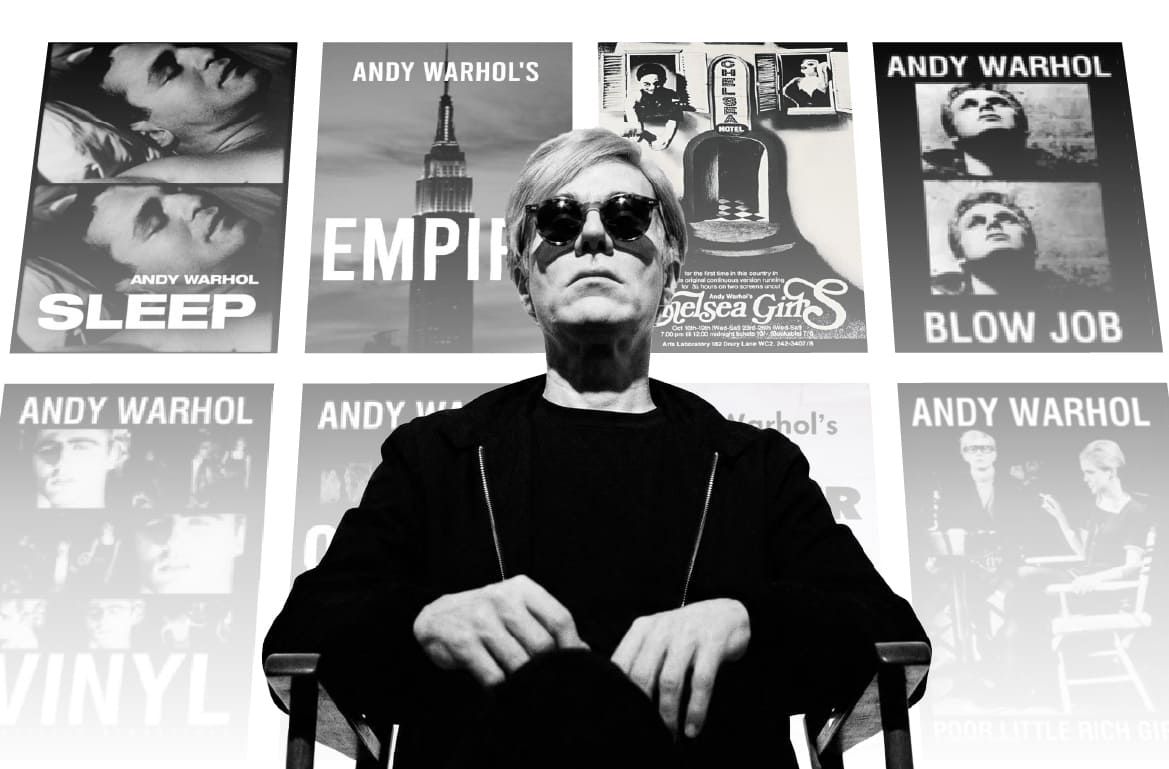
Sleep (1964)
The Andy Warhol Sleep movie features over five hours of continuous footage showing poet John Giorno dozing. The camera studies the subject from various angles using looped film segments. By observing a single banal action for an extended period, the project functions like a scientific study. The extreme duration shifts the focus entirely onto the physical mechanics of breathing and subtle movement.
Empire (1964)
Produced in July 1964, the Empire Warhol film consists entirely of an eight-hour static view of the famous New York skyscraper. It observes the structure starting in the early evening and concluding near three in the morning. The footage offers zero plot development. Film historians classify it as an anti-film.
Chelsea Girls (1966)
The three-and-a-half-hour project chronicles the chaotic events inside the Chelsea Hotel. The presentation utilized a split-screen format with two separate reels projected side-by-side. Despite the dual visuals, audio only played from one reel at a time to create a voyeuristic effect. The cast included regular studio collaborators engaging in spontaneous hedonistic behavior. The release crossed over into wider recognition and secured screenings at commercial theaters.
Blow Job (1964)
The lens remains locked exclusively on the face of actor DeVeren Bookwalter. The unseen action occurring below the frame triggers the physical reactions depicted on screen. The footage evolves into a minimalist study of human expression through a drastically slowed projection speed, bypassing the realm of explicit pornography.
Vinyl (1965)
Loosely adapted from the Anthony Burgess novel A Clockwork Orange, the release marked a shift toward scripted material. Playwright Ronald Tavel provided the framework while studio assistant Gerard Malanga took the lead role. The production documents a chaotic environment where the line between real and staged violence constantly blurs. The styling and close-up framing predated the official Hollywood adaptation by six years.
Screen Tests (1964–1966)
The studio produced hundreds of three-minute cinematic portraits during the mid-1960s. Subjects sat in front of a stationary camera and received instructions to remain completely still without blinking. Most participants ultimately broke the rules. The archive includes footage of cultural figures like Bob Dylan and Salvador Dalí alongside unknown studio visitors.
Outer and Inner Space (1965)
The setup features actress Edie Sedgwick seated in front of a television monitor. The screen behind her plays a prerecorded tape captured on an early Norelco video system. A film camera then registered the actress interacting with her own televised image. Two adjacent screens anchor the final arrangement, creating a complex visual environment where four portraits of the same person coexist simultaneously.
My Hustler (1965)
The narrative centers on two extended conversations taking place on Fire Island. An older host intensely observes a younger man hired for the weekend. The dynamic between the two, one watching, one being watched, runs through the entire film like a sustained argument about desire and power.
Poor Little Rich Girl (1965)
The camera observes Edie Sedgwick inside her apartment, dressing, smoking, moving through the hours. The lens stays out of focus for the entire first half, a buffer against the intimacy it is recording. Of everything Warhol shot during this period, this comes closest to a conventional documentary.
Lonesome Cowboys (1968)
The film follows a group of high-fashion cowboys traversing the Arizona desert, where their satirical take on the Western genre relies on the tension between traditional frontier aesthetics and the ‘camp’ spontaneity of the cast. These raw glimpses of 1960s counterculture keep the production at the center of modern debates on art and sexuality.
How Andy Warhol Changed Cinema
Before Warhol picked up a camera, experimental film had rules. He ignored all of them. A fixed lens, a running reel, no intervention, and suddenly the terms of the conversation had changed.
His influence ran in two directions. In experimental film, the long-take, static-camera approach he introduced became the backbone of what critics later called structural cinema, a movement built on duration, repetition, and the slow erosion of the viewer’s expectations.
Outside the experimental circuit, his Factory productions quietly pushed what audiences would accept on screen further than studio cinema ever had.
The No Wave movement that tore through lower Manhattan in the late 1970s drew directly from his methods. Video art inherited his indifference to editing conventions. The split-screen format of Chelsea Girls resurfaced decades later in studio productions without anyone crediting the source.
What he understood before anyone else was that observation, held long enough and without commentary, becomes its own form of meaning. That idea runs through independent filmmaking, video art, and every confessional format that followed. Warhol did not predict any of it. He just started filming and left the door open.
The Role of The Factory in Warhol’s Films
The silver-walled loft on East 47th Street functioned more like a permanent open house than a production space. Musicians, painters, drag queens, socialites, and runaways coexisted under the same roof and occasionally ended up in front of a camera. That proximity to real, unfiltered personalities is what separates Andy Warhol films from anything else produced in those years.
Warhol understood the people around him were more interesting than any character he could invent. He gave them a name, superstars, borrowed from the Hollywood system he both admired and mocked, and built his experimental films around their actual personalities.
- Edie Sedgwick became the closest thing the Factory had to a leading actress. She appeared in several Andy Warhol movies during 1965, including Beauty No. 2 and Poor Little Rich Girl, where the camera simply followed her through her own apartment. Her presence required no direction.
- Nico, the German singer associated with The Velvet Underground, appeared in the Chelsea Girls film and became one of the few Factory figures whose name registered outside the art world entirely, recognized equally in music and experimental film.
- Paul Morrissey joined in 1965 and brought structural discipline to the productions. His collaboration with Warhol shaped the direction of the Factory’s film output, and produced some of the most widely seen work to come out of the Factory, including Chelsea Girls and My Hustler.
The full roster of Factory regulars, Baby Jane Holzer, Ultra Violet, Brigid Berlin, Viva, and dozens of others, reads like a document of a cultural moment that existed briefly and has never been replicated.
Where to Watch Andy Warhol Movies Today
Access to Warhol’s films has always been complicated, and that is partly by design. After he withdrew the catalog in 1970, most titles disappeared from public view for years. The situation improved significantly when MoMA took permanent custody of the archive.
Since 1989, the institution has preserved 279 Screen Tests and more than fifty additional titles, available for 16mm rental through its Circulating Film Library. Scholars can also request private screenings and access paper files through the Celeste Bartos International Film Study Center, both by appointment.
MoMA’s Virtual Cinema offers periodic screenings to museum members, including titles like My Hustler that are rarely shown elsewhere.
The Pittsburgh museum dedicated to his legacy runs its own streaming platform, The Warhol: TV, at stream.warhol.org, with rotating digital content drawn directly from the museum’s holdings.
Anthology Film Archives in New York holds regular retrospectives. In 2024, the venue screened three newly restored features that had not been shown publicly in decades, part of a broader digitization effort by the Andy Warhol Museum.
Documentaries about Warhol are more accessible: several are available for free on Kanopy and for purchase on Amazon Video.
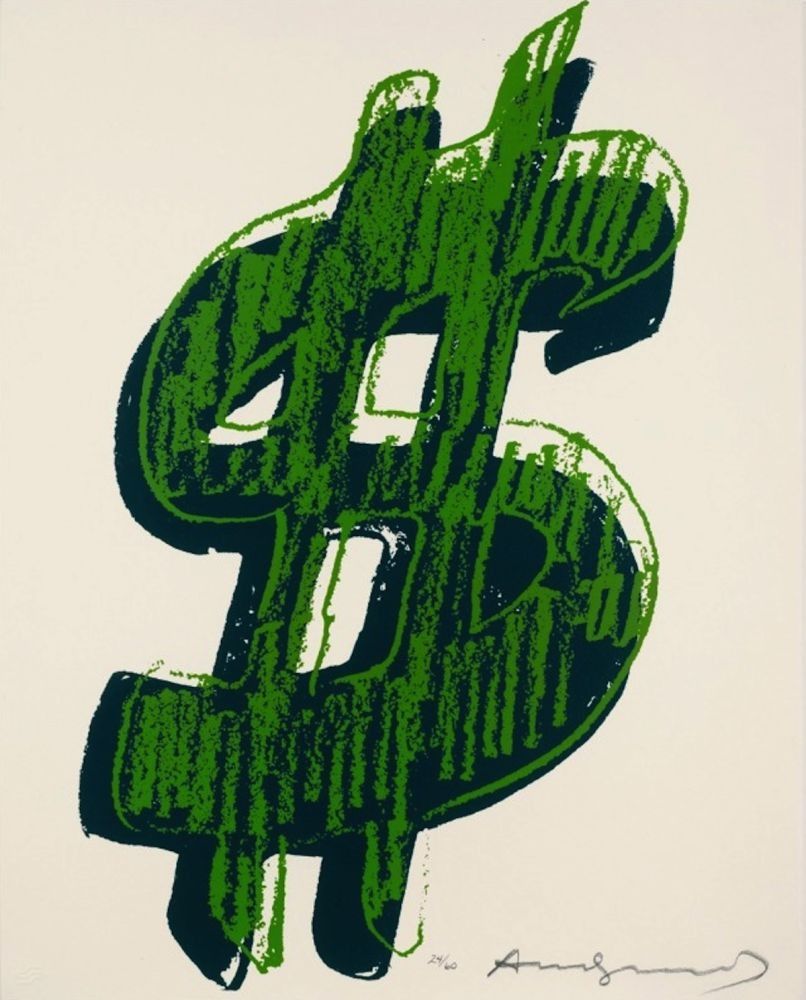
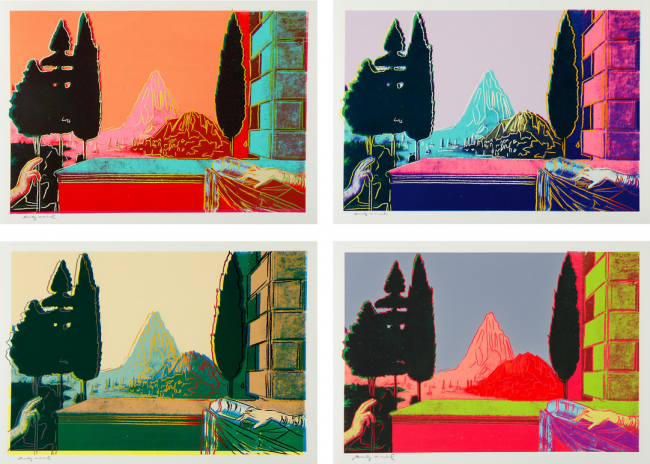
Warhol’s legacy transcended cinema. Artlife Gallery offers a curated selection of Andy Warhol art for sale, and collectors new to his work can find a practical starting point in this guide to start collecting Warhol.
Why Andy Warhol Movies Still Matter Today
Warhol pointed a static camera at a sleeping man in 1963 and, without knowing it, described a visual logic that would define the next sixty years of media culture.
The slow cinema movement that emerged in the late twentieth century, associated with filmmakers like Lav Diaz, built its entire theoretical foundation on the same principles: fixed frame, minimal action, viewer endurance as an aesthetic experience rather than a failure of entertainment. Academic research published in Short Film Studies draws a direct line between his early work and that movement, treating boredom not as a side effect but as the intended output.
The connection to contemporary media runs deeper than film theory. The non-narrative gaze Warhol trained on Edie Sedgwick in Outer and Inner Space, a camera recording a person simply existing without editorial intervention, prefigured the logic of reality television by three decades. What streaming platforms now call “raw” or “authentic” content, Warhol was producing in a downtown loft with a Bolex and no crew.
A generation discovered long-form static video through TikTok’s slow-TV formats. Surveillance cameras made the unblinking frame the dominant visual mode of public life. The aesthetics Warhol once deployed as provocation now form the background of everything.
Frequently Asked Questions
How many films did Andy Warhol make?
The artist produced nearly 650 cinematic works between 1963 and 1968. The extensive archive contains hundreds of silent portrait tests alongside dozens of feature-length releases.
Why are Andy Warhol movies so long?
Andy Warhol made long movies because he wanted to show events in real time. He used unbroken camera shots and refused to cut the film. If a subject slept for five hours, the final project lasted exactly five hours.
Are Andy Warhol movies worth watching?
It depends on your expectations. The underground cinema Warhol made lacked traditional plots, scripts, and action. The director designed them to test audience endurance and observe raw human behavior. If you study or are interested in art history and experimental filmmaking, they are mandatory. If you want a standard cinematic experience, skip them.
Ready to Start Your Collection?
Success in this market hinges on insight and access. ArtLife delivers both. We source investment-grade prints and blue-chip canvases that build real portfolio value. Contact ArtLife today to access our private inventory and acquire your next asset.