
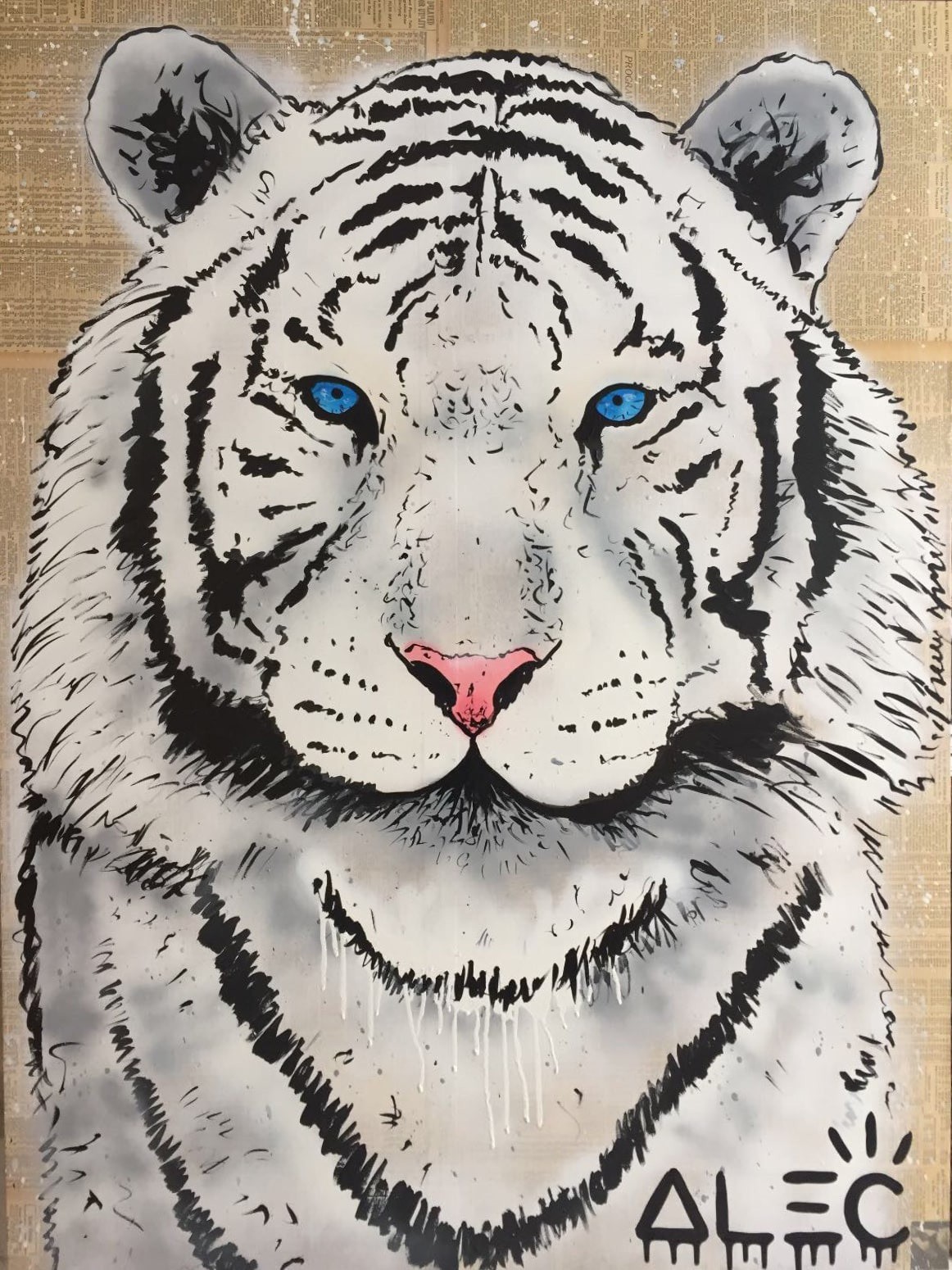
White Tiger
by Alec Monopoly
Year: 2017
Medium: Acrylic Paint on Canvas with Resin Finish
Size: 48 × 36 in (121.9 × 91.44 cm)
Reflecting Alec Monopoly’s evolution beyond traditional street imagery, White Tiger (2017) is an acrylic painting on canvas with a refined resin finish, measuring 48 × 36 inches (121.9 × 91.44 cm). The work combines bold contemporary aesthetics with the symbolic power of the tiger, exploring themes of strength, status, and visual identity. Its polished surface, original execution, and recognised place within the artist’s practice make it a compelling acquisition for sophisticated collectors.
White Tiger represents Alec Monopoly’s expansion into symbolic imagery, combining his recognizable street-inspired aesthetic with themes of power, luxury, and individuality. Created during the artist’s mature studio period, the work explores the visual strength of the tiger as a cultural symbol of confidence, leadership, and prestige. Unlike Alec Monopoly’s early public graffiti murals, White Tiger was developed as a studio artwork, allowing the artist to focus on detailed layering, expressive color, and refined mixed-media techniques.
The white tiger has long represented rarity, strength, and mystique across different cultures. Alec Monopoly reinterprets this powerful animal through his contemporary lens, using graffiti elements and bold artistic interventions to create a dialogue between nature, status, and modern identity. The work reflects recurring themes in his career: ambition, exclusivity, and the pursuit of distinction in a competitive world.
For collectors, White Tiger offers a unique opportunity to acquire a more symbolic side of Alec Monopoly’s practice. Its limited availability, striking visual presence, and connection to the artist’s luxury-focused works make it an appealing addition to contemporary collections.
At ArtLife Gallery, we view White Tiger as an important expression of Alec Monopoly’s creative evolution. Alongside his Monopz universe, luxury editions, and pop culture portraits, this work demonstrates his ability to move beyond financial imagery and create powerful contemporary artworks with broad international appeal.
Alec Monopoly, born Alec Andon, is an American contemporary street artist recognized worldwide for transforming the iconic Monopoly Man character into a symbol of wealth, ambition, and social commentary. Influenced by graffiti culture, pop art, and urban expression, Monopoly developed a distinctive style using stencils, spray paint, collage, and mixed media. His signature masked appearance became a recognizable part of his public image, creating a memorable artistic persona while his identity and career remained openly connected to his work.
Alec Monopoly rose to prominence in the late 2000s by reimagining the familiar Monopoly character within scenes featuring money, luxury, celebrity culture, and modern consumerism. His work connects traditional street-art techniques with collectible contemporary art, attracting a global audience of private collectors, entrepreneurs, entertainers, and investors. Monopoly’s best-known art series features his signature Mr. Monopoly imagery alongside themes of success, financial power, and popular culture, making his work instantly recognizable in the international art market.
From a curator’s perspective, understanding Monopoly art means recognizing the relationship between cultural familiarity, storytelling, and market appeal. Unlike many contemporary artists who rely primarily on institutional recognition, Alec Monopoly built his reputation through strong branding, public visibility, and a unique visual language that resonates with a wide collector base.
The market for his artwork has expanded steadily, with original paintings, HPMs, rare edition prints, and special collaborations receiving significant attention from collectors. Investment in Monopoly art is influenced by factors such as rarity, authenticity, provenance, condition, subject matter, and collector demand for his instantly recognizable Monopoly Man imagery. Works with unique compositions, significant scale, limited availability, or important collaborations often attract stronger interest from collectors and investors.
Among Alec Monopoly's most valuable artworks are rare original canvases and notable collaborations that have achieved substantial private-sale valuations. His continued popularity reflects the growing acceptance of street art as a major segment of the contemporary art market. For collectors seeking to acquire Alec Monopoly art, careful evaluation of authenticity, historical importance, and long-term collector demand is essential. His combination of recognizable symbolism, limited availability, and global appeal continues to secure his position as one of the most commercially influential street artists of his generation.
More Alec Monopoly Works to Explore





White Tiger
by Alec Monopoly
Year: 2017
Medium: Acrylic Paint on Canvas with Resin Finish
Size: 48 × 36 in (121.9 × 91.44 cm)
Reflecting Alec Monopoly’s evolution beyond traditional street imagery, White Tiger (2017) is an acrylic painting on canvas with a refined resin finish, measuring 48 × 36 inches (121.9 × 91.44 cm). The work combines bold contemporary aesthetics with the symbolic power of the tiger, exploring themes of strength, status, and visual identity. Its polished surface, original execution, and recognised place within the artist’s practice make it a compelling acquisition for sophisticated collectors.
White Tiger represents Alec Monopoly’s expansion into symbolic imagery, combining his recognizable street-inspired aesthetic with themes of power, luxury, and individuality. Created during the artist’s mature studio period, the work explores the visual strength of the tiger as a cultural symbol of confidence, leadership, and prestige. Unlike Alec Monopoly’s early public graffiti murals, White Tiger was developed as a studio artwork, allowing the artist to focus on detailed layering, expressive color, and refined mixed-media techniques.
The white tiger has long represented rarity, strength, and mystique across different cultures. Alec Monopoly reinterprets this powerful animal through his contemporary lens, using graffiti elements and bold artistic interventions to create a dialogue between nature, status, and modern identity. The work reflects recurring themes in his career: ambition, exclusivity, and the pursuit of distinction in a competitive world.
For collectors, White Tiger offers a unique opportunity to acquire a more symbolic side of Alec Monopoly’s practice. Its limited availability, striking visual presence, and connection to the artist’s luxury-focused works make it an appealing addition to contemporary collections.
At ArtLife Gallery, we view White Tiger as an important expression of Alec Monopoly’s creative evolution. Alongside his Monopz universe, luxury editions, and pop culture portraits, this work demonstrates his ability to move beyond financial imagery and create powerful contemporary artworks with broad international appeal.
Alec Monopoly, born Alec Andon, is an American contemporary street artist recognized worldwide for transforming the iconic Monopoly Man character into a symbol of wealth, ambition, and social commentary. Influenced by graffiti culture, pop art, and urban expression, Monopoly developed a distinctive style using stencils, spray paint, collage, and mixed media. His signature masked appearance became a recognizable part of his public image, creating a memorable artistic persona while his identity and career remained openly connected to his work.
Alec Monopoly rose to prominence in the late 2000s by reimagining the familiar Monopoly character within scenes featuring money, luxury, celebrity culture, and modern consumerism. His work connects traditional street-art techniques with collectible contemporary art, attracting a global audience of private collectors, entrepreneurs, entertainers, and investors. Monopoly’s best-known art series features his signature Mr. Monopoly imagery alongside themes of success, financial power, and popular culture, making his work instantly recognizable in the international art market.
From a curator’s perspective, understanding Monopoly art means recognizing the relationship between cultural familiarity, storytelling, and market appeal. Unlike many contemporary artists who rely primarily on institutional recognition, Alec Monopoly built his reputation through strong branding, public visibility, and a unique visual language that resonates with a wide collector base.
The market for his artwork has expanded steadily, with original paintings, HPMs, rare edition prints, and special collaborations receiving significant attention from collectors. Investment in Monopoly art is influenced by factors such as rarity, authenticity, provenance, condition, subject matter, and collector demand for his instantly recognizable Monopoly Man imagery. Works with unique compositions, significant scale, limited availability, or important collaborations often attract stronger interest from collectors and investors.
Among Alec Monopoly's most valuable artworks are rare original canvases and notable collaborations that have achieved substantial private-sale valuations. His continued popularity reflects the growing acceptance of street art as a major segment of the contemporary art market. For collectors seeking to acquire Alec Monopoly art, careful evaluation of authenticity, historical importance, and long-term collector demand is essential. His combination of recognizable symbolism, limited availability, and global appeal continues to secure his position as one of the most commercially influential street artists of his generation.