
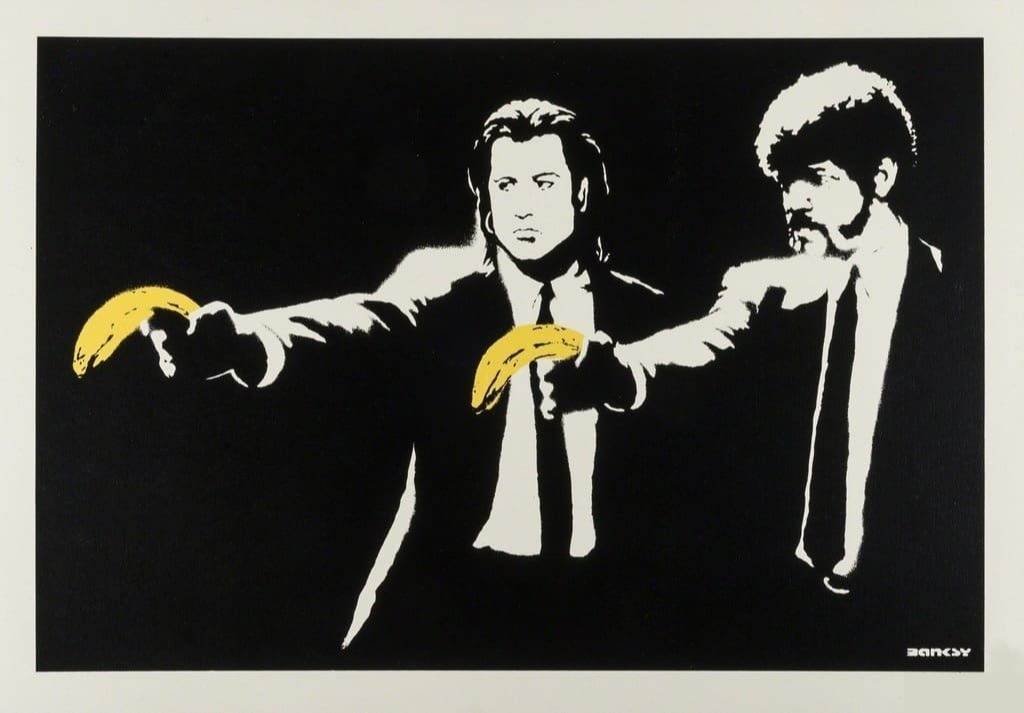
Pulp Fiction
by Banksy
Year: 2005
Medium: Screenprint on paper
Size: 70 x 50 cm
Edition of 150
Reframing cinematic iconography through a subversive lens, Banksy’s Pulp Fiction (2005) is a screenprint on paper measuring 70 × 50 cm, issued in a limited edition of 150. Replacing firearms with bananas, the work delivers a pointed critique of violence, pop culture, and media normalization of aggression, emblematic of the artist’s mid-2000s practice. Its scarce edition, bold graphic clarity, and Pest Control authentication framework ensure strong provenance and sustained collector demand.
Banksy’s Pulp Fiction first appeared as a street mural in London in the early 2000s, during a period when the artist was reworking iconic pop culture imagery to challenge authority and question cultural power structures. The original wall painting, placed in a public urban setting, quickly became one of Banksy’s most recognisable interventions. Explore more about his major mural sites in the guide to Banksy street art locations in the US and beyond.
The work reimagines a scene from Quentin Tarantino’s Pulp Fiction, replacing guns held by the characters with bananas. This simple visual shift transforms a violent cinematic moment into something absurd and humorous, stripping away its aggression while preserving its cultural familiarity. The piece reflects Banksy’s interest in media influence, entertainment culture, and the way violence is often stylized or normalised through film and advertising.
The symbolism is direct but effective. By replacing weapons with harmless objects, Banksy questions how society consumes violent imagery and how repetition in popular culture can dull its impact. The work also plays with irony, turning a highly stylised film reference into a critique of spectacle and representation.
For collectors, Pulp Fiction remains one of Banksy’s most in-demand images due to its iconic status, strong cultural reference, and early street origin. Demand continues in the secondary market, supported by its recognisable imagery and its place within Banksy’s most celebrated body of work. Today, it is regarded as a defining example of Banksy’s ability to transform pop culture into sharp social commentary.
Banksy is a world-famous British street artist known for politically charged graffiti and an anonymous identity. Emerging from the Bristol underground scene in the 1990s, Banksy became a leading figure connecting street art, graffiti art, and contemporary art movements. His work combines satire, activism, and social commentary in ways that connect with both casual viewers and serious collectors.
Banksy’s iconic works, such as Girl with Balloon, Flower Thrower, and Love is in the Bin helped define his career and transformed street art into a respected part of the global art market. His visual style is instantly recognizable through stencil techniques, bold black-and-white contrasts, and sharp messages about war, consumerism, and inequality.
Banksy holds major market importance because his original works and authenticated prints regularly sell for millions at international auctions. Demand remains strong among collectors due to limited supply, global recognition, and cultural relevance.
Beyond the market, Banksy changed how people view public art. He brought graffiti into galleries, museums, and mainstream culture while keeping its rebellious spirit alive. From an investment perspective, Banksy is considered one of the strongest contemporary art names, with steady collector demand and long-term appeal across generations.
More Banksy Works to Explore





Pulp Fiction
by Banksy
Year: 2005
Medium: Screenprint on paper
Size: 70 x 50 cm
Edition of 150
Reframing cinematic iconography through a subversive lens, Banksy’s Pulp Fiction (2005) is a screenprint on paper measuring 70 × 50 cm, issued in a limited edition of 150. Replacing firearms with bananas, the work delivers a pointed critique of violence, pop culture, and media normalization of aggression, emblematic of the artist’s mid-2000s practice. Its scarce edition, bold graphic clarity, and Pest Control authentication framework ensure strong provenance and sustained collector demand.
Banksy’s Pulp Fiction first appeared as a street mural in London in the early 2000s, during a period when the artist was reworking iconic pop culture imagery to challenge authority and question cultural power structures. The original wall painting, placed in a public urban setting, quickly became one of Banksy’s most recognisable interventions. Explore more about his major mural sites in the guide to Banksy street art locations in the US and beyond.
The work reimagines a scene from Quentin Tarantino’s Pulp Fiction, replacing guns held by the characters with bananas. This simple visual shift transforms a violent cinematic moment into something absurd and humorous, stripping away its aggression while preserving its cultural familiarity. The piece reflects Banksy’s interest in media influence, entertainment culture, and the way violence is often stylized or normalised through film and advertising.
The symbolism is direct but effective. By replacing weapons with harmless objects, Banksy questions how society consumes violent imagery and how repetition in popular culture can dull its impact. The work also plays with irony, turning a highly stylised film reference into a critique of spectacle and representation.
For collectors, Pulp Fiction remains one of Banksy’s most in-demand images due to its iconic status, strong cultural reference, and early street origin. Demand continues in the secondary market, supported by its recognisable imagery and its place within Banksy’s most celebrated body of work. Today, it is regarded as a defining example of Banksy’s ability to transform pop culture into sharp social commentary.
Banksy is a world-famous British street artist known for politically charged graffiti and an anonymous identity. Emerging from the Bristol underground scene in the 1990s, Banksy became a leading figure connecting street art, graffiti art, and contemporary art movements. His work combines satire, activism, and social commentary in ways that connect with both casual viewers and serious collectors.
Banksy’s iconic works, such as Girl with Balloon, Flower Thrower, and Love is in the Bin helped define his career and transformed street art into a respected part of the global art market. His visual style is instantly recognizable through stencil techniques, bold black-and-white contrasts, and sharp messages about war, consumerism, and inequality.
Banksy holds major market importance because his original works and authenticated prints regularly sell for millions at international auctions. Demand remains strong among collectors due to limited supply, global recognition, and cultural relevance.
Beyond the market, Banksy changed how people view public art. He brought graffiti into galleries, museums, and mainstream culture while keeping its rebellious spirit alive. From an investment perspective, Banksy is considered one of the strongest contemporary art names, with steady collector demand and long-term appeal across generations.