
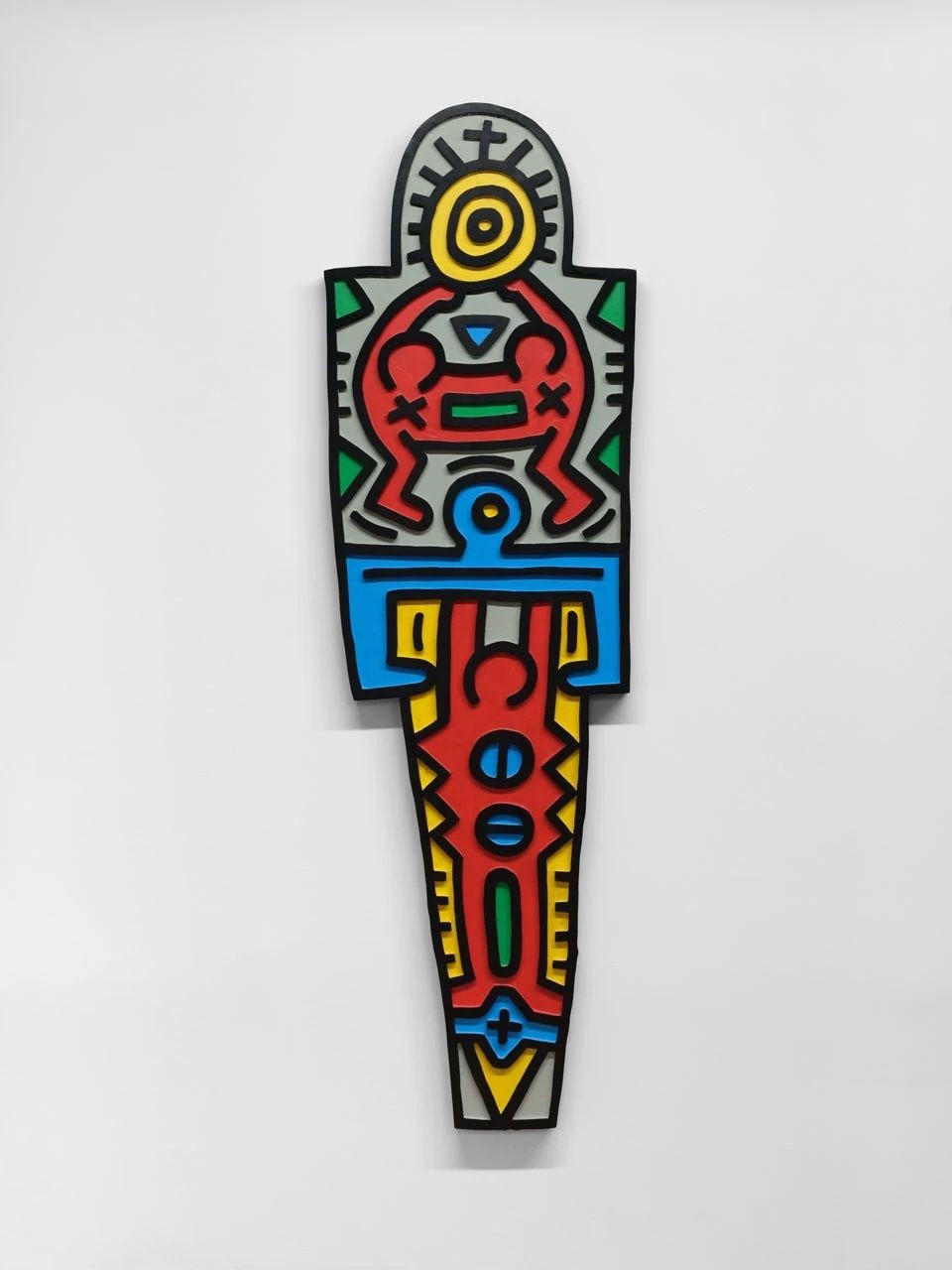
Totem
by Keith Haring
Year: 1988-89
Medium: Carved plywood
Size: 72 x 22 x 2 in
Carved plywood painted with enamel in colors
Created in 1988–89, Keith Haring’s Totem is a carved plywood sculpture painted with enamel in vibrant colors, measuring 72 × 22 × 2 inches. Produced during the artist’s final and most celebrated period, it reflects Haring’s iconic visual language and public art ethos. Its sculptural format, historical importance, and distinctive craftsmanship make this an exceptional and highly desirable acquisition for discerning collectors.
Totem by Keith Haring is a striking example of the artist’s ability to transform simple forms into universal symbols of connection, energy, and community. First developed during Haring’s prolific studio practice in the mid-1980s, the imagery draws directly from the visual language he established in New York’s subway drawings and public murals. While Totem itself was not executed as a specific street graffiti work, its bold outlines, rhythmic figures, and accessible composition clearly evolved from Haring’s public art philosophy rather than a single graffiti intervention.
The stacked forms evoke ceremonial totems while celebrating unity, shared identity, and collective strength. Haring fused ancient symbolism with contemporary pop culture, creating an image that feels timeless yet unmistakably modern. Its vibrant visual rhythm reflects his belief that art should communicate across cultures without barriers.
Collectors prize Totem for its limited availability, museum-quality significance, and strong demand within the blue-chip Keith Haring market. Works featuring his iconic symbolic vocabulary continue to attract seasoned collectors and first-time buyers alike.
Curator Insight: At ArtLife Gallery, we view Totem as one of Haring’s most balanced compositions—where movement, symbolism, and optimism come together with remarkable clarity.
Totem belongs to Haring’s mature artistic period and relates closely to Radiant Baby, Pop Shop, Best Buddies, and his celebrated mural projects, reflecting the visual language that established him as one of the defining artists of contemporary pop art.
More Keith Haring Works to Explore
Totem
by Keith Haring
Year: 1988-89
Medium: Carved plywood
Size: 72 x 22 x 2 in
Carved plywood painted with enamel in colors
Created in 1988–89, Keith Haring’s Totem is a carved plywood sculpture painted with enamel in vibrant colors, measuring 72 × 22 × 2 inches. Produced during the artist’s final and most celebrated period, it reflects Haring’s iconic visual language and public art ethos. Its sculptural format, historical importance, and distinctive craftsmanship make this an exceptional and highly desirable acquisition for discerning collectors.
Totem by Keith Haring is a striking example of the artist’s ability to transform simple forms into universal symbols of connection, energy, and community. First developed during Haring’s prolific studio practice in the mid-1980s, the imagery draws directly from the visual language he established in New York’s subway drawings and public murals. While Totem itself was not executed as a specific street graffiti work, its bold outlines, rhythmic figures, and accessible composition clearly evolved from Haring’s public art philosophy rather than a single graffiti intervention.
The stacked forms evoke ceremonial totems while celebrating unity, shared identity, and collective strength. Haring fused ancient symbolism with contemporary pop culture, creating an image that feels timeless yet unmistakably modern. Its vibrant visual rhythm reflects his belief that art should communicate across cultures without barriers.
Collectors prize Totem for its limited availability, museum-quality significance, and strong demand within the blue-chip Keith Haring market. Works featuring his iconic symbolic vocabulary continue to attract seasoned collectors and first-time buyers alike.
Curator Insight: At ArtLife Gallery, we view Totem as one of Haring’s most balanced compositions—where movement, symbolism, and optimism come together with remarkable clarity.
Totem belongs to Haring’s mature artistic period and relates closely to Radiant Baby, Pop Shop, Best Buddies, and his celebrated mural projects, reflecting the visual language that established him as one of the defining artists of contemporary pop art.