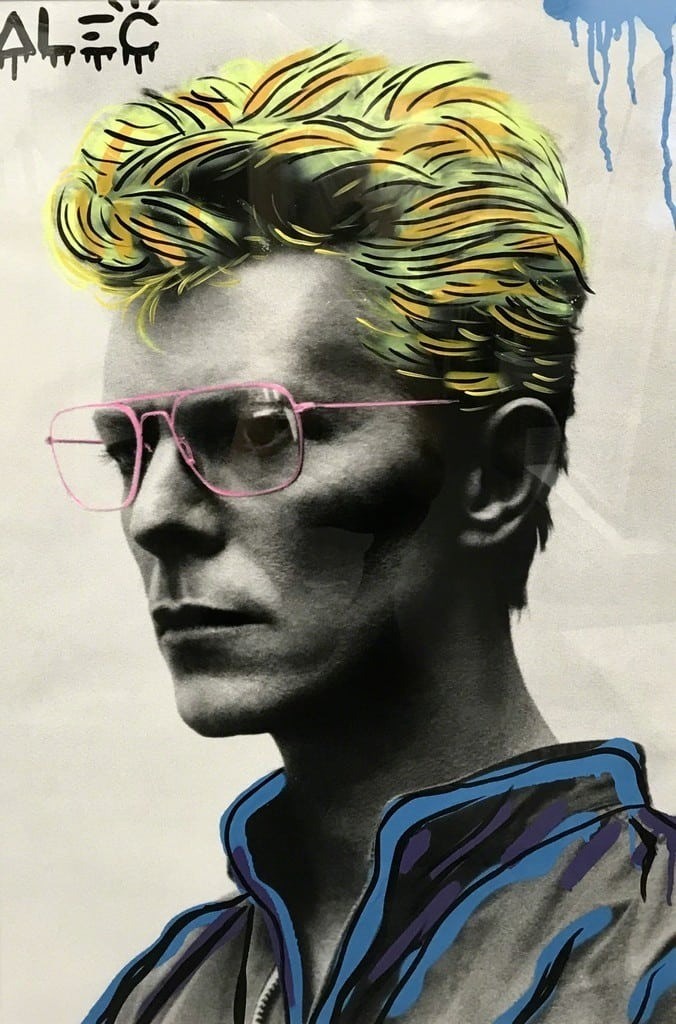
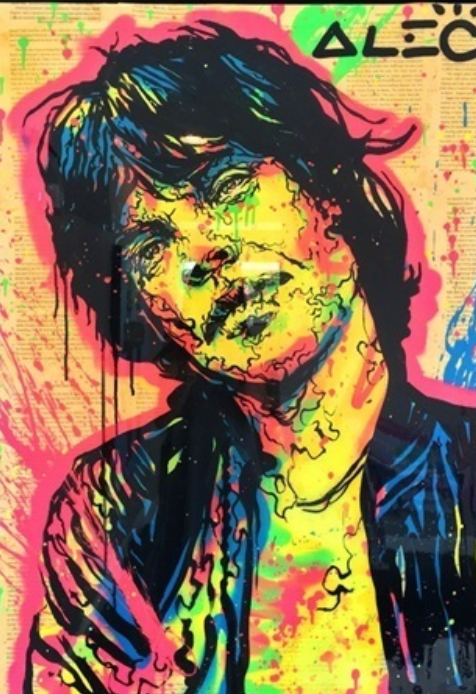
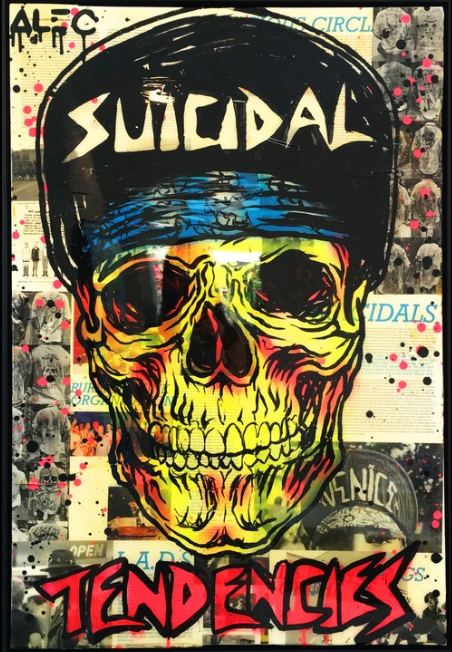
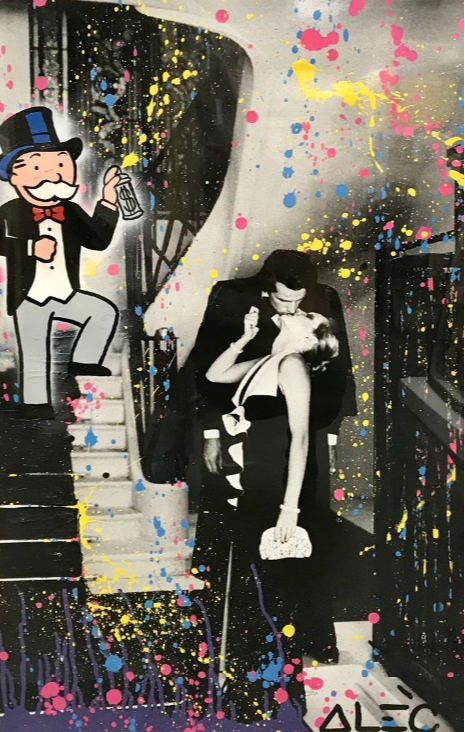
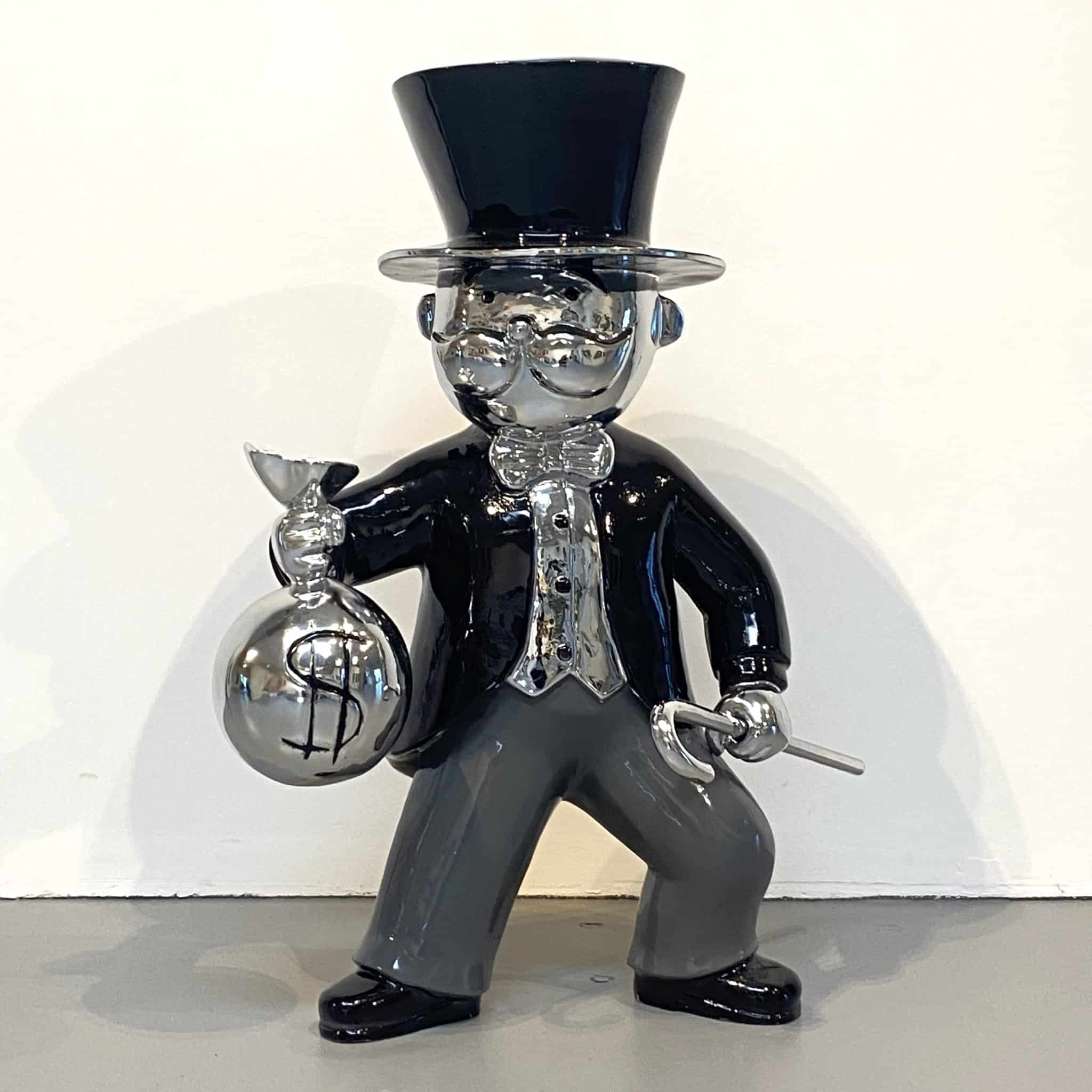
Alec Monopoly at Auction: The Most Valuable Artworks Ever Sold
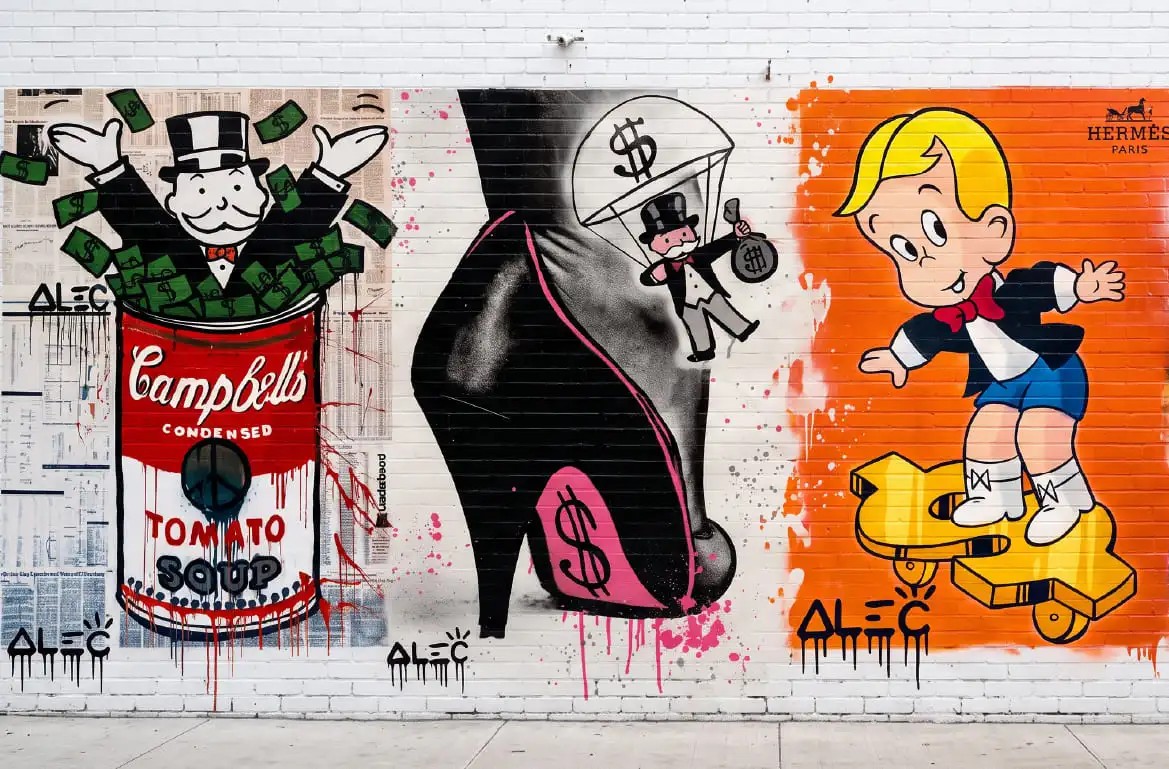
For years, Alec Monopoly’s canvases traded within a predictable $20,000 to $50,000 band. That ceiling broke in 2026 when a hand-painted Hermès Birkin sold for $193,500 at Phillips, beating his previous auction record by 275%. Now, his secondary market is sharply divided between steady volume for standard paintings and fierce bidding for scarce luxury objects.
Who Is Alec Monopoly?
Alec Monopoly built one of street art’s most recognizable commercial brands by hijacking the Monopoly board game’s mascot. His focus on wealth, luxury, and pop culture attracts a divided audience of speculative investors and high-profile celebrities. That dual appeal moves his numbers.
Who Bids on Alec Monopoly at Auction
His bidders fall into a handful of clear groups, and knowing which one you belong to helps you read his results. At the entry level are buyers after a signed print, often making a first art purchase. In the middle are collectors who want an original canvas of a known character and intend to keep it for years.
At the top are trophy buyers, the watch, fashion, and luxury crowd who chase his rarest objects and set the records. Each group watches for something different, and the distance between them is what keeps his market easy to enter at the low end and capable of big surprises at the top.
How His Auction Results Compare to Other Street Artists
Placed next to his peers, Monopoly is a mid-tier auction name with one outsized result. His record is strong for a living street artist of his standing, yet it stays well under KAWS, whose top sale reached $14.8 million, or Banksy, whose work changes hands in the tens of millions.
The closer comparison is Mr. Brainwash, whose auction figures swing widely from one sale to the next. Monopoly trades more steadily than that, and his ceiling keeps rising, though his results still depend on brand demand more than on the museum history that backs the artists above him.
Why Collectors Buy Alec Monopoly Works
Monopoly’s imagery reads at a glance and hangs easily on a wall, which draws collectors still finding their footing in contemporary art. Famous owners and luxury collaborations raise the brand’s cultural standing.
His prices also start low, and prints or small works cost a fraction of a blue-chip name. A newcomer can own a recognizable artist without spending much. Our Alec Monopoly investment guide shows how to turn a first buy into a smart hold.
Alec Monopoly Auction Results: A Market Overview
Artprice ranks Monopoly 57th among the world’s top 100 ultra-contemporary artists by auction turnover for 2024 to 2025, with $257,316 in total sales. Most lots land in the familiar five-figure range, though his 2026 record cleared six figures. Heritage moves the volume, and Phillips holds the high end.
According to Avery Andon, CEO of ArtLife Gallery, “Ten years ago, pretty much everything he made sold for about the same. Now the rare ones set records, and his regular paintings still sell in the five figures. Top collectors can go after what’s scarce, and there’s still room at the bottom for someone just starting out. Both ends are healthy, they just don’t move together anymore.”
Auction Volume and Sell-Through Rate
Bidders return for him sale after sale. In 2024 to 2025, 41 of his lots sold against 12 that went unsold, a sell-through near 77%. Few artists this early in their market resell so reliably, which keeps his pieces liquid.
“Watch the sell-through rate, how many of the works on offer actually sell,” says Nico Hayes, Senior Director at ArtLife Gallery. “That tells you whether the demand is real or people are just hoping. Then look at the gap between what he normally sells for and his top sale. When that gap gets wide, the rare material is pulling everything up.”
Average Selling Prices Over Time
His turnover that year averaged near $6,300 a lot, and his best sale reached $37,500. Both run far below his 2026 record, which shows how far the Birkin jumped ahead of his usual market. Massive premiums are confined to a few exceptional pieces. The vast majority of his work trades at highly accessible price points.
Key Auction Houses Driving Demand
Heritage runs Monopoly’s secondary market. Its Urban Art sales have sold the largest share of his canvases, including the Mr. Monopoly that held his record for six years. Phillips seized the top in 2026 with the Skeleton Monopoly Bag. Smaller regional houses take the rest, mostly prints and lower-value lots.
Alec Monopoly Price History: 2015–2026
His auction record more than tripled between 2020 and 2026, one of the sharpest jumps in recent street-art auctions. The early years stayed quiet. Canvases sold in the five figures, and the top barely moved. Then 2020 reset his ceiling, and 2026 broke it open as buyers chased his rarest work.
Early Auction Performance
Before 2020, Monopoly’s prices moved in a narrow range. Canvases sold mostly between $20,000 and $35,000, and few climbed higher. The market stayed active but shallow, and demand concentrated on his Monopoly Man and character paintings. Prices held without climbing, the usual pattern for a young artist whose reputation is still forming.
The 2020 Price Acceleration
The market baseline jumped in July 2020. Heritage sold Mr. Monopoly for $51,250 and Gold Bull for $50,000, establishing a completely new pricing tier for his canvases. Those two results roughly doubled his going canvas prices and set a fresh benchmark. The timing was no accident. New buyers flooded into street art during the pandemic boom.
The 2026 Record-Breaking Sale
Skeleton Monopoly Bag, a Birkin handbag he covered in spray and paint, sold for $193,500 at Phillips during a strong New York season. The bag broke the record because nothing else like it existed. The result shows a market where high-fashion synergy is the ultimate collector’s prize.
“A record gets people talking, and that brings in new buyers, which is good for anyone who already owns one,” says Andon. “But it also raises expectations. One Birkin going for six figures doesn’t mean every canvas is suddenly worth more. I tell my clients to enjoy the headline, then look at the sales that actually match what they’re buying.”
What Factors Influence Alec Monopoly Artwork Prices?
Subject matter moves a Monopoly price more than anything, then size, medium, and provenance. Celebrity ownership and brand ties push it higher, and condition settles the rest. The same Monopoly Man can fetch wildly different sums depending on which of these line up.
Subject Matter and Iconography
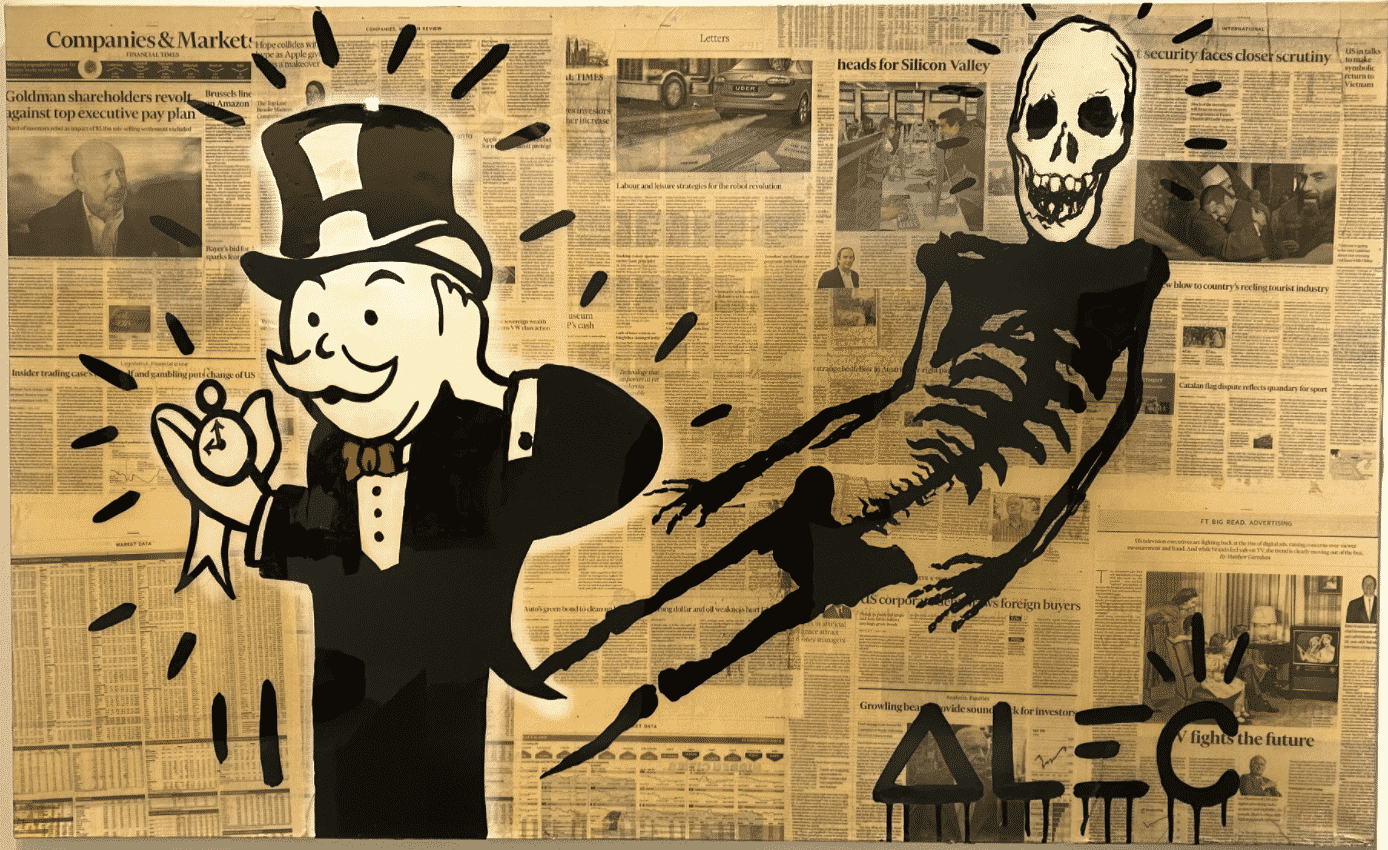
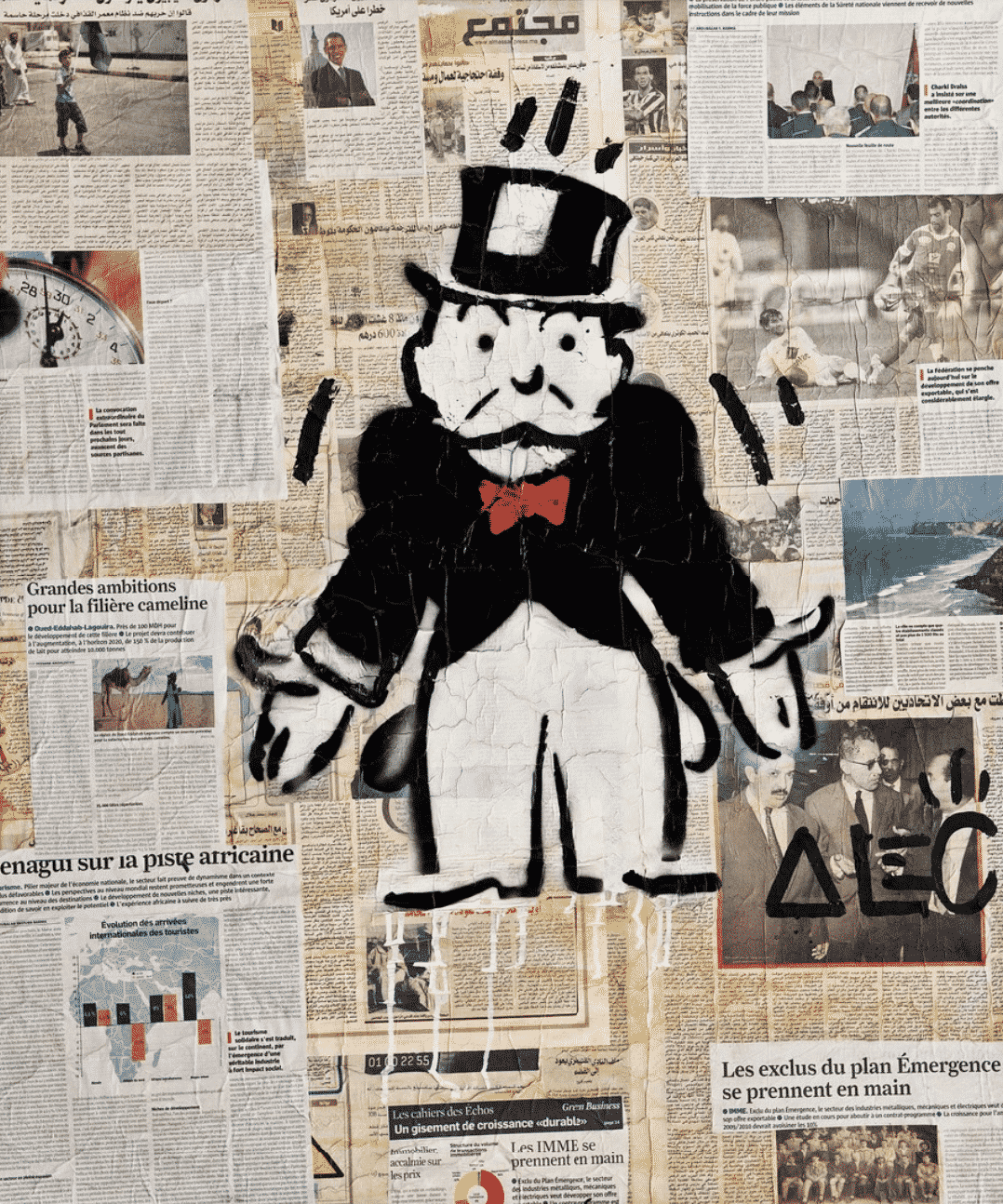
What is on the canvas matters most. The Monopoly Man in his familiar poses has the strongest demand. That figure defines the brand. Scrooge McDuck, Richie Rich, and financial symbols like gold bars and charging bulls follow close behind. Strip out the signature character, and the price drops noticeably.
Artwork Size and Medium
Scale and material set the number. Large canvases worked over with spray paint, collage, and thick resin reach the highest prices. Mixed-media originals sell far above anything flat on paper. His sculptures and hand-painted objects draw the fiercest bidding of all.
Provenance and Exhibition History
A canvas with a clear ownership trail, gallery records, and exhibition history beats an identical one with no documentation. A known former owner adds confidence, as the Monopoly canvas from the Guy Hepner collection showed. Buyers pay for certainty, and a clean history delivers it.
“You can have two paintings with the same Monopoly Man, sold a few years apart, at totally different prices,” says Hayes. “One is a big one-off canvas with gallery paperwork and a clean history. The other is small, with nothing to back it up. People pay for being sure, and they pay for size.”
Celebrity Ownership and Brand Collaborations
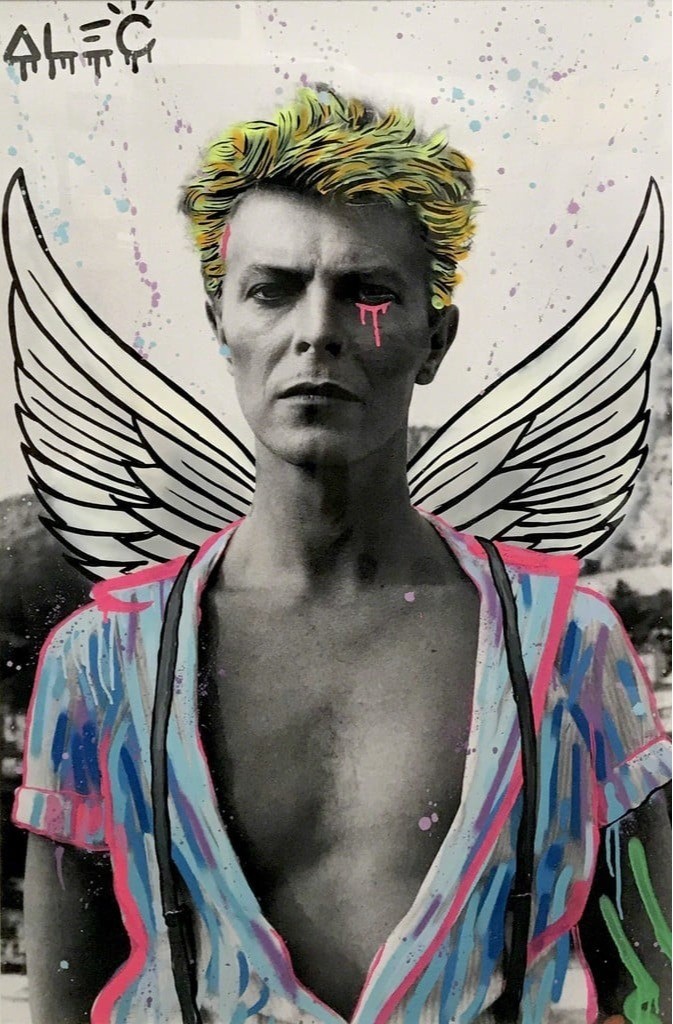
Celebrity history sells. Monopoly’s luxury-house collaborations and his celebrity buyers feed demand directly. Collectors value that link. A canvas tied to a marquee name or brand project sells at a clear advantage at auction. The effect is real, even if it ties the value to celebrity as much as to the art.
Condition and Authentication
Alec Monopoly uses a lot of resin and mixed media, so the surface has to be perfect, and any visible damage ruins the price. On a piece this heavy in resin, a buyer studies the condition closely before bidding. Authentication carries just as much weight, which is why the steps to confirm it get their own section later on.
9 Most Valuable Alec Monopoly Artworks Ever Sold
Canvases dominate the artist's top nine, yet his single highest result is a painted Hermès handbag. Beneath that six-figure peak, the remaining top sales cluster tightly in the low thirties. Every name in this top tier is a core character, a financial motif, or a luxury collaboration.
| Rank | Artwork | Year Sold | Auction House | Price |
|---|---|---|---|---|
| 1 | Skeleton Monopoly Bag | 2026 | Phillips | $193,500 |
| 2 | Mr. Monopoly | 2020 | Heritage | $51,250 |
| 3 | Gold Bull | 2020 | Heritage | $50,000 |
| 4 | Love My Porsche | 2023 | Heritage | $47,500 |
| 5 | Wall Street Crucifix | 2020 | Heritage | $45,000 |
| 6 | Scrooge McDuck | 2020 | Heritage | $36,250 |
| 7 | DJ Monopoly | 2020 | Heritage | $32,500 |
| 8 | Scrooge | 2022 | Heritage | $32,500 |
| 9 | Monopoly | 2023 | Heritage | $32,500 |
Phillips secured the definitive record, with Heritage sweeping the rest of the ranking. The three-way tie at $32,500 points to a crowded secondary tier for standard pieces, far below the bag at the top.
Why These Artworks Command Premium Prices
A record needs three things at once, something rare, an image people already know, and a story collectors want to own. His 2026 record had all three and left every canvas behind. The familiar image widens the audience, and a famous name carries the rest.
Scarcity and Uniqueness
Nothing moves price like rarity. A one-off canvas or a hand-painted object has no duplicate. Buyers fight over the only one in existence, taking it far past anything an edition reaches. The Birkin set its record with no second copy anywhere, the only one of its kind.
Cultural Relevance
He builds on a theme everyone grasps, money and the games people play with it. The Monopoly Man works in any language or generation, and his strongest canvases reach an audience few contemporary artists touch. When a canvas carries a clear reference, a luxury brand, a famous character, or a financial symbol, the meaning registers at once. The bidding runs deeper.
Cross-Category Appeal
Alec Monopoly sells to people who never call themselves art collectors. Watch enthusiasts, sneaker buyers, fashion followers, and pop-culture fans all know his name, and some of them bid at auction. That extra demand pushes prices past anything an art-world reputation alone could reach. The 2026 record came straight from that crowd, a luxury-goods audience chasing a painted handbag.
Luxury Collectibles vs Traditional Paintings
His paintings built the market, but his luxury objects now set the records. A canvas competes with hundreds of similar canvases; a painted Birkin or a custom watch competes with nothing. Steady canvas sales keep his market liquid, while the rare collectibles bring in the top prices.
Best-Performing Alec Monopoly Themes for Resale
Themes resell unevenly. The Monopoly Man leads, then financial imagery, then his limited brand collaborations. Pop-culture characters hold their own when the example is strong. The closer a theme stays to his core identity, the faster a work finds its buyer.
Monopoly Man Series
The Monopoly Man remains his safest resale category. His strongest results below the record are consistently canvases focused on the top-hatted mascot, and demand for them holds steady through every market cycle. That figure is the definitive Monopoly image, the core of Alec Monopoly’s art series and themes. These pieces present the lowest resale risk and bring in the deepest pool of bidders.
Financial Market Motifs
Money imagery ranks second. Bull markets, gold bars, stock tickers, and cash tie straight back to the wealth critique central to his message. Collectors place them with him at once. Gold Bull and Wall Street Crucifix both reached his upper tier on the strength of those symbols. The theme resells well. No one mistakes it for anyone else.
Luxury Brand Collaborations
Brand collaborations make up a small but valuable part of his market. Works tied to Hermès, TAG Heuer, Jacob & Co, or other luxury houses pull buyers from outside the usual art crowd, and their rarity drives strong resale. The painted Birkin proves the point. These collaborations come up for sale only occasionally, so demand spikes whenever one appears.
Pop Culture Character Works
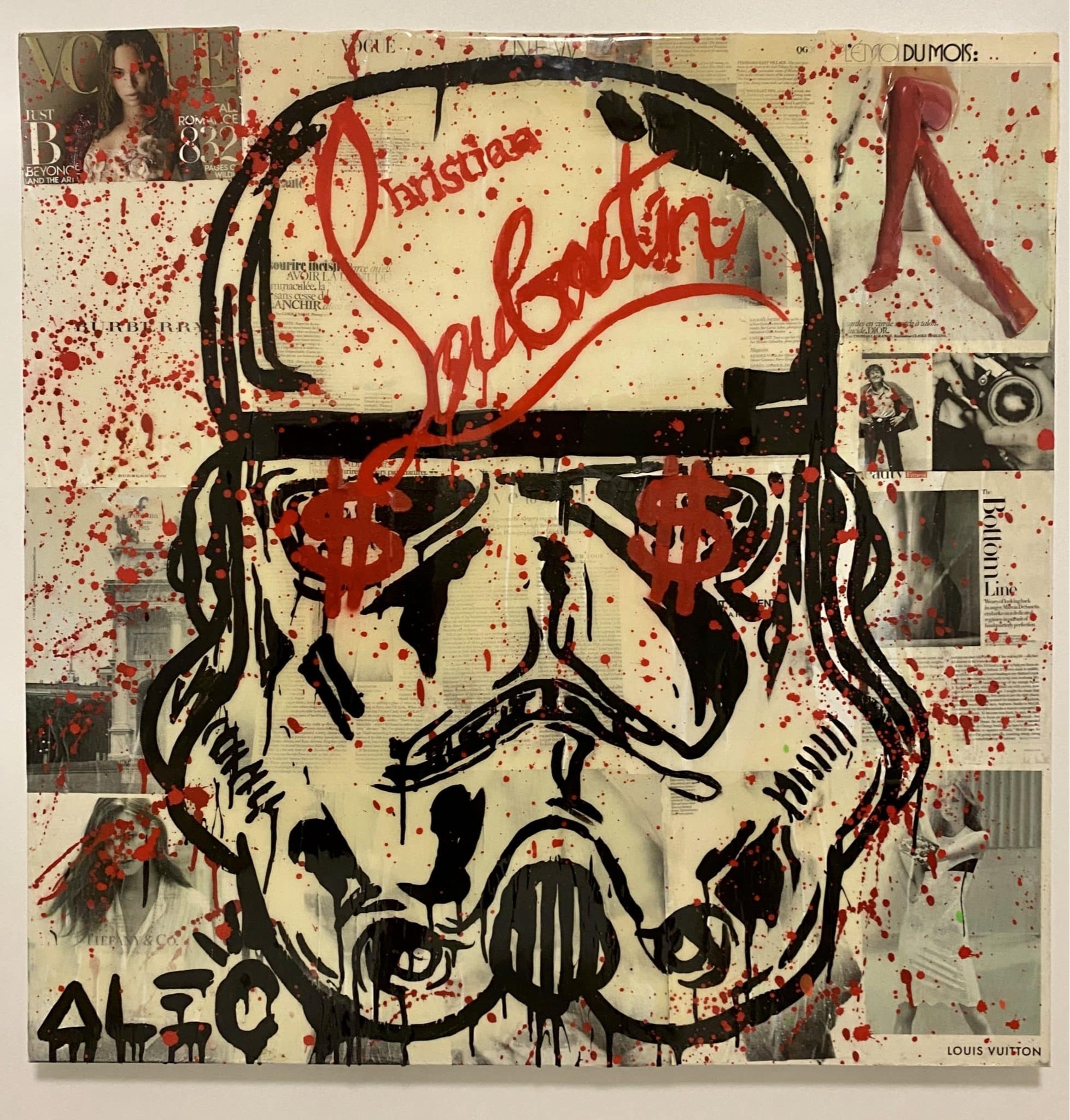
Pop-culture characters round out his resale themes. Scrooge McDuck, Richie Rich, and Tony Montana give collectors a familiar face beyond the Monopoly Man. These canvases resell well when the character is strong and the execution clean, though they trail the central mascot in demand and price. They suit a buyer who wants his style on a different character.
Original Paintings vs Prints: Which Hold Value Better?
Originals appreciate far more reliably than prints, and his auction record makes the gap plain. One-off paintings and hand-painted objects resell consistently, while the large supply of prints caps the gain and slows the resale.
Auction Performance Comparison
His ranking settles the question. Every entry is an original painting or a unique object, and not one standard print makes the list. Prints sell steadily, usually in the hundreds to low thousands, but they have never reached the five and six-figure range his originals have. Our guide to Alec Monopoly HPMs, originals, and prints breaks the formats down in full.
Liquidity and Buyer Demand
Originals also sell faster. Demand for unique pieces runs steady, and a strong canvas finds its buyer quickly. Prints move slower, because with so many copies in circulation a seller fights every other example of the same image. That competition cuts both the speed and the price.
Risks of Limited Editions
Edition size decides whether a print gains anything. A small, signed, numbered run can appreciate, but a print pulled in the hundreds gains little, and open editions or unsigned reproductions return nothing at all. Bargain hunters learn too late the supply they overlooked is exactly what kills their return. With editions, smaller wins.
How to Evaluate Alec Monopoly Art Before Buying
Fakers copy and misattribute his work constantly. Before you buy, confirm the certificate, trace the provenance, and check the auction history of comparable works. A verified trail protects both authenticity and resale value. Skip that step, and you overpay for something you cannot resell.
What to Check in the Lot Listing
At auction, your evidence comes from the catalog before the sale. Read the lot entry for the title, year, medium, and edition details, and ask for the condition report, which a trustful house provides on request. Confirm that a certificate of authenticity backs the work, and weigh the estimate against recent comparable lots. A thin listing with no condition report and no provenance line is a reason to slow down.
Tracing the Sale History
Provenance is easier to confirm at auction than in most private deals, because past results are on record. Trace the lot back through earlier sales, gallery invoices, and exhibition history, then cross-check any claimed prior sale against published auction records to confirm the figure is real. A clean, checkable trail supports both authenticity and your own resale later.
Red Flags in the Secondary Market
A handful of signals should stop you before you bid. An estimate set well under comparable results can point to a problem with the work, not a bargain. A missing condition report on a resin-heavy piece, no certificate, or a vague consignor history all deserve questions. Be wary of merchandise and printed goods dressed up as fine art, and of any lot where the documents do not support the asking price.
Where to Track Auction Results
Reliable price data is easy to find, once you know where to look. Phillips and Heritage publish their past results, and specialist art databases track sales throughout the wider market. Check recent comparable lots before you bid. Nothing protects you better from overpaying. On the primary market, the authorized galleries where you can buy Alec Monopoly art hold the verified inventory and the matching paperwork.
Frequently Asked Questions
What is Alec Monopoly’s most expensive artwork?
Skeleton Monopoly Bag, a Birkin bag he painted by hand, holds the record at just under $200,000, sold at Phillips in 2026. It is the only one of his works to pass six figures at auction. His top paintings land a tier below, in the low-to-mid five figures.
How much do Alec Monopoly paintings typically sell for?
His paintings mostly sell between $20,000 and $50,000 at auction. Smaller works and prints go for far less, sometimes only a few hundred dollars. Only his rarest formats reach six figures, the territory of his record-setting painted Birkin.
Are Alec Monopoly artworks a good investment?
Yes, they offer excellent investment potential if you buy strategically. His auction presence is consistent and highly active. Unique canvases focused on the Monopoly Man and backed by perfect paperwork are the safest investments. Prints remain mostly decorative, but his original paintings have a proven ability to maintain and grow their value over time.
Which Alec Monopoly pieces appreciate the fastest?
Hand-painted originals and one-off objects tied to his core themes appreciate fastest. The Monopoly Man and his financial imagery lead, especially when the piece carries strong provenance or a luxury collaboration. Standard prints lag well behind in the secondary market.
Where can I find Alec Monopoly auction results?
Phillips and Heritage post their past sales, and independent art-market databases track the wider secondary market. They list the final hammer price, total auction fees, and specific sale dates. This data gives you an accurate financial baseline for future bids.
How can I authenticate an Alec Monopoly artwork?
Start with the certificate of authenticity from his studio or an authorized gallery, then confirm the ownership history. For resin and mixed-media pieces, add a condition report. No paperwork, no purchase.
Build Your Alec Monopoly Collection
Looking for investment-grade Alec Monopoly artwork? Browse museum-quality originals, rare HPMs, and sold-out editions selected for serious collectors. Our specialists can help you find the right piece based on rarity, provenance, and market performance.