Alec Monopoly’s Best-Known Art Series and Themes
Alec Monopoly’s signature art series and themes
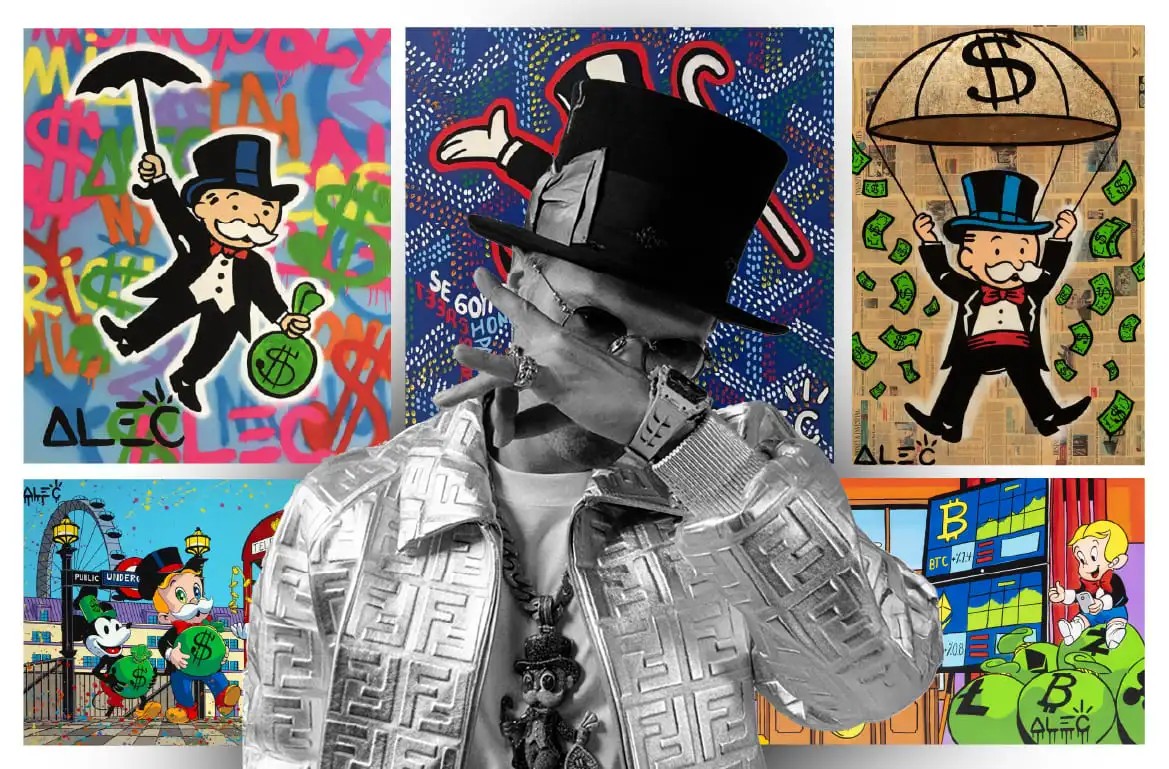
Alec Monopoly’s market runs on recognition. Buyers go straight for the characters they already know, so his catalog keeps to a tight rotation of signature series. The Monopoly Man leads, followed by his money and luxury work and a line of brand collaborations. The series differ in how widely they are known and how well they keep their value, which is what a buyer needs to sort out before spending.
Why Alec Monopoly’s Series Matter to Collectors
Buyers sort his work by series, and the market prices it the same way. Works from a known series carry an audience that already wants them and a resale history you can check, while a stray image carries neither. That gap explains why two canvases of equal size and quality can sell for very different sums.
Recurring Symbols and Visual Themes
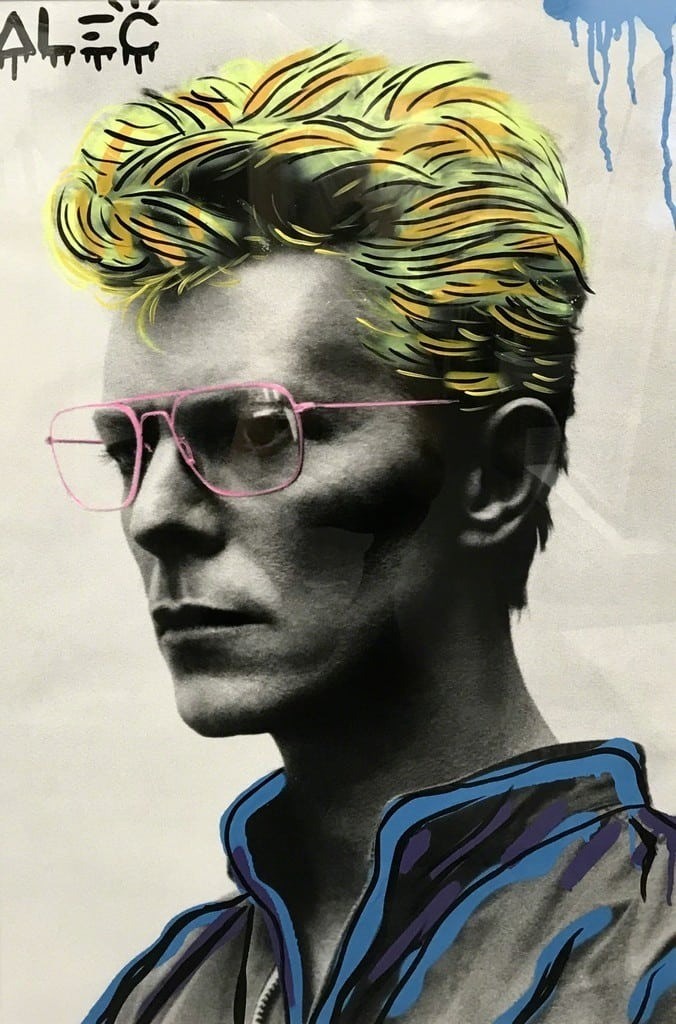
The same short vocabulary runs through most of his work: top hat and moneybag, dollar signs, gold bars, charging bulls, diamonds, champagne, all of it painted over newsprint or sheet music. Learn these symbols and you can tell a core Monopoly canvas from a one-off experiment in a second.
The Role of Mr. Monopoly
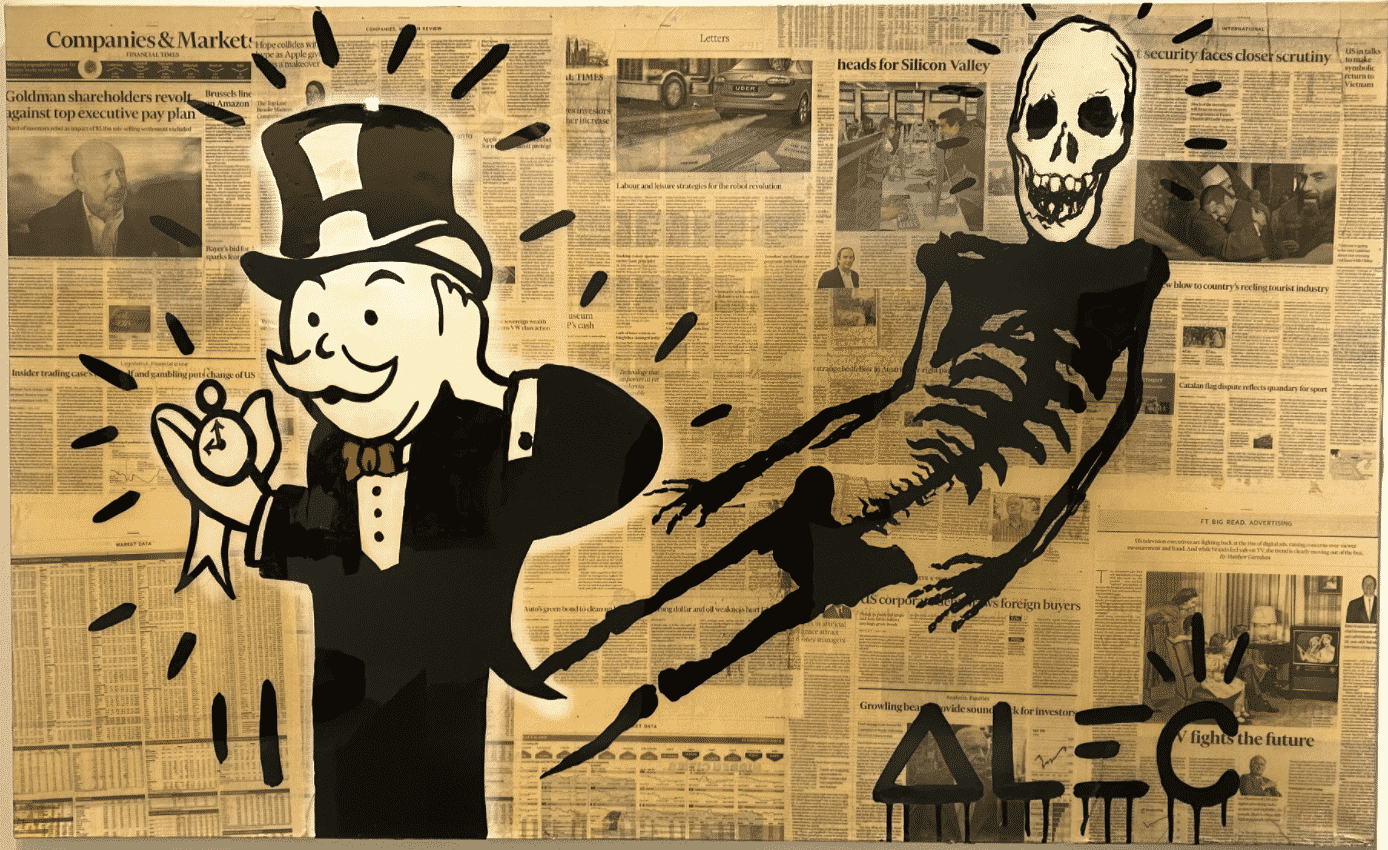
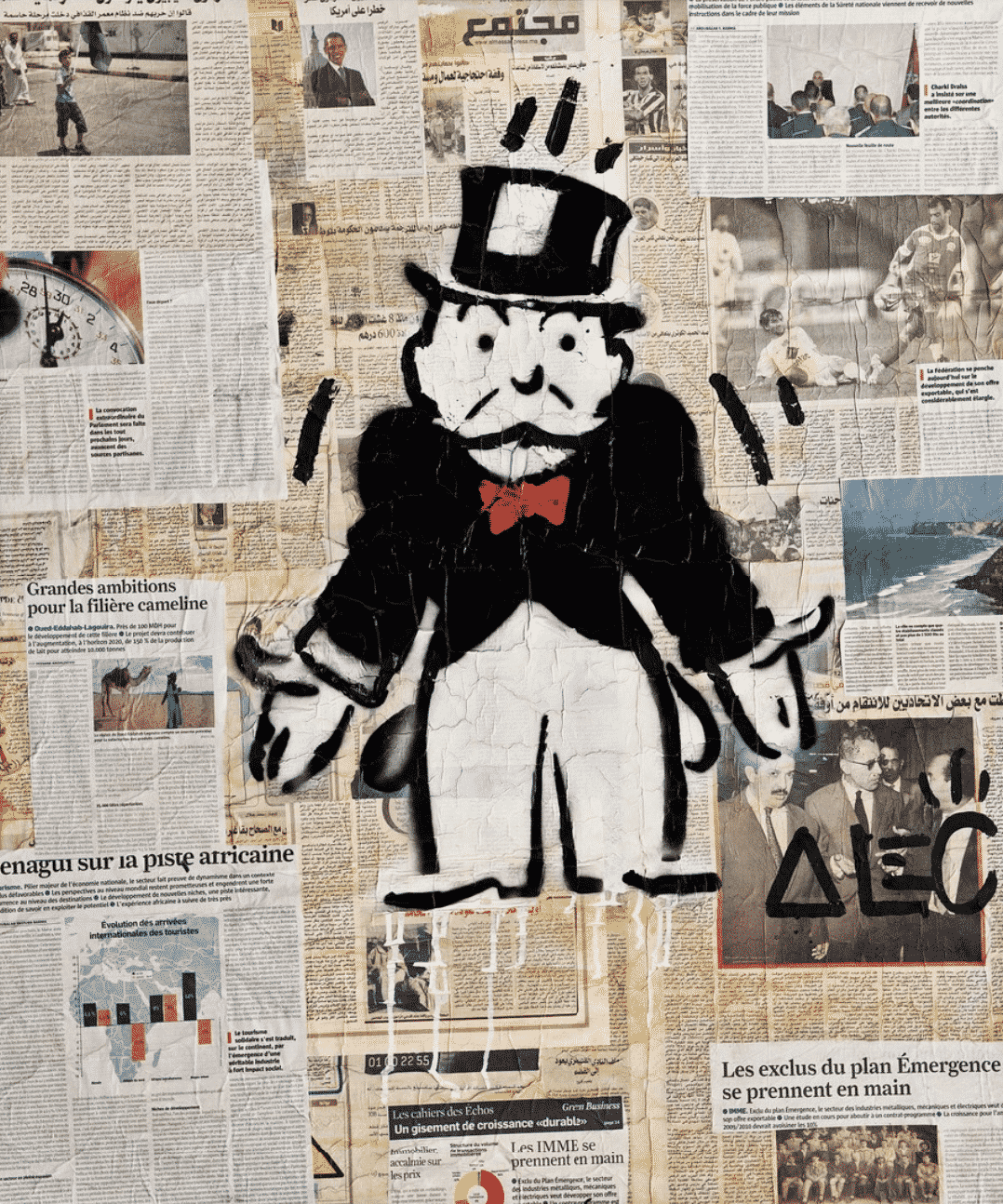
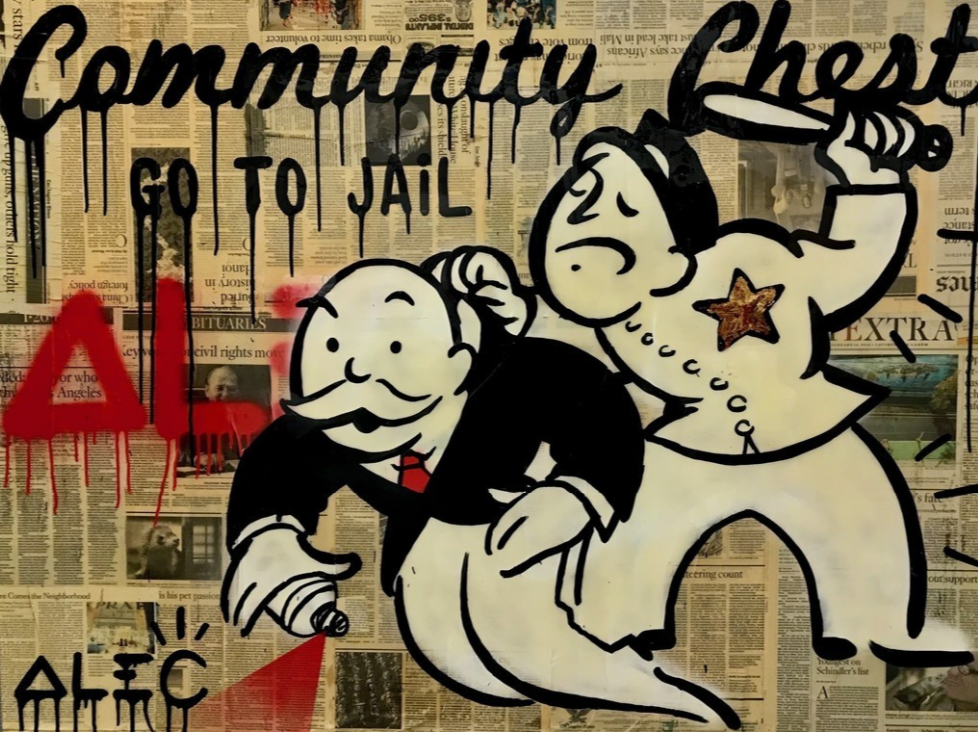
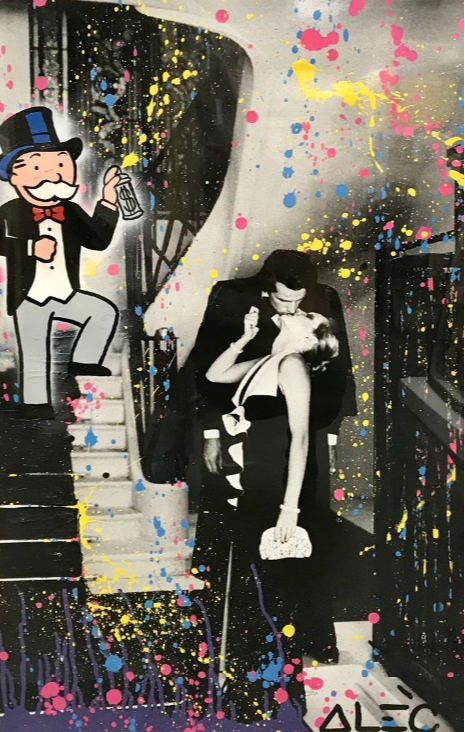
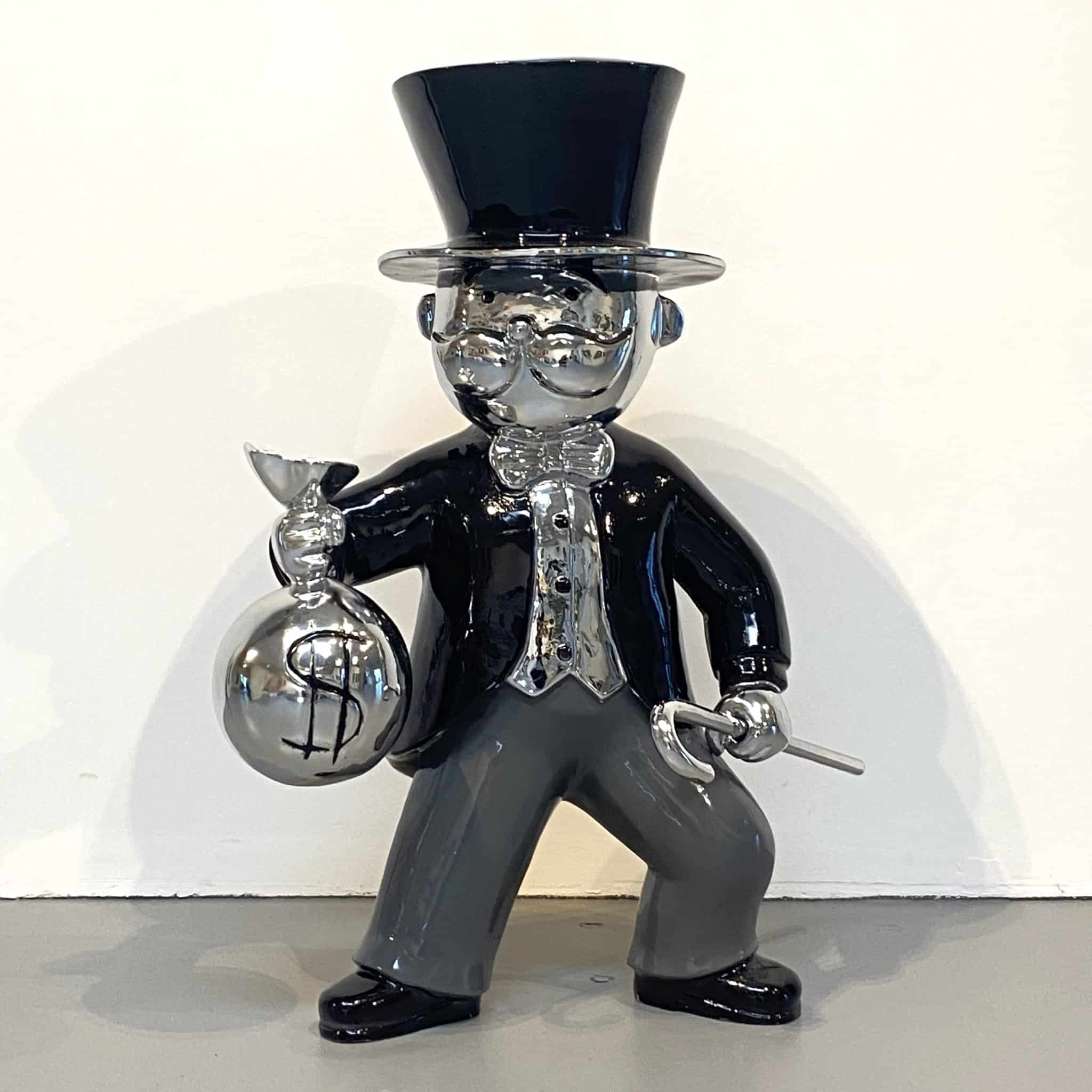
Mr. Monopoly, the top-hatted banker from the board game, anchors the whole catalog. Monopoly paints him sprinting with a moneybag, lighting a cigar, or scattering cash, and that one character signals his authorship faster than anything else does. Buyers picture him when they picture the artist, which is why the name now reads as a brand.
Wealth, Luxury, and Consumer Culture
The bright color never hides the point. He uses cartoon money to poke at capitalism, status, and the way people show off wealth. The work sells to luxury buyers and to people who mock luxury alike. His hand-painted Hermès Birkins, built on bags that retail from around $11,000 into six figures, sell to celebrities like Miley Cyrus and Khloé Kardashian.
How Series Recognition Influences Demand
Recognition quietly drives his prices. Work from a series buyers already know reaches a wider audience and resells more easily than a stray image.
Avery Andon, who runs ArtLife Gallery, starts with the same character every time. “When people picture an Alec Monopoly, they picture the top hat and the moneybag. Mr. Monopoly is the anchor, and Richie Rich and the Bearbricks come right behind him. A buyer learns those first, because that is what the market keeps coming back to.”
The Story Behind Alec Monopoly’s Signature Style
His visual signature is the thing buyers recognize before they read a label. Stencils, spray, collage, and resin add up to a look nobody mistakes for another artist.
Street Art Origins
The graffiti background shows in the finished canvases. Fast spray edges, drips, and the feel of an image put down in public, all surviving the move indoors. His public-wall energy, kept light where most street art runs grim, set him apart early.
Pop Culture Influences
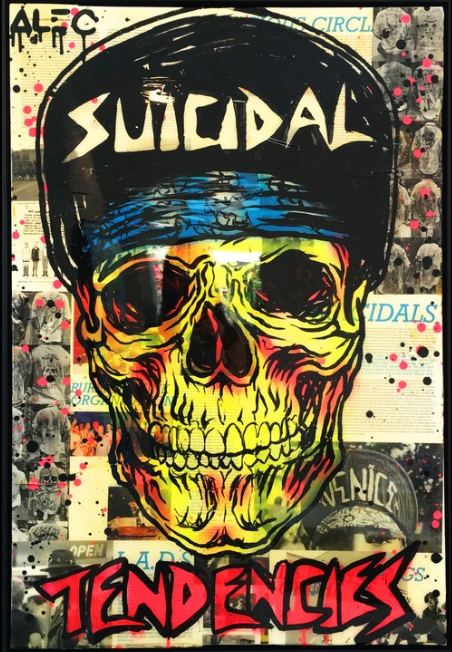
Monopoly works with imagery the public already owns, reworking known characters and logos in his own palette. The Eden Gallery catalog, run by his exclusive distributor, shows how consistently he returns to that familiar ground. The payoff is speed. The viewer catches the reference at a glance and reads his twist on it. The images travel across countries and generations on pure recognition.
Mixed Media and Graffiti Techniques
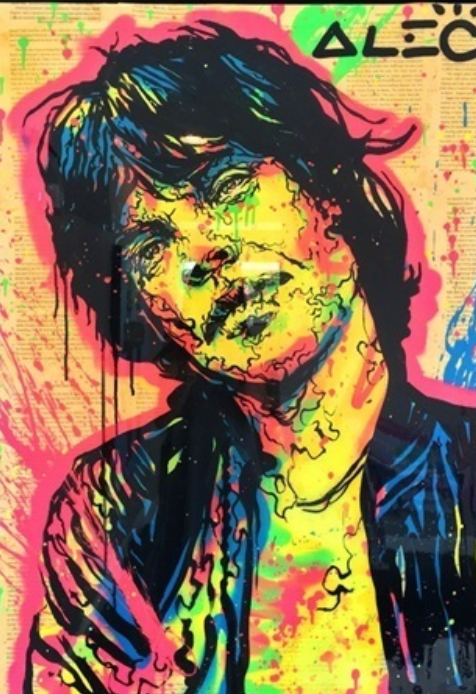
The surface carries the street training. He stacks stencils, spray, and acrylic, works in collage from newspaper and sheet music, then seals it under epoxy or a glossy resin. A flat print cannot replicate the built-up depth. The texture carries into his sculptures and objects, and it separates his unique work from his editions.
Alec Monopoly’s Signature Art Series and Themes
Alec Monopoly’s signature body of work is defined by recurring characters, most notably Mr. Monopoly, alongside themes of wealth, luxury, and pop culture. Combining street art with financial iconography, his pieces examine capitalism, celebrity, and consumer culture through bold, vibrant imagery. Each series offers a distinct perspective on modern ambition, status, and the excesses of contemporary life.
Mr. Monopoly Series
The Mr. Monopoly series is his core catalog and his best-known work. The banker drives the most demand, plain and simple. Every other series he makes just expands on this one idea.
Core Themes and Visual Elements
He puts the banker front and center, mid-action, ringed by the money symbols that define the brand. A cash bag, a giant dollar sign, gold, diamonds, drips, newsprint. The themes stay on wealth and play, consistent enough that ten of these works read at once as one series.
Most Recognizable Motifs
Top hat, monocle, mustache, moneybag, dollar-sign eyes, cigar, scattered bills. These motifs read from across a room, and they are so bound to his name that another artist cannot use them without inviting the comparison. That kind of ownership supports long-term demand.
Why Collectors Love This Series?
Buyers trust this series because it is the clearest statement of what they are buying and the easiest to resell. His auction history backs that, with the $193,500 painted Birkin of 2026 at the top and standard Monopoly Man canvases still clearing five figures. For a newcomer, nothing he makes carries less risk.
Rich List and Luxury Lifestyle Works
The Rich List works swap money symbols for the props of the good life. Supercars, private jets, champagne, and designer logos push his wealth commentary toward aspiration, and they pull buyers straight from fashion and luxury.
Supercars, Jets, and Champagne
Here the banker shares the frame with a Porsche, a yacht, a bottle of champagne, a flight somewhere expensive. His recent Flying to a Happy Place project carries the idea onto real jet parts. This series finds buyers who already live around the objects he paints.
Celebrity and Luxury Culture References
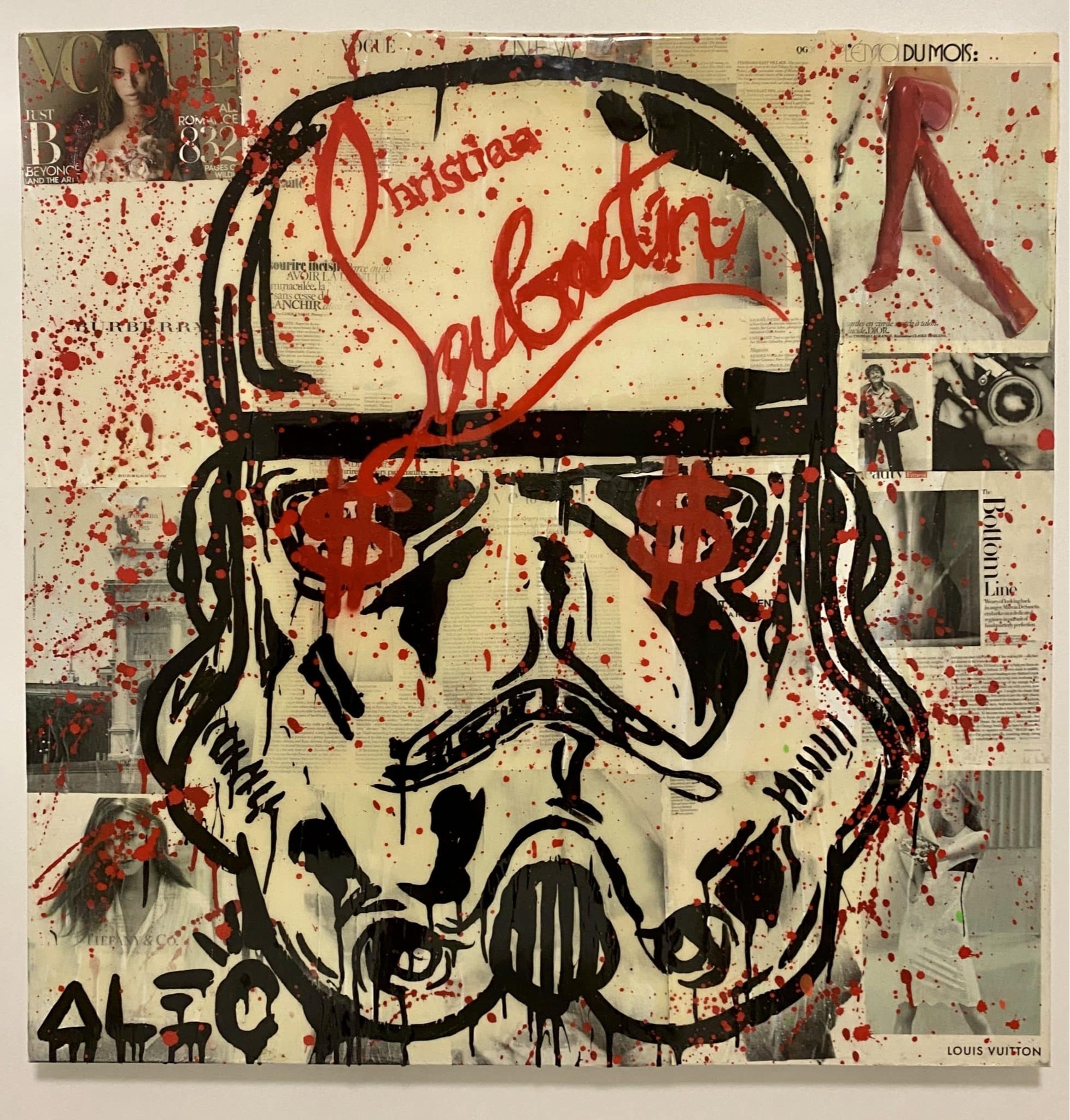
High-fashion logos fill this series, with houses like Hermès and Louis Vuitton among them. The same celebrity world buys the work and turns up inside it, giving the art a self-aware tone. The logos read as tribute and mockery at once, and the work never passes for an advertisement.
Collector Appeal
Watch, car, and fashion collectors buy this series as readily as art buyers do. For them the subject is home turf, and the crossover demand lifts prices past what gallery standing alone would explain. Resale runs smoothest when a known character meets a clear luxury reference.
Wall Street Bull Series
The Wall Street Bull series aims his money symbols straight at finance. Charging bulls, tickers, gold, and market language carry the ambition and capitalism at the center of his message. It is a staple for collectors in the trading world.
Financial Symbolism
The charging bull leads, with bears, ticker tape, gold bars, and dollar signs close behind. Markets have leaned on these symbols for a century, and he uses them knowing exactly what each one signals. A bull means confidence, a bear means fear, gold means a flight to safety, and he trusts the viewer to read them without a caption.
Market and Wealth Narratives
Each canvas tells a small story about winning, losing, and chasing money. The bull mid-charge stands for a rising market, the cracked surface for a crash, a falling figure for a wipeout. Anyone who has watched a market turn catches the moment at once, and the series keeps its grip because the cycles never stop repeating.
Notable Themes
Past the bull, the series returns to gold bars, stacked cash, and the tug between greed and ambition. Gold Bull and similar canvases sell among his stronger results, since the meaning lands in a second. The motifs stay close to his core money work, and collectors file these canvases with the rest of the catalog.
DJ Monopz Series
The DJ Monopz series sets Mr. Monopoly behind the turntables and joins music culture to his character work. It grew out of the artist’s own life in nightlife, and it hands the banker a fresh role without leaving the brand.
Music and Entertainment Influences
Monopoly DJs as well as paints, and the series comes straight out of his double life. He spins at his own gallery openings, and the banker behind the decks works as a self-portrait. Club culture supplies the props, headphones, turntables, a crowd, all in his usual bright palette.
Pop Culture Crossovers
This series reaches past the gallery crowd to music and nightlife fans. Someone who first saw the work at a festival recognizes it on sight, and the traffic runs both directions: music fans walk over to the art, and art buyers pick up a piece rooted in a scene they already love.
Distinctive Visual Elements
Turntables, headphones, sound waves, and stage lights are the giveaways of a DJ Monopz piece. The banker keeps his top hat and mustache, so the link to the core brand never breaks, even with the setting moved to the booth. One character, a brand-new stage, and none of the recognition lost along the way.
Greatest of All Time (GOAT) Series
The GOAT series points his lens at champions, the athletes and cultural figures crowned the greatest in their field. Here he trades money symbolism for tribute, and the work reaches sports and entertainment fans who might never follow an art career.
Athlete and Celebrity Tributes
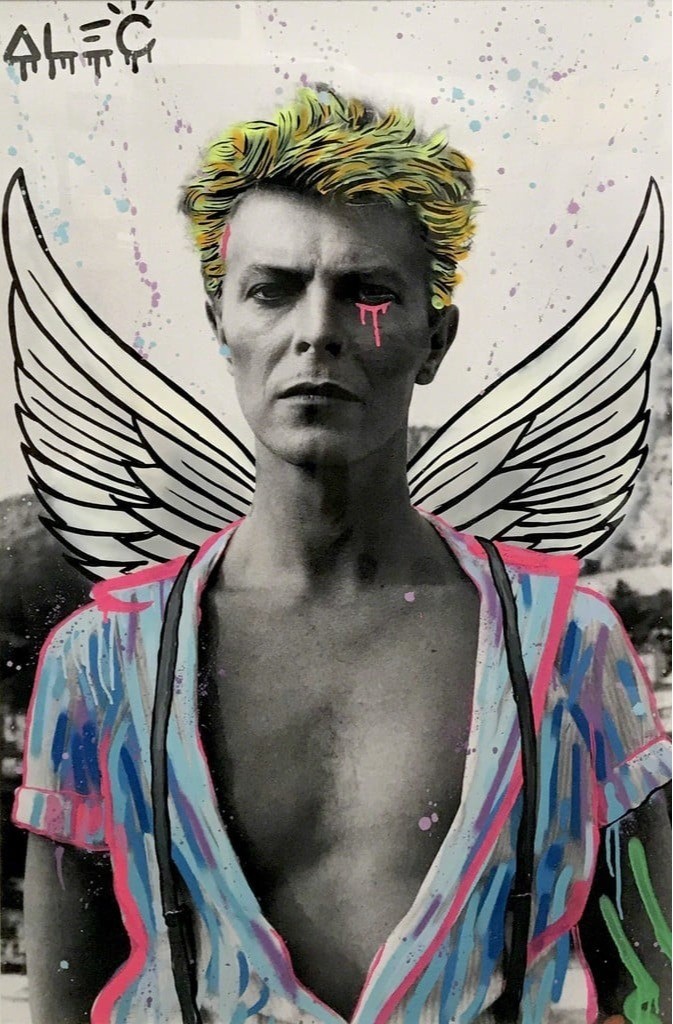
He paints these legendary figures in his usual layered, high-color style. The mood is warm and admiring, entirely different from his money-focused imagery. Fans of the athlete or the star line up beside the collectors who come for the artist.
Popular Subjects
He reaches for names everyone knows, the household champions of sport and music whose faces read instantly, on any continent. Wide fame is the whole point of the choice. It works best when the subject is unmistakable and the hand underneath is just as unmistakable.
Limited Editions and Collectibility
Most GOAT works arrive as limited runs, meaning scarcity matters just as much as the subject. Small editions featuring massive stars always create a bidding war. To see exactly how these formats control the price, check out our Alec Monopoly HPMs, originals, and prints guide.
Richie Rich Series
The Richie Rich series leans on one of pop culture’s oldest symbols of inherited money. Through the comic-strip boy, Alec Monopoly handles privilege and aspiration with his usual playful edge. Only the banker draws more demand.
The Role of Richie Rich in Alec Monopoly’s Visual Language
Richie Rich gives the artist a second face the public already knows, a wealthy boy who reads on sight as old money. The character widens the cast alongside Mr. Monopoly without watering down the brand. His presence on a canvas or a Bearbrick instantly marks the work as core vocabulary.
Themes of Inherited Wealth and Privilege
Mr. Monopoly plays the money game; Richie Rich was simply born to it. The series trades on effortless, inherited luxury. This contrast breaks up the artist’s usual aggressive focus on cash. This series brings status from a different angle and a broader visual range to a collection.
Why Richie Rich Remains a Collector Favorite?
People have grown up with Richie Rich since the comic strips, so the character sells himself. A buyer does not need the backstory explained, and the familiarity carries straight through to resale. In demand he lands just under the core Monopoly works, an easy first step for someone who wants something recognizable at a friendlier price. The character never fades.
ICONS Series
The ICONS series throws the most at you. A single canvas can hold famous faces, luxury brands, and money symbols together, more than anywhere else in his work. Collectors love it for that, the sheer amount packed into one piece.
Reimagining Pop Culture and Luxury Symbols
Famous faces and brand logos get repainted in his own colors and stacked together on one canvas. You keep spotting things the longer you look, a logo here, a face there, all under his drips. It works like a DJ sampling tracks, familiar elements rebuilt into something of his own.
Featured Characters and Cultural References
Alongside his own Mr. Monopoly and Richie Rich, the canvas fills with famous names and fashion logos from film, music, and luxury. The Jacob & Co watch shrinks the same idea down to one dial, several regulars side by side. A buyer spots someone they know, leans in, and the artwork has them.
Why Collectors Follow the Icons Series
ICONS keeps people coming back because there is always more to find, and a packed canvas looks great on a wall. The famous names help at resale too, since more buyers connect with what they see. The best examples pair the clearest references with the sharpest painting. Those are the ones that hold their value.
Bearbrick Series
A Bearbrick is a collectible toy figure. Monopoly paints one in his own style, and it becomes a small sculpture. Both art buyers and toy collectors go after them, and the series is one of his most popular.
The Influence of BE@RBRICK in Contemporary Art
Medicom Toy made the first BE@RBRICK in 2001. It is a plain bear-shaped figure, and the blank body is built to be painted on. Plenty of artists have made their own, KAWS and Karl Lagerfeld among them. Monopoly uses it the same way, as a base for his work.
How Alec Monopoly Incorporates Designer Toys
Monopoly paints the bear with dollar-sign eyes and cash, sometimes over a shiny chrome shell. It still looks like a Bearbrick, but the whole surface is his now. The finished piece is a sculpture and a toy at the same time.
The Crossover Appeal for Art and Toy Collectors
Two crowds bid on the same object, art buyers after a Monopoly sculpture and toy collectors chasing artist Bearbricks. His Money Eye$ Bearbrick, a four-foot chrome sculpture, pulls in both camps, a real edge whenever one returns to market.
Collaborative and Limited-Release Collections
Monopoly’s collaborations and limited releases move his characters onto luxury goods and capped editions. Watches, brand projects, and event-only drops reach audiences far past the gallery, and the scarcity behind them creates its own demand.
Brand Partnerships
His biggest collaboration is the Jacob & Co Astronomia, a watch limited to nine pieces and priced at $600,000, with the Monopoly Man, Scrooge McDuck, money wings, and a dollar sign hand-painted on solid gold. He also worked with TAG Heuer in 2016, putting his art on their Formula 1 and Carrera watches.
Event Exclusives
Some works only come out at a show or an opening, made for that one night or city. After the event you will not find them in the usual places. People want them precisely because they are so hard to get. The collectors who follow his calendar get first pick, and a strong backstory usually pushes the price up at the next sale.
Special Edition Releases
This part of his work covers small signed runs and one-off objects, like a custom-painted Birkin or a special watch. With so few made, they stay well apart from his regular, more decorative output. How many were made moves the price a lot, so look closely at the format and the paperwork before you buy.
Which Alec Monopoly Series Has the Highest Value for Collectors?
The Mr. Monopoly series leads on value and demand, with his financial and luxury work and his scarcest collaboration objects close behind. Value tracks recognition and scarcity together. The strongest series match a famous character with a short supply. Taste still counts alongside the numbers.
Best Series for New Collectors
First-time buyers are safest with his best-known series, the easiest to resell if taste shifts. Mr. Monopoly and Richie Rich lead there, and an entry-level print or Bearbrick from either is an honest way in. Once you decide to buy Alec Monopoly art, buy from the studio, from Eden, or from a gallery like ArtLife, so your paperwork is clean from the start.
Most Recognizable Works
A few images do most of the work for him. The Monopoly Man with his moneybag, the charging bull, and the dollar-sign Bearbrick are the ones buyers know on sight, and they hold attention longest when they come up for sale. His top auction prices go to these familiar pictures, well ahead of his one-off experiments.
Factors That Influence Demand
Demand comes down to three things. The image has to be strong, the format has to be scarce, and the work has to be widely known. When all three line up, an item sells fast and holds its price. Drop one and it takes longer to find a buyer.
Nico Hayes, Senior Director at ArtLife Gallery, puts it down to one of them. “What holds people is a character they recognize on the spot. The Monopoly Man comes first, then the finance pieces, and the collaborations spike every time one turns up. Nobody is buying it because it is a painting or a print, they are buying who is on it.”
The market backs him up. Alec Monopoly is one of the ultra-contemporary artists tracked in Artprice’s contemporary art market report, and most of his lots find buyers when they reach auction. The works built on his best-known characters clear most reliably.
“By the time a recognizable piece reaches the room, the buyers are already waiting,” Hayes adds. “The work has done the selling before the gavel goes up.”
Collecting Based on Personal Taste vs Investment
Resale is not the only reason to buy. Some collectors chase whatever moves them and treat value as a bonus; others weigh demand and scarcity first. Both approaches work, and the two often land on the same canvas. Our investment guide covers how to weigh them on a budget.
Andon gives first-time buyers the same line. “Buy the series you actually want on your wall. If it doubles as an investment, his recognizable characters are the safer ground, but a piece you love is one you will keep through a slow market.”
Frequently Asked Questions
What is Alec Monopoly’s most famous series?
The Mr. Monopoly series. It is built around the top-hatted banker from the board game, and it is the work people know him for. Most buyers start here, and most come back to it. It carries his strongest demand, and it is the easiest of his work to resell later.
Which series is most collectible?
The Mr. Monopoly works come first, with his rare collaborations and Bearbricks close behind. An item is most collectible when the character is well known and not many were made. His painted Birkins and gold watches are the rarest, so collectors compete hardest for those.
Are certain themes more valuable?
Yes. His money themes, the Monopoly Man and the Wall Street pieces, are the steadiest in value. Luxury and collaboration work can jump when an object is rare or crosses over to new buyers. The themes that stray from his usual look sell for less and move slower, because fewer people know them.
How often are new series released?
He is always working, so new pieces and collaborations come out through the year, both at his gallery and with his brand partners. Recent ones include the paintings on jet parts and his luxury watches. There is no set calendar, so the best way to keep up is to follow his shows.
What should collectors look for?
Start with a character people know, a clear format, and a small edition when there is one. An edition or canvas from one of his main series, with proper paperwork and a trusted seller, is the safest first buy. The character drives the demand, and the paperwork protects what you paid.
Add Monopoly Artworks to Your Collection
If you're considering buying Alec Monopoly, choosing the right artwork is what matters most. Get in touch with our team to explore our private inventory and find the piece that best fits your collection and investment goals.