The Complete Encyclopedia of KAWS Characters
KAWS characters
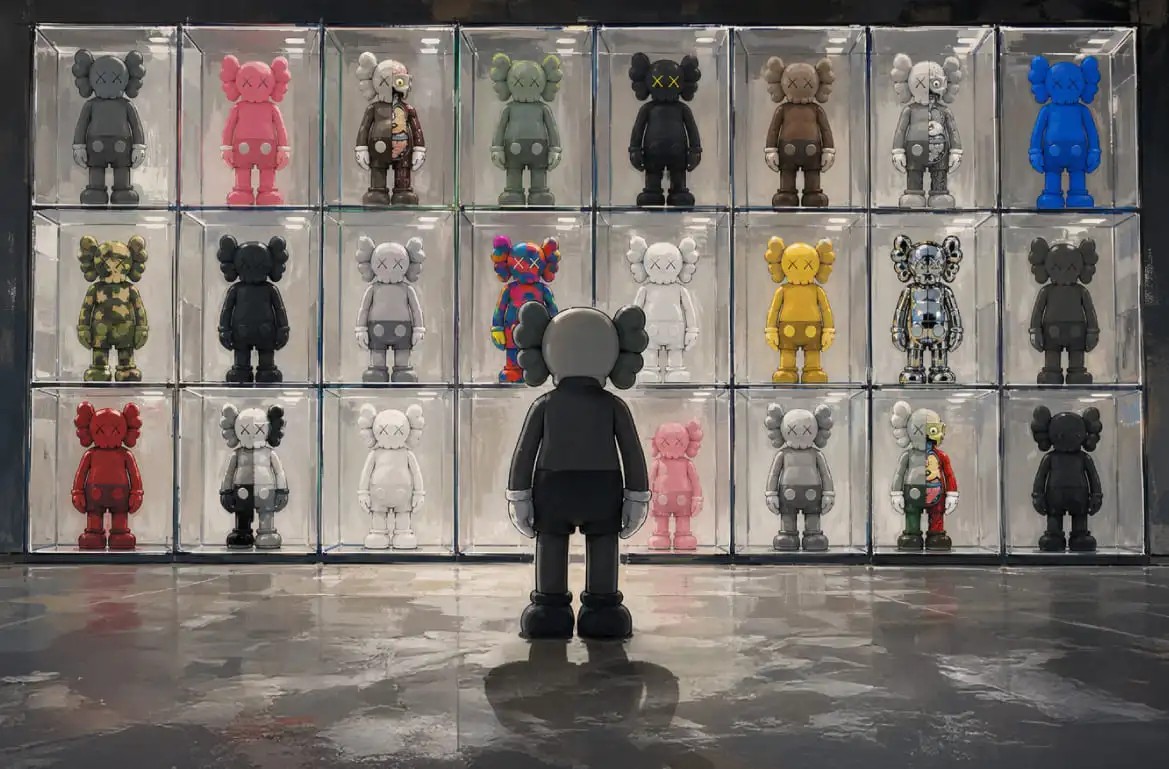
Companion, BFF, Chum, Accomplice, Bendy, and Blitz are the six original characters KAWS has created over three decades. All of them began as drawings or affordable vinyl toys. The same designs now appear in painted bronze at the San Francisco Museum of Modern Art and in a survey running through September 2026 at the Albertina Modern in Vienna. If you collect KAWS, or plan to start, knowing the full cast is essential.
Why Does Everyone Recognize KAWS Characters?
Two design choices explain the recognition. Every KAWS creation carries crossed-out X eyes and a rounded skull head with crossbone ears, so a viewer who has seen one of his designs can identify all of them. Constant repetition across toys, paintings, sculptures, and museum shows did the rest.
The Artist Behind the Characters
Brian Donnelly, born in Jersey City in 1974 and based in Brooklyn, has worked under the name KAWS since the early 1990s. His path through graffiti, advertising takeovers, and animation work is a story of its own, and we cover it in full in Why Is KAWS So Famous? For this guide, the relevant fact is his training as an illustrator. Every design he produces follows the visual logic of commercial animation. The training explains why the cast reads instantly, even at monumental scale or on a keychain.
What Makes the KAWS Universe Unique
Most artists who reach museum level keep their subject matter varied. KAWS narrowed his to a handful of recurring figures and let their poses carry the emotional work. A Companion with its hands over its eyes shows distress. A BFF held in another figure’s arms projects comfort. No caption is required. The accessibility explains why his audience includes millions of people who have never entered a gallery, and why the same designs can be street art, collectibles, and fine art without changing form.
Understanding the KAWS Character Universe
KAWS took the shared language of cartoons (round heads, gloved hands, thick simple outlines) and rebuilt it into original creations marked by X eyes and skull features. Viewers recognize the cartoon source at once and register the alterations a moment later. The tension between those two reactions runs through his entire body of work, on canvas and in vinyl.
The Meaning Behind the XX Symbol
In classic animation, crossed-out eyes signal a knocked-out or dead figure. KAWS borrowed the mark, enlarged it, and made it his signature, applying it to eyes, hands, and ears alike. The repetition means even a silhouette identifies him. KAWS has kept the meaning open in interviews, and the ambiguity works in the market’s favor. A mark with no official meaning invites personal interpretation, and personal attachment is what keeps demand alive across generations of buyers.
Cartoon Influence and Street Art Roots
Before the toys, there were altered advertisements. Through the 1990s KAWS removed posters in New York bus shelters and phone booths, painted his skull-and-crossbones motif over the models’ faces, and returned them to their frames, a practice Sotheby’s documents under the name subvertising.
The cartoon vocabulary entered his work in those same years, drawn from his own imagination and from advertising mascots the public already knew. The cast was built to live in public space first. That environment shaped their bold outlines and simple color blocking.
Fine Art and Collectible Culture in One Body of Work
The same cast exists simultaneously as museum bronzes and as vinyl multiples once bought at retail for a few hundred dollars. The Brooklyn Museum’s 2021 survey KAWS: WHAT PARTY placed collectible objects and furniture alongside paintings and monumental sculpture across more than one hundred works.
The toys belong to the artistic record, and major institutions now handle them that way. Our KAWS artist page reflects the same range, with multiples and unique works listed side by side, because serious buyers move between both formats.
Companion: The Character That Started It All
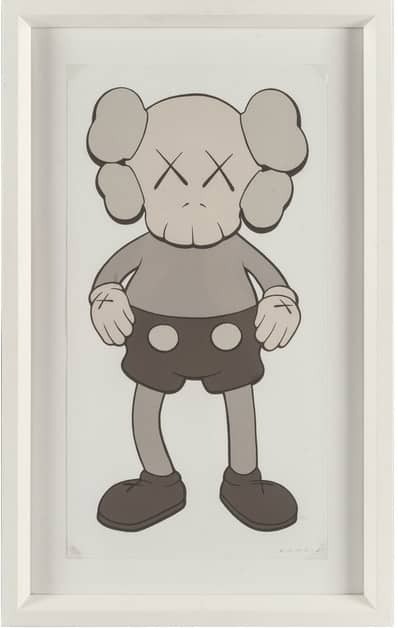
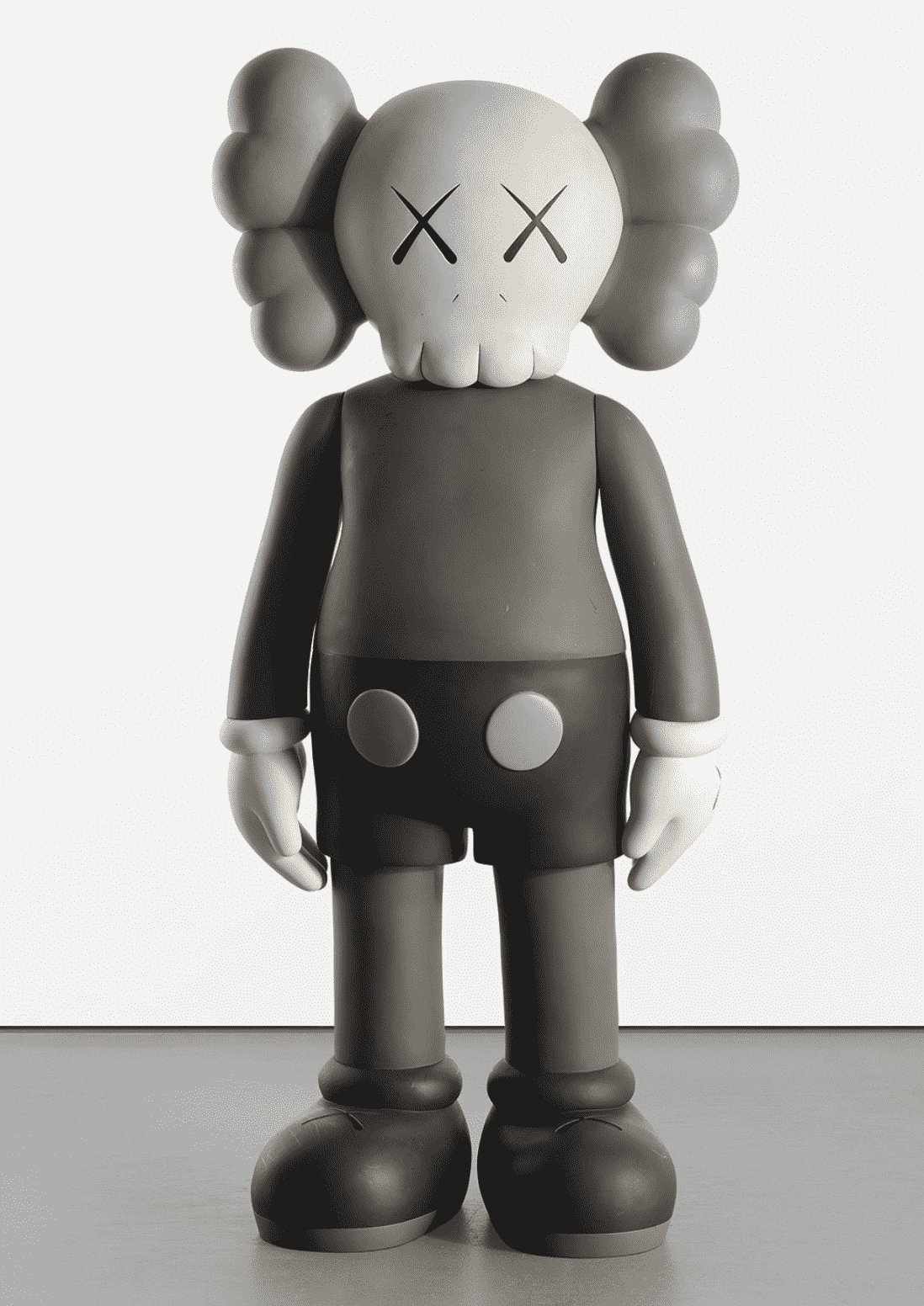
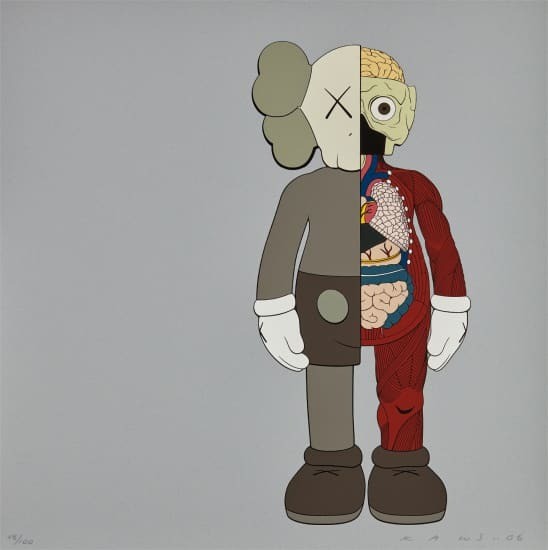
The oldest and most recognizable KAWS creation appeared in his New York street work in 1996 and became a limited vinyl toy with the Japanese brand Bounty Hunter in 1999. Its skull head, crossbone ears, and X eyes have anchored his output at every scale since, in wood, bronze, fiberglass, and paint.
The Origin of Companion
A Phillips lot essay traces the figure’s first appearance to 1996, when KAWS painted it as a graffiti tag on a Marlboro billboard. The vinyl version arrived in 1999 through Bounty Hunter, a Tokyo toy and streetwear label, and the run of 500 sold out almost at once.
Early examples measure about seven and a half inches and carry the stamp KAWS 99 on the underside, details preserved in Phillips auction records. The design borrowed the rounded body, white gloves, and shorts of Mickey Mouse and replaced the head with a skull and crossbones.
What Companion Represents
KAWS poses the figure the way a person carries emotion. Companion covers its eyes, slumps forward, lies face down, or holds its head in its hands. When a 16-foot version titled Companion (Passing Through) was installed at Philadelphia’s 30th Street Station, KAWS told CBS News: “I feel like I can kind of relate to him... It’s an overwhelming world.” The figure reflects the viewer, and loneliness and reflection are its recurring themes.
Avery Andon, ArtLife’s CEO, sees the same effect with buyers. “Companion never needed an explanation to sell, and that is unusual. Most contemporary work requires context before a buyer commits, so you spend the conversation on the artist, the movement, where the piece fits. With this figure the reaction happens first and the questions come afterward. The pose does the work. That is why demand for the character has never depended on critical attention, and why it survived thirty years of taste cycles that finished off artists who were far hotter than KAWS at the time.”
Famous Companion Releases
Three works define the range. The 1999 Bounty Hunter toy opened the entire collecting field and remains the reference point for early KAWS vinyl. Along the Way (2013), a monumental pair of Companions carved in afrormosia wood with arms draped over each other’s shoulders, belongs to the Brooklyn Museum’s permanent collection.
Companion (Passing Through), the 16-foot figure with its face buried in its hands, has toured public spaces worldwide, and the pose ranks among the best-known images in his catalog. Between those poles, dozens of vinyl colorways and dissected versions, exposing a painted anatomy on one half of the body, are where most new collectors start.
Explore Companion figures by KAWS, available for sale at ArtLife—an exceptional opportunity to acquire one of contemporary art’s most recognisable collectible icons.
BFF: The Softer Side of the KAWS Universe
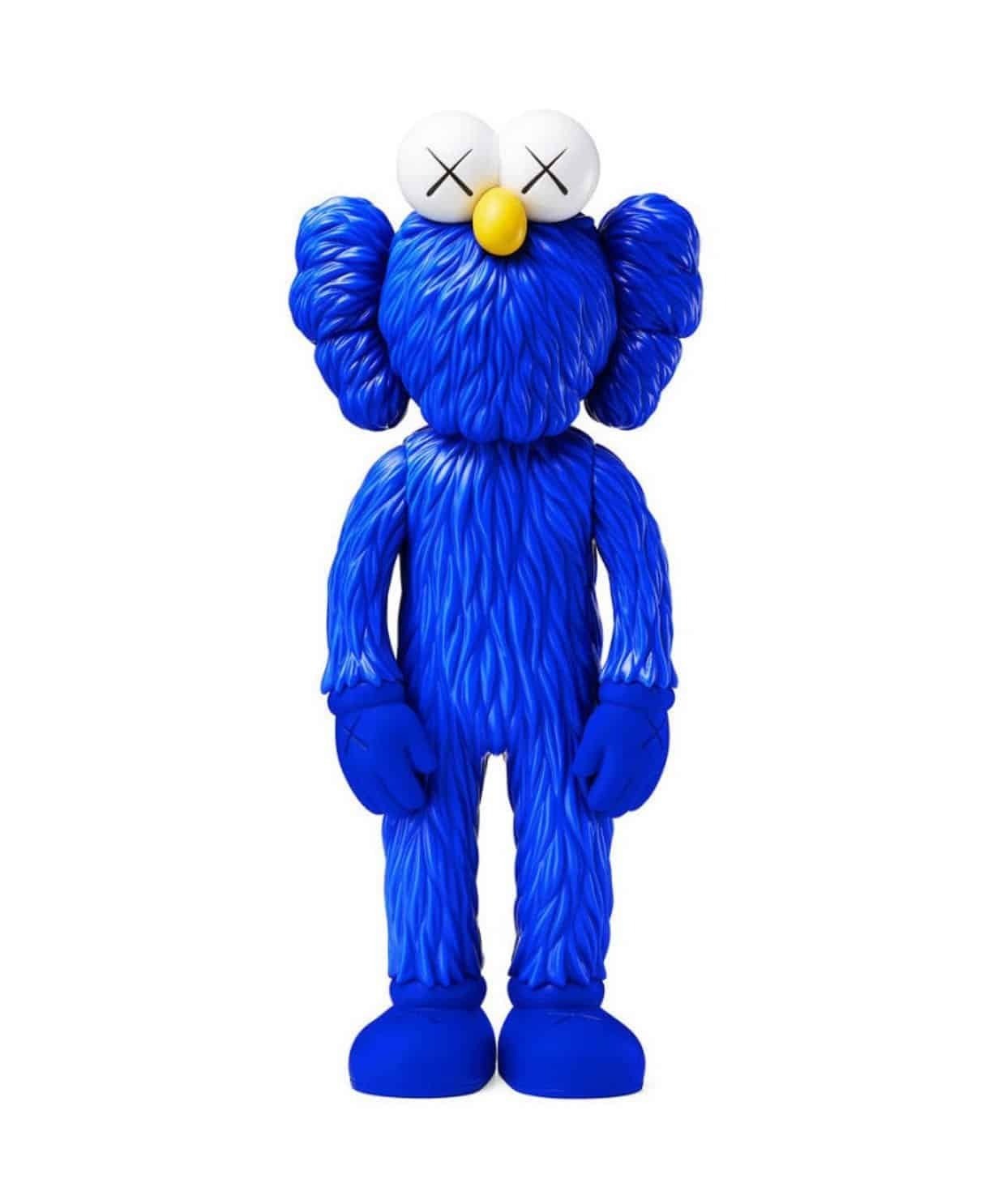
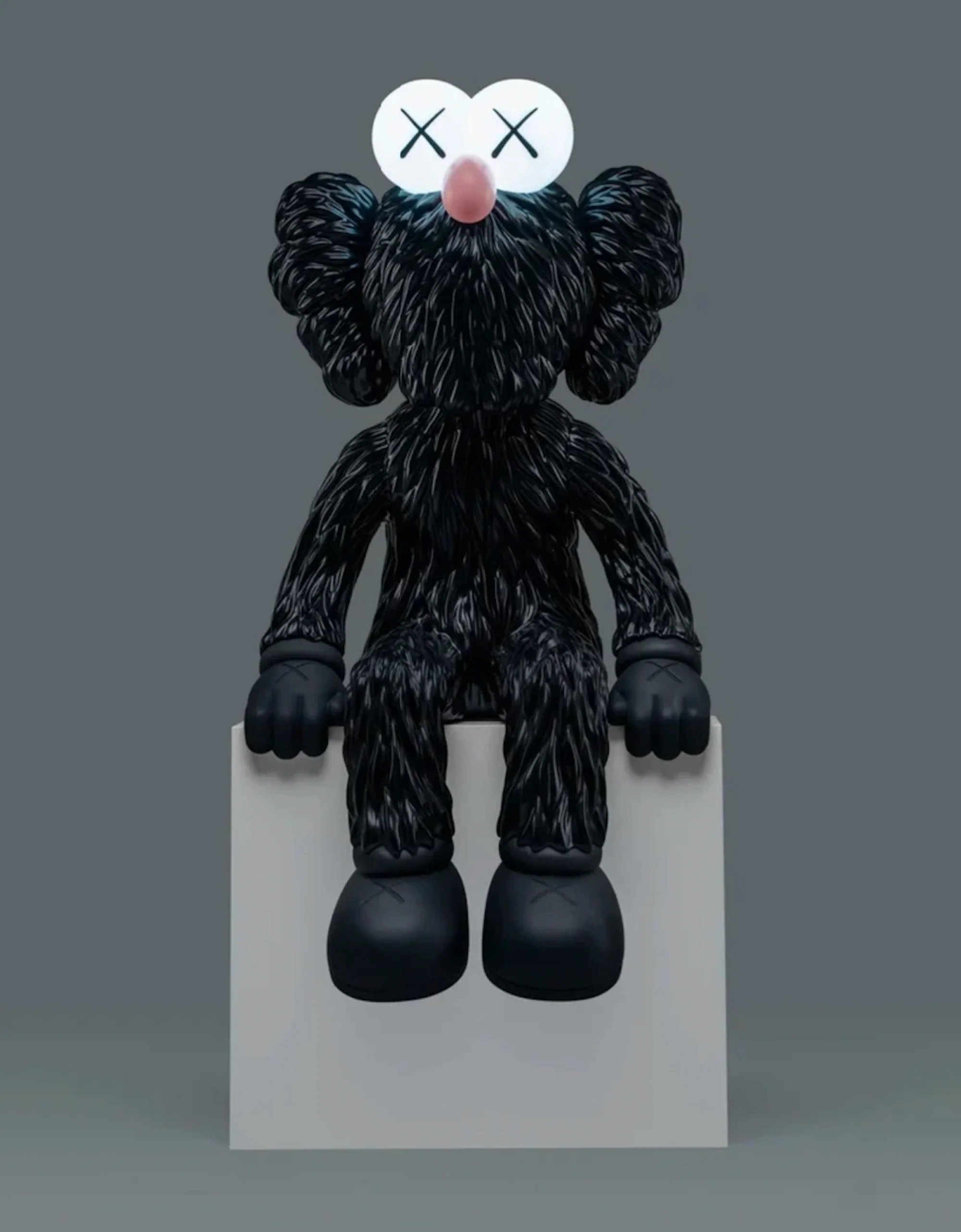
A fuzzy blue creature introduced in 2016 gave the KAWS cast its warmest member. BFF shares the X eyes and gloved hands of Companion but trades hard vinyl smoothness for fur, and its role in group compositions is emotional support. BFF plays the friend, the comfort, and the softer counterpart to Companion’s melancholy.
First Appearance and Visual Traits
KAWS debuted the design in 2016 as a bright blue public sculpture, and the Art Gallery of Ontario lists its defining features as bulging eyes atop the head, a round yellow nose, and a fully fur-covered frame. The texture was a first for an artist whose sculptures had always been smooth. Fur changed how audiences respond to the design. People want to touch BFF, photograph it, and hold the plush versions. This tactile appeal pushed the figure toward younger fans faster than any earlier creation. Blue came first, and black and pink versions followed over the next three years.
The Relationship With Companion
Group sculptures define BFF’s meaning. In SHARE, the 18-foot bronze installed at Rockefeller Center in 2021, Companion walks while cradling a small BFF in its arms. TAKE reverses the roles and puts a small Companion in BFF’s grip. GONE shows Companion carrying a limp BFF, a pairing some viewers take as rescue and others as mourning. Across all three, BFF is the figure receiving or giving care, and the friendship theme of the entire project rests on this dynamic.
Famous BFF Editions
The first blue plush arrived with the 2016 debut, a black version followed the same year, and pink came in 2019. Vinyl BFF figures in standing poses reached retail through the MoMA Design Store in 2017, and demand crashed the museum's website. Early blue plush examples with clean fur and original packaging are the reference pieces, since fur shows wear far more visibly than painted vinyl does. Condition matters more on BFF than on any other piece in the lineup.
Buy KAWS BFF figures at ArtLife and bring an instantly recognisable icon of contemporary art into your collection.
Chum: The Character Inspired by Classic Cartoons
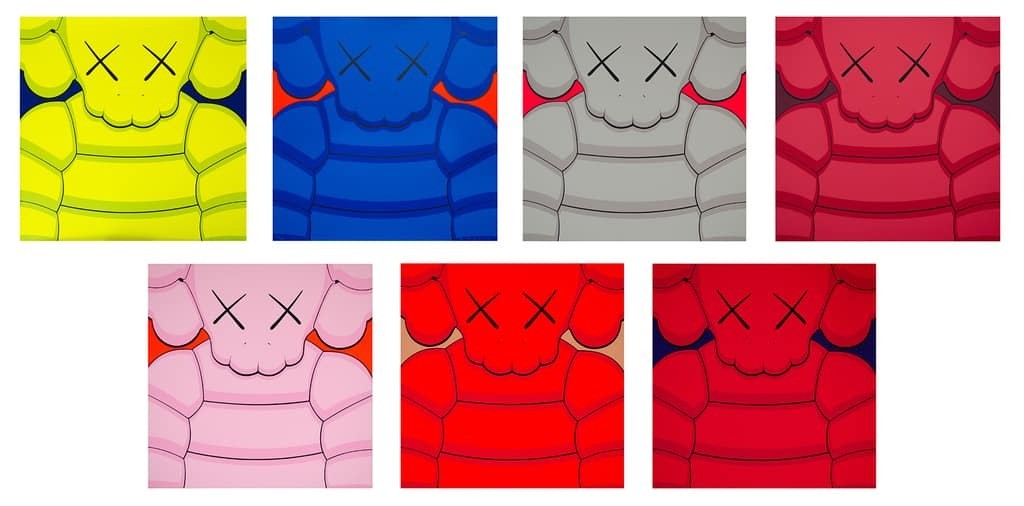
An inflated body borrowed from the Michelin Man gave KAWS a subject built for humor. Chum appeared in his street interventions at the start of the 2000s and arrived in vinyl in 2002, keeping the mascot’s stacked silhouette while adding the skull head and X eyes. Its exaggerated bulk carries a comic energy the rest of the cast rarely allows.
Design and Inspiration
Bibendum, the Michelin tire mascot drawn in the late nineteenth century, ranks among the oldest advertising icons in existence, and KAWS chose it precisely for that history. A Phillips lot essay frames the choice through curator Mónica Ramírez-Montagut, who writes that Chum “incorporates a childlike humor” conveyed through playful distortion and vibrant color. The design keeps the tire-stack torso and swaps the original grin for the standard KAWS skull. On canvas, Chum often appears mid-run or mid-gesture, with more movement than Companion ever gets.
Popular Releases and Collector Interest
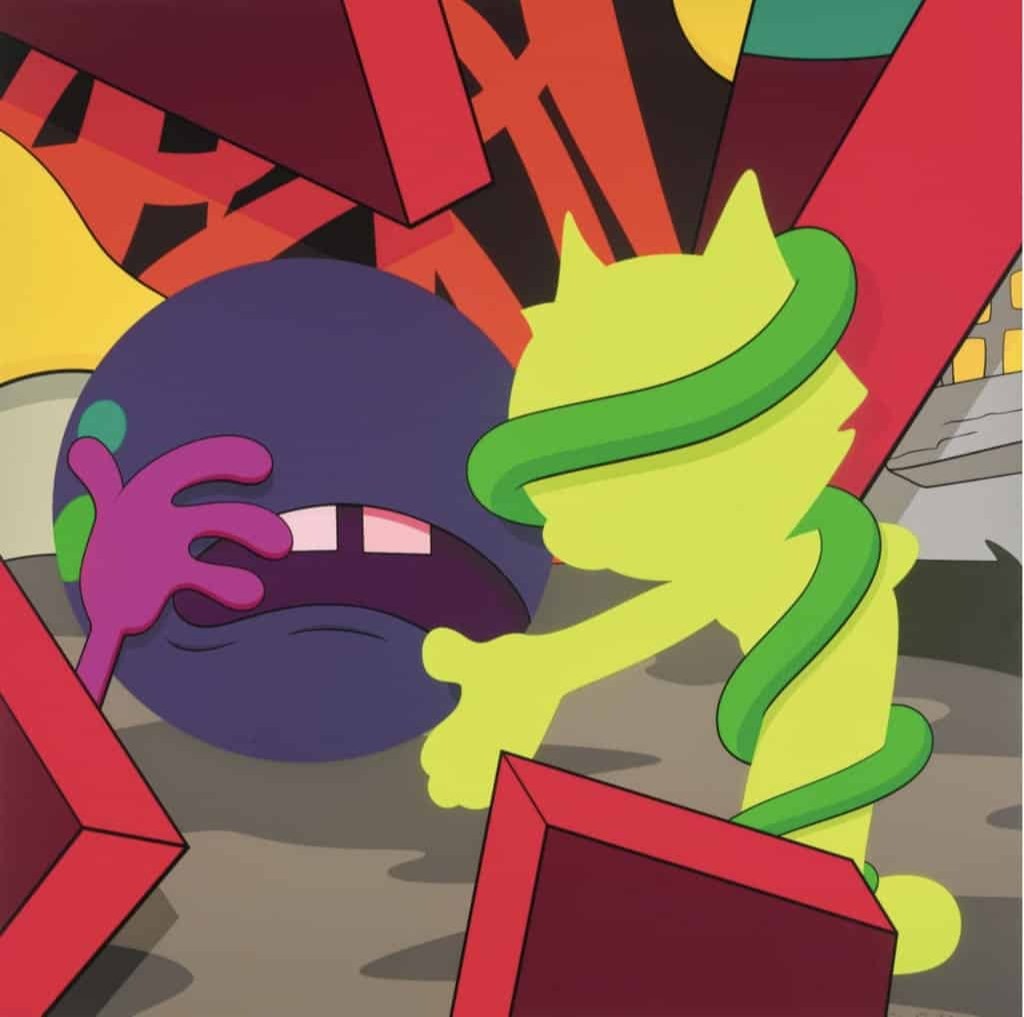
The first Chum vinyl editions appeared in 2002 in several colorways. During the pandemic, it took the central role in KAWS’s painting output. Art & Object documents URGE, a ten-panel painting made for the Brooklyn survey. The artwork repeats the figure touching its face and summed up the anxiety of 2020 without a single word on canvas. A hunched Chum figure released alongside the survey extended the design into vinyl. Early skate and sneaker projects carried the design as well, years before the luxury houses arrived, and Iconic KAWS Collaborations documents that run in full.
The Characters Many Fans Missed
Accomplice, Bendy, and Blitz complete the roster of original KAWS creations. All three entered the market as small vinyl editions between 2002 and 2004, before the artist’s museum career began. Short production runs explain why casual fans rarely encounter them and why veteran collectors put clean examples at the top of their want lists.
Nico Hayes, ArtLife’s Senior Director, sees the pattern in the gallery every week. “The mistake is assuming the whole cast behaves like Companion. That figure has been in production almost continuously for more than twenty-five years, so there is nearly always something available at some level, in some format. Accomplice, Bendy and Blitz were made once, in small runs, for an audience that barely existed yet. Supply for those three doesn’t respond to demand at all. The search takes as long as it takes and the window closes fast when a clean example does appear.”
Accomplice: The Bunny in the KAWS Family
KAWS released this design as a vinyl edition in 2002. Pink and black versions exist, and the pink tones separating head from body reveal the figure as a Companion wearing a bunny suit. The Art Gallery of Ontario notes the name itself suggests a motive and leaves open whether the character is friend, foe, or alter ego.
Market recognition came early. When Heritage Auctions staged the first stand-alone KAWS auction in 2018 with the collection of Ronnie K. Pirovino, the 2002 Accomplice carried a presale estimate of $6,000 to $8,000, among the highest figures named in the announcement.
Bendy: The Early Experimental Figure
The oldest of the secondary designs appeared in the altered posters of the late 1990s, an elongated body with the standard skull head that spiraled across the appropriated advertisements. Vinyl came in 2003, and Phillips sale records list Bendy editions from that year. Bendy never starred in a monumental public installation the way Companion and Accomplice have. That keeps it a specialist purchase, and the scarcity of the 2003 editions sustains steady demand among completists.
Blitz: The Rocket Few Collectors Have Seen
A rocket-shaped body with arms, legs, and the usual crossed-out eyes makes Blitz the strangest member of the original cast. Medicom Toy produced the vinyl editions in 2004 in several colors, and examples have appeared in auction records from Heritage sales of urban art and toy collections since 2018. Documentation on this edition is thinner than on any other, adding to the appeal.
Any true collection of the original cast needs a Blitz, and finding one still in its original packaging takes years of watching the market. The KAWS Investment Guide sets out how completist buying compares with the other routes into the artist.
Original Characters Versus Borrowed Characters
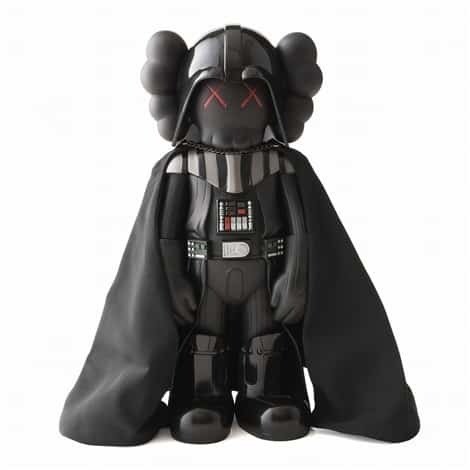
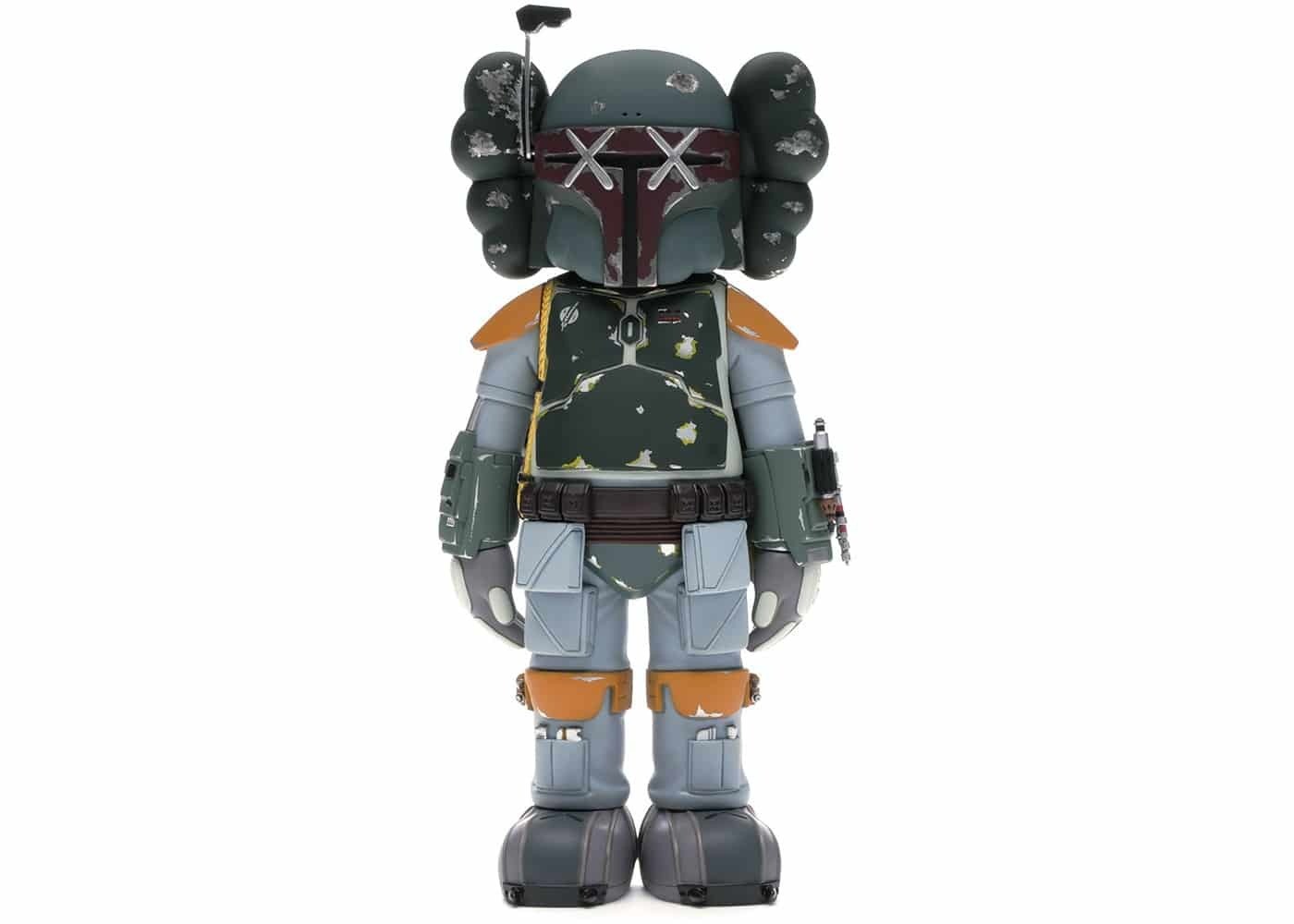
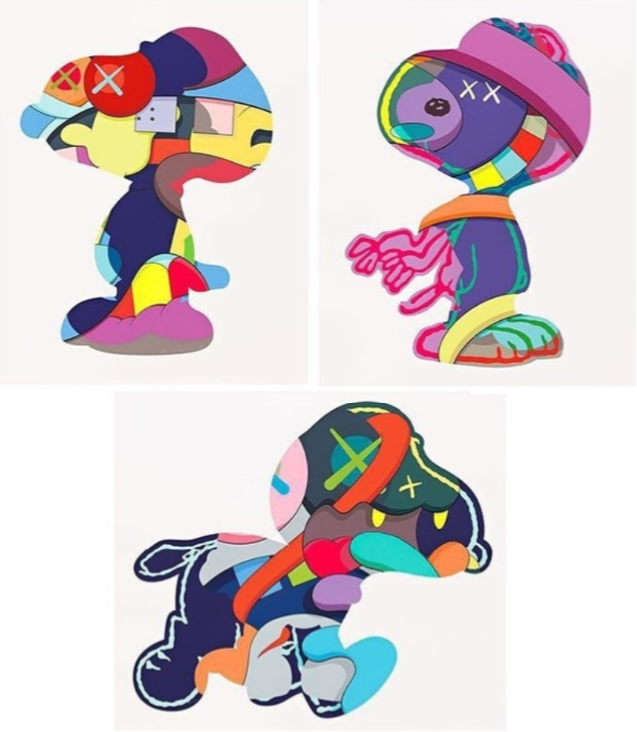
The cast splits into three groups, and the distinction matters at purchase time. Companion, Chum, BFF, Accomplice, Bendy, and Blitz are inventions of the artist. The Kimpsons, the Kurfs, KAWSBOB, and the Snoopy reinterpretations rework properties owned by studios and estates. A third group belongs to commercial projects. Zooth, sometimes miscredited as a KAWS original, is the dog mascot of the Japanese label Neighborhood, restyled by the artist for a limited 2007 release. Auction catalogs describe the three groups differently, and reading a listing correctly starts with knowing which group the object in front of you belongs to.
The Character Evolution: Three Decades in the Making
KAWS built his cast in three stages. Street experiments of the late 1990s produced Companion. Vinyl editions between 2002 and 2016 added Chum, Accomplice, Bendy, Blitz, and BFF. Since 2018, monumental public installations and museum retrospectives have carried the same figures onto rooftops, lakes, temples, and gallery floors across four continents.
| Period | Character Development |
|---|---|
| 1996 | Companion appears in New York street interventions |
| 1999 | First Companion vinyl edition, produced with Bounty Hunter in Tokyo |
| 2002 to 2004 | Accomplice, Chum, Bendy, and Blitz arrive as vinyl editions |
| 2016 | BFF debuts as a public sculpture and plush toy |
| 2018 | The KAWS HOLIDAY world tour launches |
| 2020 to 2021 | FAMILY unites the main cast and major museum retrospectives begin |
| 2025 to 2027 | SFMOMA, ALBERTINA MODERN, and the New York Botanical Garden |
KAWS HOLIDAY: The Characters on a World Tour
Monumental versions of the cast have traveled since 2018 through the touring project KAWS HOLIDAY, organized with the creative studio AllRightsReserved. The tenth stop set a record for the artist in 2023 with a pink Accomplice close to 150 feet long reclining beside Indonesia’s ninth-century Prambanan temple complex. As KAWS told Whitewall at the unveiling, “Art has the power to bring people together and inspire meaningful connections.”
The tour accelerated through 2025. Bangkok hosted the thirteenth stop in May, featuring a 59-foot Companion seated on a globe and holding the moon. In November, a 36-foot inflatable Companion landed on the roof of SFMOMA as the fourteenth stop, and the museum’s announcement put the project’s cumulative audience above 20 million people worldwide. Weeks later, a 105-foot Companion holding a glowing moon anchored the Manar Abu Dhabi light exhibition on the Mina Zayed waterfront through early January 2026.
Public exposure at this level supports the auction demand that has made character-based canvases and sculptures the artist’s top results, and we rank every major sale in How Much Is KAWS Art Worth?
How to Identify Your KAWS Figure
Shape identifies a KAWS character faster than color. Companion follows the Mickey Mouse silhouette, BFF is furry, Chum is inflated, Accomplice has long ears, Bendy twists, and Blitz is a rocket. Color varies across editions, so collectors rely on body structure, head shape, and the placement of X marks to name a design at a glance.
| Character | Key Features |
|---|---|
| Companion | Skull-and-crossbones head, X eyes, gloved hands, Mickey Mouse body |
| BFF | Fur-covered body, bulging eyes atop the head, round yellow nose |
| Chum | Inflated tire-stack torso modeled on the Michelin Man |
| Accomplice | Long bunny ears, two-tone pink or full black body, Companion head |
| Bendy | Elongated twisting body with no fixed pose |
| Blitz | Rocket-shaped body with limbs and X eyes |
Size is the one trait that identifies nothing. The same Companion exists at keychain scale and at monument scale, so buyers read proportions before dimensions. The X placement helps too, since every original design carries the mark on the eyes and usually on the hands, while borrowed figures keep more of their source anatomy.
Identification and authentication are separate steps. The table tells you which member of the cast you own, while stamps, paint quality, and provenance decide whether the example is genuine. The second question sets the price when you sell KAWS pieces through a gallery or at auction. Production stamps on the underside of the feet, consistent paint edges, and original packaging are the first three things our team checks when a work arrives for consignment.
The KAWS Figures Every Collector Should Know
Group compositions and the first edition of every character form the collector’s shortlist. FAMILY, the bronze that anchored the 2025 SFMOMA exhibition, marks the point where the cast became a single subject, and the debut vinyls of the six originals show where it began. A focused collection built on those moments covers the entire story.
Group Works That Unite the Cast
FAMILY (2021), a painted bronze over two meters tall, groups Companion, Chum, and BFF in the pose of a studio portrait. SFMOMA made it the centerpiece of the artist’s first major West Coast museum exhibition, which ran until May 2026. Medicom Toy released a vinyl version of the grouping in 2021, the same year the bronze appeared, packing four figures into a single box and giving collectors a piece where the cast actually interacts.
Milestone Releases by Character
Every serious checklist starts with the first editions, meaning the 1999 Companion, the 2002 Accomplice and Chum, the 2003 Bendy, the 2004 Blitz, and the 2016 BFF plush. Sourcing all six in clean condition takes years, and complete sets rarely surface for sale together.
The Buy KAWS selection on our artist page lists vetted examples currently in inventory, updated as pieces arrive and sell.
Avery Andon keeps the advice simple for first-time buyers. “Start with the character that made you stop scrolling. There’s a version of it at almost every price, and you’ll never regret owning the thing you actually love.”
How Cartoon Characters Became Contemporary Art Icons
Museum adoption completed the cast’s move into contemporary art. Between 2021 and 2027, six major institutions across the United States, Canada, and Europe have mounted or announced full exhibitions built around the cast. The audiences those shows draw extend far past traditional collecting circles. Recognition that began on the street now runs through the largest public art programs anywhere.
The Museum Circuit, 2021 to 2027
The current cycle opened with the Brooklyn survey in 2021 and continued at the Art Gallery of Ontario in 2023, where the FAMILY exhibition originated before traveling to Arkansas and San Francisco. In Vienna, Albertina Modern shows his sculptures beside Basquiat, Haring, and Peter Saul in Art & Comix through September 27, 2026.
The largest commitment is still ahead. The New York Botanical Garden has scheduled a takeover of its 250 acres between May 22 and October 24, 2027, with more than two dozen sculptures, some newly commissioned, in what the institution calls the largest-scale presentation of his art to date.
A Global Audience Beyond the Art World
Attendance at these venues includes school groups, families, and travelers with no auction history, and the toys mean anyone can take a piece home at retail. Younger buyers arrive through social channels and streetwear, then graduate to editions and prints as budgets grow.
FAQ
What is the most famous KAWS character?
Companion. It is the only cast member produced in wood, bronze, fiberglass, inflatable, and painted vinyl, and the only one present in every decade of KAWS’s output since the 1990s. When another character appears in a group sculpture, Companion is almost always standing beside it.
How many KAWS characters are there?
There is no official list. KAWS has never published one, so collectors rely on community consensus. The accepted core is six original creations, while the wider universe adds the borrowed cast and one-off designs made for specific projects. Depending on where you draw the line, the total lands anywhere between six and several dozen.
What do the X eyes mean in KAWS art?
The X is a trademark. It makes a design readable as a KAWS piece from down the street or inside a thumbnail, and it transfers to hands, ears, and noses without losing recognition. Even if the artist keeps the true meaning a secret, the mark alone carries the brand across every format he produces.
Which KAWS character should beginners know first?
Learn Companion, then BFF and Chum, in that order. The three appear together in FAMILY and in the bulk of group compositions. Recognizing them covers nearly everything a new buyer will encounter at fairs, museums, and listings. Save Accomplice, Bendy, and Blitz for the stage when edition details start to matter, because the secondary cast rewards research.
Ready to Add KAWS Vinyl Figures to Your Collection?
Success in this market hinges on insight and access. ArtLife delivers both. We source investment-grade prints and blue-chip canvases that build real portfolio value. Contact ArtLife today to access our private inventory and acquire your next asset.