KAWS Investment & Collecting Guide for Beginners and Experienced Collectors
KAWS Investment & Collecting Guide
A $300 print and a million-dollar canvas can wear the same pair of X-ed eyes. KAWS ranks 24th worldwide by auction turnover, and the people bidding on his work arrive out of street culture, design, and fine art at once. This guide covers what the work costs in 2026, what gains value, and where the traps hide.
Who Is KAWS and Why Are Collectors Paying Attention?
KAWS is Brian Donnelly, born in 1974 and working out of Brooklyn. His pieces trade at every price level, on toy shelves and in evening sales alike, and museums on three continents hold his work. The crossed-out eyes made his name. The deep resale trade behind them is what secures his blue-chip status.
Donnelly built the audience before the art career. Twenty years of toys, prints, and brand projects taught millions of people to spot his characters instantly, and a slice of those fans grew into buyers with real budgets. The whole story of how a graffiti writer ended up on museum walls is told in why KAWS is so famous.
The demand has an unusual shape, and investors should note it. Bids come in from art collectors, sneakerheads, design buyers, and a strong Asian base all at once. When one group goes quiet, another usually keeps paddling. Sales volume holds up even in slow years.
Is KAWS Still a Good Investment in 2026?
KAWS in 2026 rewards one kind of buyer and punishes another. Entry and mid-level pieces keep changing hands in volume, while top prices came down after 2019 and stayed down. Bargain hunters now get terms unseen in five years. Owners of trophy pieces are waiting out the cycle. Your horizon decides which side you are on.
The Current Market
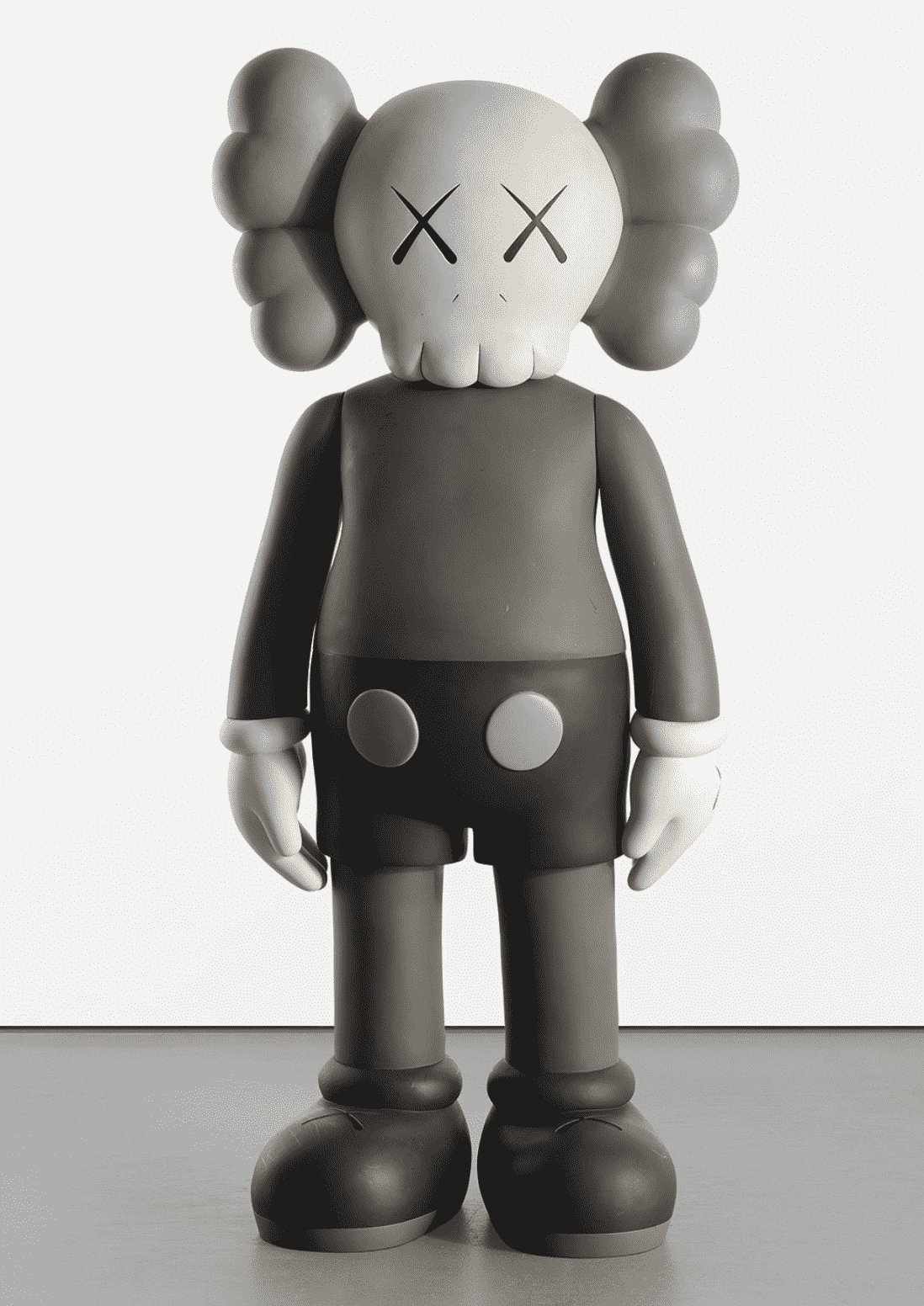
Artprice’s 2025 Contemporary Art Market Report describes his results as settling at more measured levels since the peak, with major works struggling to regain old prices. The clearest case in the report is Ohhh… (2013), a monumental sculpture hammered at $371,500 at SBI Art Auction in Tokyo in May 2025. A comparable piece brought $1.5 million at Phillips New York in 2019. Same class of object, a quarter of the price, six years apart.
Why Collectors Keep Buying
Museums explain most of it. Anyone watching the auction charts sees decline; anyone watching institutions sees SFMOMA running a full survey through May 2026, Vienna’s Albertina Modern up next, and the New York Botanical Garden preparing a massive 250-acre takeover for 2027. Institutional calendars get booked years ahead, and they show where curators expect his legacy to remain long after this cycle ends.
Avery Andon, CEO of ArtLife Gallery, explains the reality of this reset: “After 2019 the speculators walked, and prices came back to earth. What was left is the collector base that actually cares about the work. Honestly, that is when I like buying. A reset market with real museum momentum behind it beats a frenzy every time, because in a frenzy you are just paying for other people’s excitement.”
Investment Outlook
Nobody can promise appreciation, and this guide will not. The data supports something narrower. Sales volume stays among the highest of any working artist, entry prices run below 2019, and institutional recognition keeps compounding. Patient buyers of scarce pieces like those conditions. Anyone hoping to resell a mass edition at a profit next year gets nothing from them.
Why Has KAWS Become One of the World’s Most Collectible Artists?
Donnelly solved a problem most artists never touch. His catalog works at every budget without cheapening at the top. A student spends $300 on a print, a design buyer spends $15,000 on an edition, a fund buys a canvas, and all three own the same unmistakable visual language from the same hand.
Career and Museum Recognition
The path ran through Jersey City graffiti and Japanese toy culture before the museums arrived, and every stage widened the pool of collectors who wanted a piece. The institutional side keeps growing. KAWS: Art & Comix at the Albertina Modern in Vienna, open April through September 2026, hangs his characters beside Lichtenstein, Basquiat, and Haring. A museum placing an artist in a lineage anchors long-term value far beyond a single auction record.
Scarcity Where It Counts
Supply stays under his control. Editions are capped, canvases are few, and output slowed after 2019. Mass-market products carry the brand to millions while the collectible tier stays tight, and each side feeds the other. Wide recognition plus narrow supply is the oldest formula in art dealing, and nobody alive runs it better.
Demand Across Generations and Borders
His audience never ages out. Early fans who found the work in 2005 skate shops now bid against a new wave of collectors drawn in by a museum show or a video game. The geography runs just as wide, with Tokyo, Seoul, Hong Kong, New York, and London all active. A trade with that many doors rarely goes quiet through all of them at once.
How Has the KAWS Market Performed?
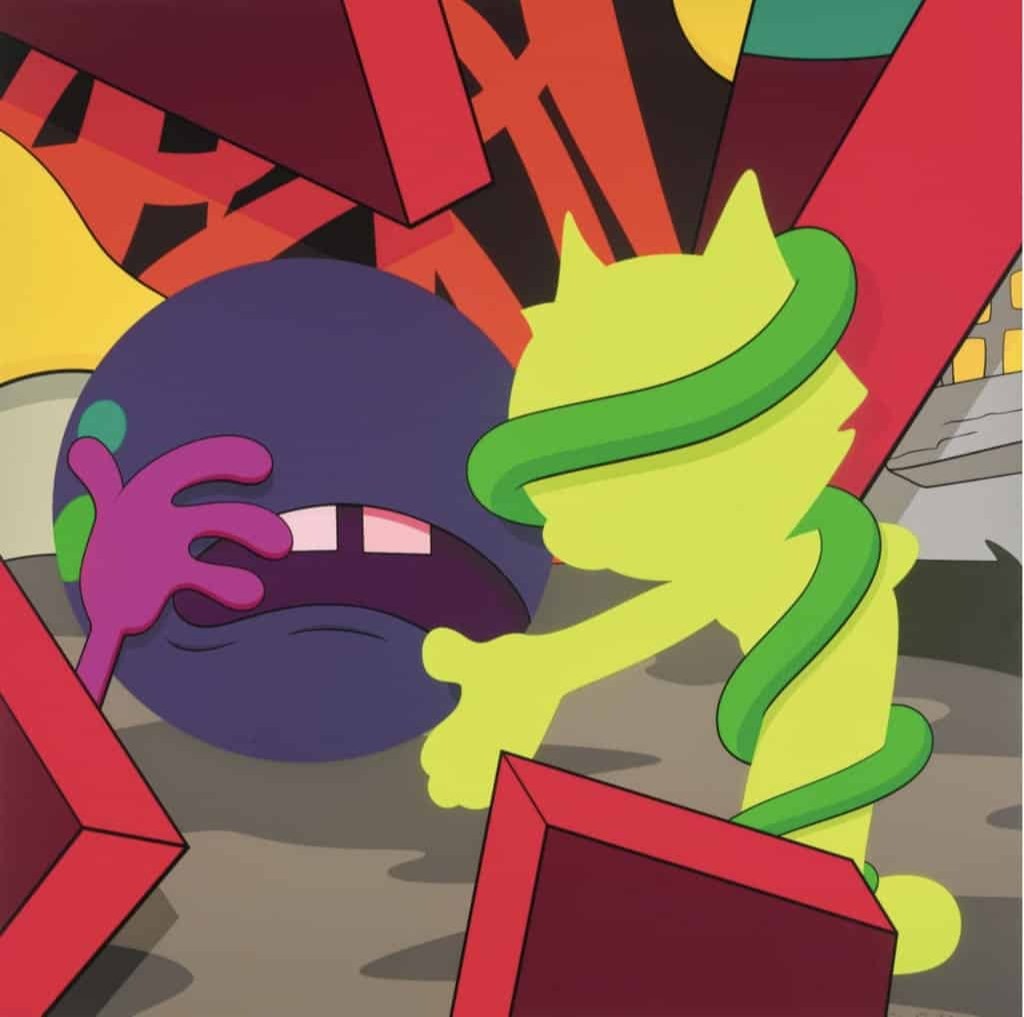
The auction record breaks into a long climb, a 2019 explosion, and a correction still finding its floor. Peak results concentrated in 2019, led by the $14.7 million sale of THE KAWS ALBUM, and the years since have paid selective buyers instead of momentum chasers. Volume never left. The froth did.
Our breakdown of how much KAWS art is worth ranks every record sale and explains each price, so the play-by-play lives there. If you are buying for profit, the rule is straightforward: every top result involves a unique painting or major sculpture, most sold at the peak, and nothing from the edition tier appears anywhere near them.
The correction changed behavior. Auction houses now set deliberately low estimates on his lots to pull bidders in. A defensive tactic Artprice documents in its 2025 report. Owners who paid peak prices are holding instead of realizing losses. Meanwhile, patient bidders are landing sculpture-class pieces at 2017 numbers.
What Types of KAWS Works Make the Best Investments?
Unique pieces appreciate hardest and cost the most, while editions trade constantly and suit smaller budgets. Drawings and editioned sculpture fill the middle with the best balance of growth and liquidity. The table below is the map. Nothing under $1,000 grows meaningfully, and nothing above $100,000 sells fast when you need out.
| Type | Typical Price | Liquidity | Growth Potential | Risk |
|---|---|---|---|---|
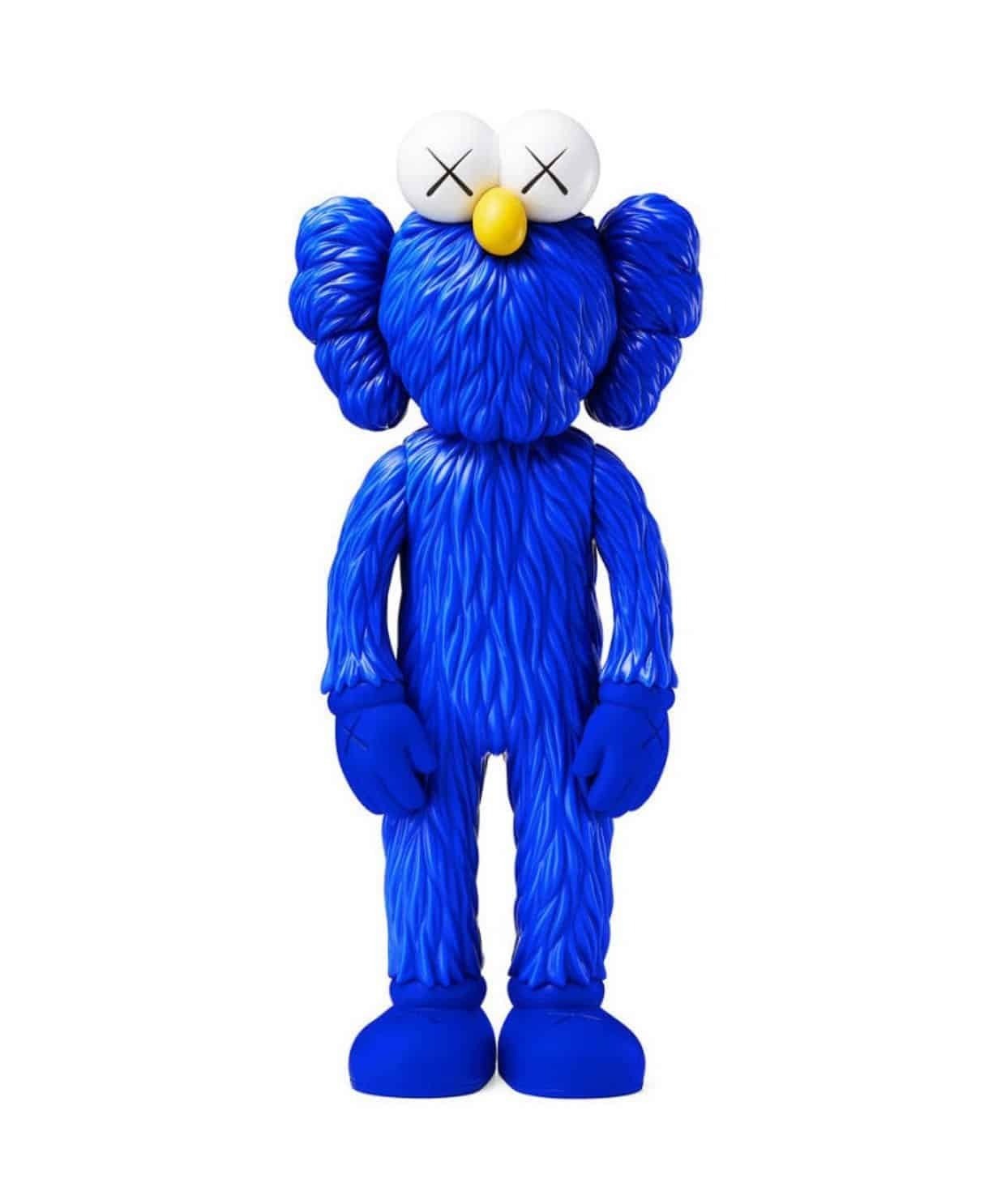
| Open-edition vinyl | $200–$2,000 | Very high | Minimal | Low cost, low reward |
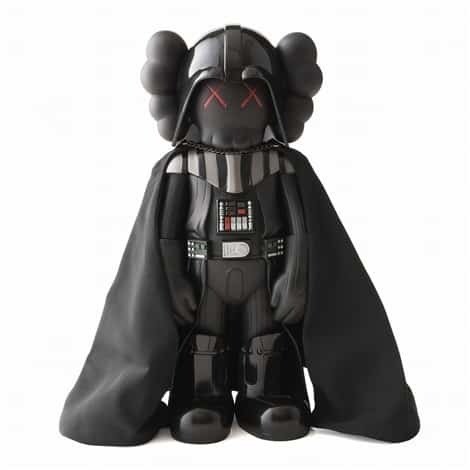
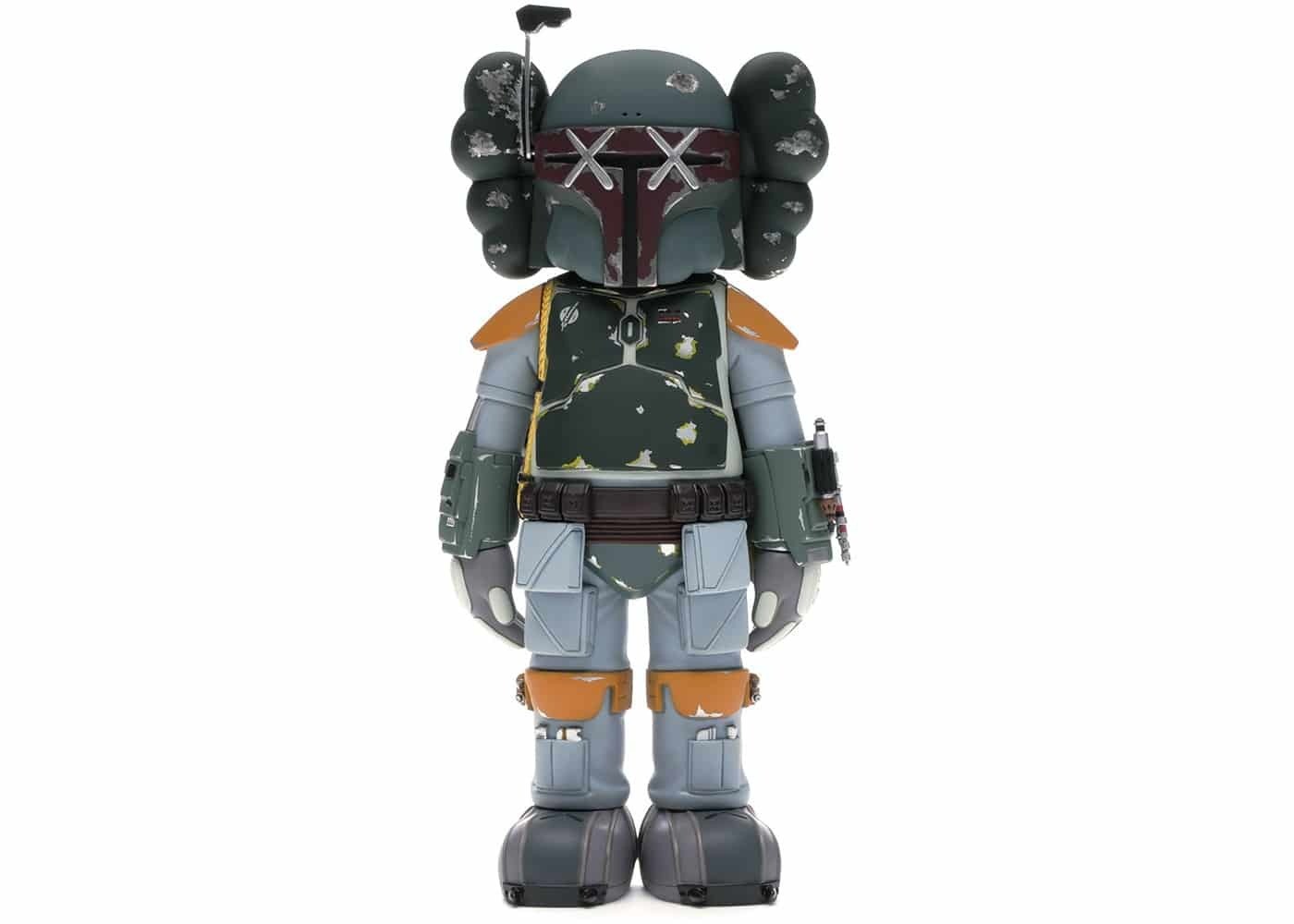
| Limited figures | $2,000–$30,000 | High | Moderate | Condition-sensitive |
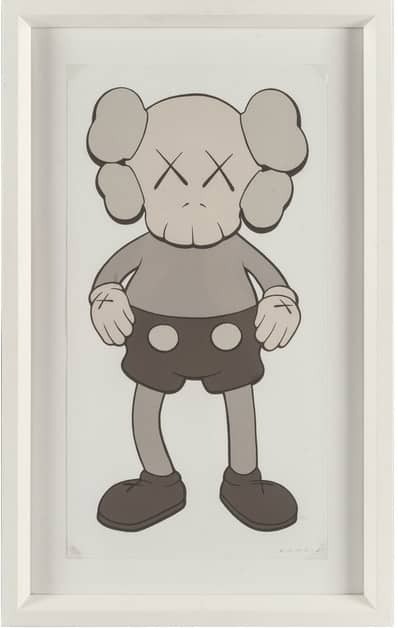
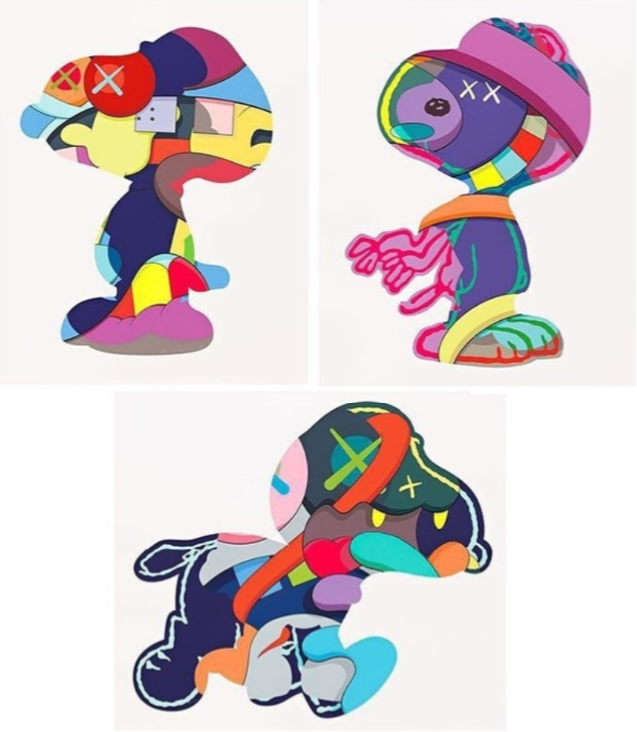
| Prints (editions) | $1,500–$60,000 | High | Moderate to strong | Fakes concentrate here |
| Drawings | $20,000–$150,000 | Moderate | Strong | Fewer comparables |
| Sculptures (editioned) | $50,000–$500,000 | Moderate | Strong | Correction hit hardest |
| Unique paintings | $100,000+ | Low | Highest | Long holds required |
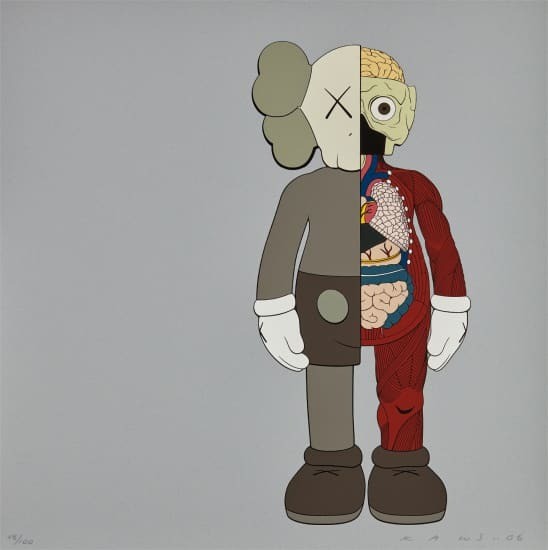
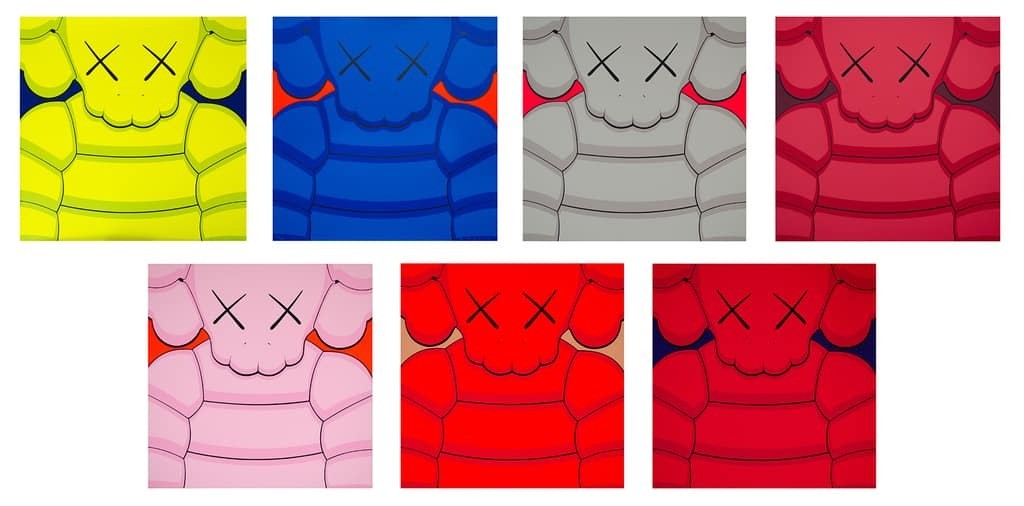
Within the edition tier, money favors early, small, and complete. First portfolios, low numbers, and full sets in original packaging outsell loose equivalents every time. The KAWS artist page shows what ArtLife currently holds across these tiers.
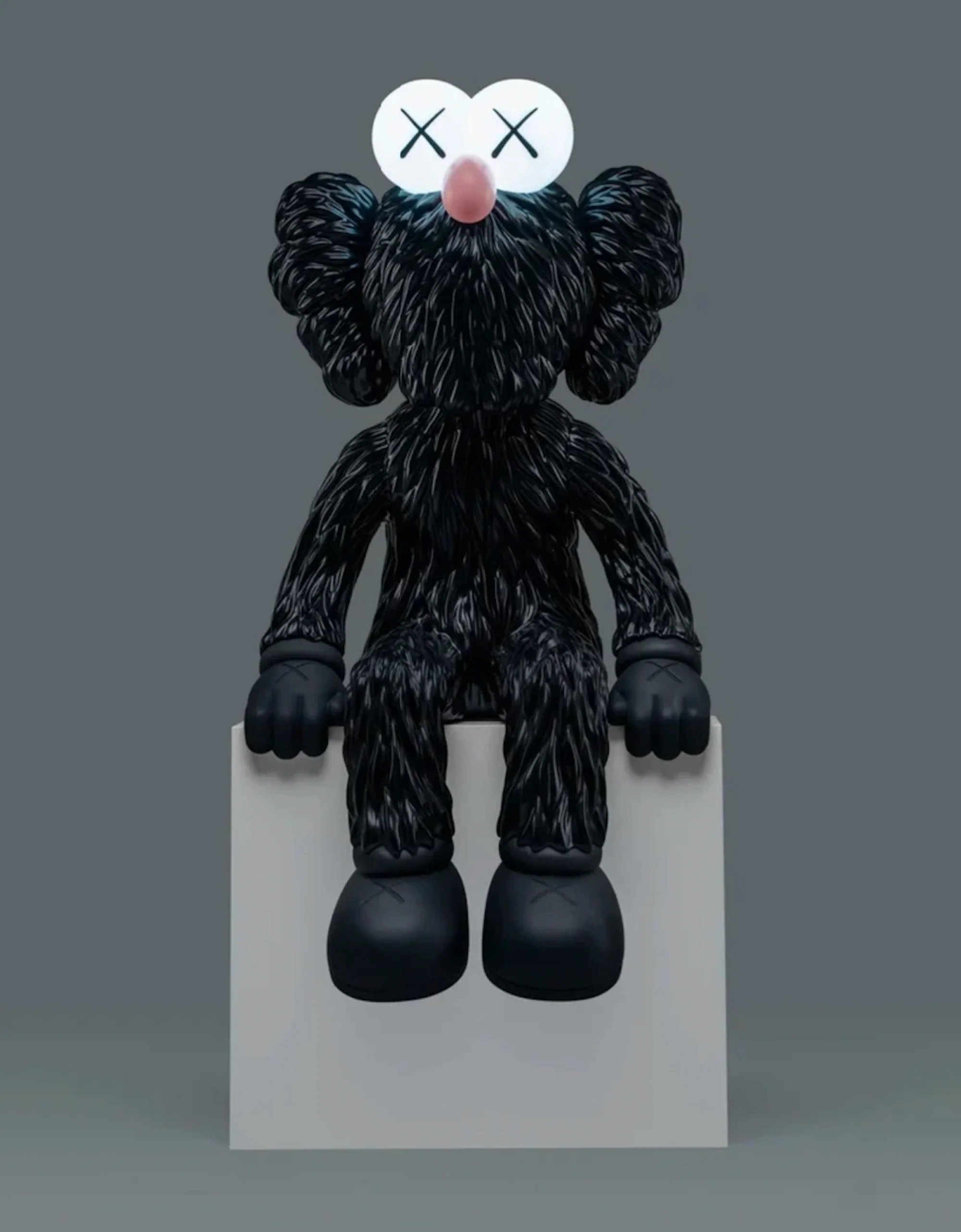
Companion pieces earn a note of their own. The character anchors the whole catalog, and anything built around that figure carries a premium over similar work starring lesser-known faces. Two editions of identical size and retail price are entirely different bets when only one of them wears the top hat of his cast.
Best KAWS Artworks to Invest in 2026
Scarce editions tied to career milestones beat the broader catalog. The strongest categories this year are sealed figures out of the OriginalFake era, print sets from his first decade of editioning, and editioned sculpture bought below its 2019 comparables. One pattern runs through all three, fixed supply meeting demand that never left.
His earliest collectibles were produced in tiny numbers for a Japanese audience, and attrition removes examples every year. Early portfolios rarely surface complete, and single sheets trade at a discount to the full set, which quietly pays anyone who reassembles one.
The correction created the third category. Editioned sculpture lost the most ground since 2019, which leaves the class with the strongest museum validation trading furthest below its peak. Buying quality in an unloved class is how art collectors have always made money, and his catalog offers the clearest version of it right now.
How Much Money Do You Need to Invest in KAWS?
Real positions start around $2,000, and serious ones around $15,000. Below that, you are buying for pleasure - a valid approach, but an entirely different game. Artprice’s 2025 data shows lots under $5,000 made up 85% of contemporary sales while producing just 8% of the value, and his market follows this exact curve.
- Under $5,000: Open editions, small vinyl, and single prints from larger runs. High liquidity, minimal upside. This is the right budget for learning how the secondary market behaves and making cheap mistakes early.
- $5,000 to $15,000: Limited figures with paperwork and mid-tier prints. Scarcity turns real at this level. Condition and completeness dictate everything; the value between a pristine sealed example and an unboxed one can swing by 50%.
- $15,000 to $50,000: Strong prints, early collectibles, and entry-level drawings. This bracket offers the best ratio of upside to liquidity in his entire catalog. Most pieces that doubled over the past decade started here.
- Above $50,000: Editioned sculptures and, past $100,000, unique works. The ceiling is highest here, and so is the overhead: holding periods, insurance, transaction costs, and the financial penalty for picking the wrong piece.
What Risks Should Investors Know?
Counterfeits, illiquidity, and the price cycle are the primary sources of capital risk. Fakes cluster in prints and small collectibles, the exact entry point for most new buyers. Trophy pieces can take a year to sell at fair value. And 2019 proved his prices can halve, so anyone modeling only the climb is reading half the chart.
Authentication in the KAWS market follows a distinct set of rules. Editioned toys ship without signatures or certificates, making original packaging, receipts, and provenance the true proof of authenticity. Prints carry signatures and numbering, which is exactly why forgers prefer them.
Nico Hayes, Senior Director at ArtLife Gallery, sees it constantly. “When something comes to us with a question mark over it, almost always it is because someone bought fast and cheap and never kept the paper. The frustrating thing is that the object can be perfectly genuine. Without a clear chain of ownership, though, a serious buyer either walks away or offers far less, and that gap comes straight out of what the seller was owed.”
Condition risk compounds quietly. Vinyl yellows, resin chips, paper tones, and none of it reverses. Two identical figures can land a full tier apart on condition alone. Climate-controlled storage, insurance, and keeping items factory-sealed protect a position far better than attempting to time the market. When the time comes to sell KAWS, that care is what the valuation reflects.
What Drives KAWS Prices?
Donnelly caps his editions and cut his output after 2019, so there is less of his work to buy every year. Museums keep pushing him in front of new audiences at the same time, which sends more buyers after that shrinking supply. Those two forces shape the long-term direction. Collector confidence swings prices day to day, and the economy has the final say on it all, because art competes for the same money as every other investment.
Auction records work like advertising. A high price for a canvas brings new bidders into the lower tiers, and that lifts prints with no direct connection to the painting. Sotheby's notes that he repeats his imagery so the work reads clearly to everyone, and salerooms pay for exactly that clarity. The more recognizable the image, the harder people bid.
Exhibitions affect prices slowly. A museum survey announced now shapes what sells, and at what estimate, over the next two seasons, and his schedule through 2027 is the busiest of his career. Newly commissioned works will appear alongside pieces that have never traveled to North America in the largest-scale presentation of KAWS’s work at NYBG. Collectors who follow museum news tend to move about six months before the ones who only watch auction results.
How Does KAWS Compare With Other Blue-Chip Contemporary Artists?
KAWS sells in far greater volume than the names above him. Koons, Banksy, and Hirst all post higher yearly turnover, but KAWS moves close to a thousand lots a year, and almost none of the others come near that number lower down the price ladder. The cost of that volume is a lower top. Since the correction, his strongest results stay well under theirs.
| Artist | Auction Turnover 2024/25 | Lots Sold | Best Result | Entry Point |
|---|---|---|---|---|
| Jeff Koons | $32.6M | 221 | $9.9M | High |
| Banksy | $21.2M | 540 | $5.4M | Moderate |
| Damien Hirst | $20.4M | 948 | $2.2M | Low |
| KAWS | $9.6M | 993 | 996K | Low |
| Takashi Murakami | $8.4M | 1,242 | $1.2M | Low |
Turnover and lot figures come out of Artprice’s Top 500 ranking for June 2025. Kusama would rank near the top of a blue-chip list as well, carried by heavy Asian demand and a tightly controlled print supply, but Artprice files her outside its contemporary bracket by birth year, so she falls off this particular table on a technicality.
Hirst, Murakami, and KAWS all chase the lower and mid price ranges, and KAWS pulls the youngest crowd of the three. Koons and Banksy work the opposite end, fewer sales at much higher prices. Where KAWS has no real rival is range. Nobody else on the list sells toys, prints, sculpture, and paintings all at once, all in volume.
Where Should You Buy KAWS?
Established galleries first, major auction houses second, for most people. Galleries price transparently, stand behind authenticity, and hand over documented provenance with the sale. Auctions offer wider selection and occasional bargains, priced in fees and competition. Everything else, marketplaces and private sellers included, trades convenience against risk at every step.
The primary market barely exists for individuals. New releases sell through lotteries and gallery relationships, and allocation goes to institutions and long-standing clients. In practice nearly every collection gets built on the secondary market, which makes the choice of counterparty the biggest risk decision after the choice of artwork.
Auctions leave the homework up to you. You have to dig into condition reports, question the paperwork, and know exactly when to stop bidding. If you miss a detail, you own the mistake. Collectors who buy KAWS through ArtLife receive works with the authenticity and provenance already verified.
Expert Tips for Building a KAWS Collection
Strong collections rely on methodical acquisition and long-term holding periods. Securing top-tier works, preserving full provenance, and exercising patience are mandatory steps for a profitable exit.
- Concentrate your budget: One scarce work will outperform the same money spread across five average ones. Quality earns a premium that quantity never reaches.
- Own across formats: A print and a figure behave differently over a decade. Holding both evens out your risk while keeping your standards high.
- Keep everything: Receipts, emails, condition photos, storage records. All of it adds real value on the day you sell, and it costs you nothing today.
- Insure it and store it properly: Climate control matters for vinyl and paper. Sunlight, humidity, and heat cause damage that restorers can rarely undo.
- Plan for five to ten years: His cycles run long, and transaction costs eat anything shorter. Patience is the strategy his sales history actually rewards.
- Talk to an accountant before you sell: Art sales are taxable almost everywhere, and collectibles sometimes carry their own rates.
- Sell when the attention is there: A museum opening or a new collaboration brings buyers out and lifts prices with them.
- Exit the way you entered: The gallery or auction house that vetted your purchase is the one that can defend its value to the next buyer.
Frequently Asked Questions
Is KAWS a good investment?
His work has rewarded collectors who bought with judgment. The scarce material, early figures with documentation and limited prints in strong condition, has appreciated steadily across two decades. Open editions and damaged pieces have not. The difference lies in what you buy, and how well you can prove its history.
Why is KAWS expensive?
Because the good material is genuinely hard to find. He limits what he produces, and four separate audiences want the same small pool of it. Art collectors bid against fashion people, designers, and sneaker culture. Competition between groups that rarely overlap is what pushes numbers upward.
Will KAWS prices increase?
Anyone who answers that with confidence is selling something. Prices have already fallen from the 2019 highs, which removes some downside. The museum schedule ahead looks strong. Against that, premium contemporary art has stayed weak everywhere. The evidence supports cautious optimism and nothing firmer.
Which KAWS prints perform best?
The ones tied to moments that mattered in his career. Complete portfolios beat loose sheets, low numbers beat high ones, and clean untrimmed margins add more value than most people expect. Anything screen-printed during his first decade of editioning attracts the steadiest demand.
Should beginners buy prints?
They are the sensible starting point. A print teaches you condition grading, edition sizes, and how paperwork works, and it does so for a few thousand dollars instead of fifty. Save your budget until you can afford one properly signed example.
How do I authenticate KAWS?
You trace it. Toys arrive with no certificate, so the box, the receipt, and each previous owner form the proof. Prints carry signatures and numbering that specialists compare against verified examples. Galleries and major houses complete this work before anything is offered.
How long should I hold KAWS?
Long enough for the cycle to turn, which historically means five years minimum. Buying and selling costs run to roughly a quarter of the value once fees stack up, and short holds rarely clear that hurdle. His slowest stretches have lasted three or four years.
What affects KAWS prices?
Scarcity above everything, then the state of the object, then who owned it before. Subject matters for unique work, since his best-known figures command more than obscure ones. Interest rates and general wealth set the ceiling, because discretionary spending funds every art purchase eventually.
Can KAWS outperform stocks?
Individual works have beaten the index across certain decades, though the comparison flatters art. Shares cost nothing to store, pay dividends, and sell in seconds. A sculpture does none of that. Sensible portfolios keep art small and count enjoyment as part of what they earn.
What is the rarest KAWS artwork?
Commissioned paintings made for one person, of which very few exist. Below those come the Japanese collectibles from the early 2000s, made in tiny quantities and thinned by twenty years of accidents. Assembling a complete early portfolio now takes years of patient hunting.
Ready to Add KAWS Art to Your Collection?
Looking to acquire a KAWS? ArtLife Gallery provides curated access to investment-grade canvases, prints, sculptures, and vinyl figures. Connect with our specialists to explore available works.