
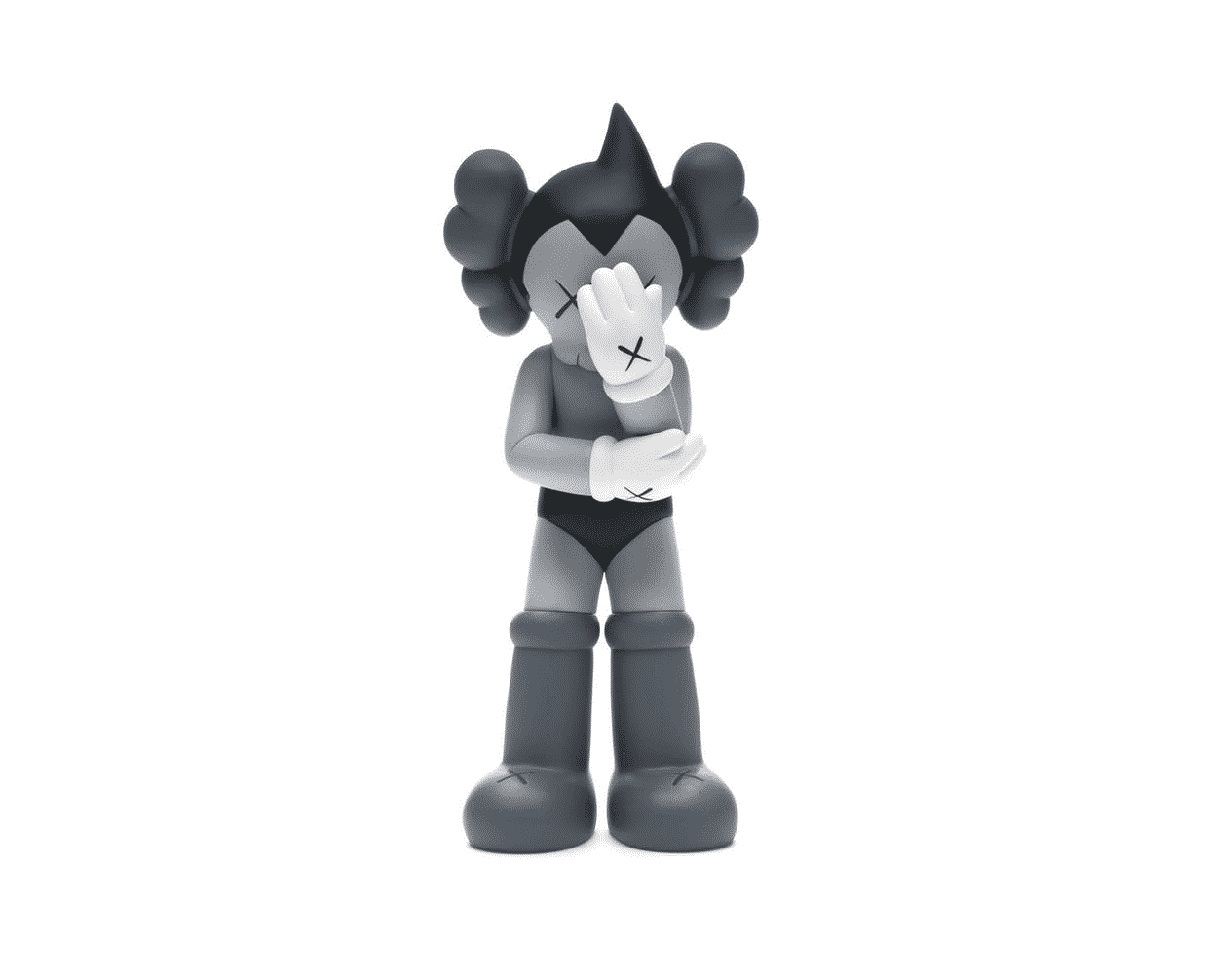
Astro Boy (Grey)
by KAWS
Year: 2013
Medium: Painted Cast Vinyl
Size: 15 x 6.5 Inches
Edition of 300
Rooted in KAWS’ celebrated dialogue with global pop culture, Astro Boy (Grey) (2013) is a painted cast vinyl sculpture measuring 15 × 6.5 inches, produced in a limited edition of 300 and stamped on the underside of the foot. The work reimagines a beloved character through KAWS’ contemporary visual language, exploring nostalgia, identity, and transformation. Its authenticated marking, controlled edition, and enduring collector appeal enhance its significance within the artist’s oeuvre.
Astro Boy (Grey) is a significant work from KAWS’ celebrated exploration of pop culture, nostalgia, and contemporary identity. First introduced through KAWS’ studio and gallery practice, the piece was created as a fine art collectible rather than a street graffiti artwork. While KAWS began his career through public interventions and altered advertisements, Astro Boy (Grey) reflects his mature period of transforming recognizable cultural icons into limited-edition works of contemporary art.
The sculpture reimagines the beloved Astro Boy character through KAWS’ signature visual language, including expressive forms and the artist’s iconic crossed-out eyes. The grey finish creates a timeless, understated presence while highlighting themes of childhood memory, transformation, innocence, and emotional connection. By merging a global pop culture figure with his own artistic vocabulary, KAWS creates a bridge between nostalgia and the contemporary art world.
Collectors consider Astro Boy (Grey) an important crossover work due to its connection to both Japanese pop culture history and KAWS’ influential character-based practice. Its limited availability, strong collector demand, and place within KAWS’ evolution make it a highly desirable acquisition.
At ArtLife Gallery, we view Astro Boy (Grey) as a defining example of KAWS’ ability to reinterpret cultural icons. Related to Companion, BFF, Chum, and other collaborative character works, it represents the period when KAWS expanded his influence from street culture into the global fine art market.
KAWS, born Brian Donnelly in Jersey City in 1974, has become one of contemporary art’s most recognisable figures by moving between street art, fine art, fashion, and design. After studying illustration at New York’s School of Visual Arts, he worked in animation while developing a graffiti practice that soon evolved into a distinctive artistic language.
His iconic characters, including Companion, BFF, Chum, and Accomplice, blend cartoon-inspired forms with X-shaped eyes and expressive gestures. Beneath their playful appearance, KAWS explores isolation, friendship, consumer culture, and human connection. These figures have appeared across paintings, sculptures, drawings, vinyl editions, and public works, creating a visual identity that is instantly recognisable.
Collaboration became a defining part of his career. Partnerships with Medicom Toy, Uniqlo, Nike, Dior, Supreme, and other global names helped blur the boundaries between contemporary art, fashion, product design, and popular culture. His Tokyo label, OriginalFake, strengthened this crossover during the 2000s. Even today, KAWS’ approach to collaboration shows how art can move naturally between galleries, retail spaces, and everyday life.
KAWS has exhibited internationally at major museums and institutions, presenting paintings, sculptures, drawings, and collectibles to audiences far beyond the traditional gallery system. His ability to pair accessibility with artistic ambition has made him a defining figure in 21st-century visual culture. This wide reach also helps explain why KAWS has become so famous.
His influence extends into the global art market, where scarcity, edition size, provenance, condition, and cultural significance can affect value. For anyone considering investing in KAWS art, understanding the factors behind his investment market and the prices achieved at auction offers useful context for evaluating his enduring position in contemporary art.
More KAWS Works to Explore


Astro Boy (Grey)
by KAWS
Year: 2013
Medium: Painted Cast Vinyl
Size: 15 x 6.5 Inches
Edition of 300
Rooted in KAWS’ celebrated dialogue with global pop culture, Astro Boy (Grey) (2013) is a painted cast vinyl sculpture measuring 15 × 6.5 inches, produced in a limited edition of 300 and stamped on the underside of the foot. The work reimagines a beloved character through KAWS’ contemporary visual language, exploring nostalgia, identity, and transformation. Its authenticated marking, controlled edition, and enduring collector appeal enhance its significance within the artist’s oeuvre.
Astro Boy (Grey) is a significant work from KAWS’ celebrated exploration of pop culture, nostalgia, and contemporary identity. First introduced through KAWS’ studio and gallery practice, the piece was created as a fine art collectible rather than a street graffiti artwork. While KAWS began his career through public interventions and altered advertisements, Astro Boy (Grey) reflects his mature period of transforming recognizable cultural icons into limited-edition works of contemporary art.
The sculpture reimagines the beloved Astro Boy character through KAWS’ signature visual language, including expressive forms and the artist’s iconic crossed-out eyes. The grey finish creates a timeless, understated presence while highlighting themes of childhood memory, transformation, innocence, and emotional connection. By merging a global pop culture figure with his own artistic vocabulary, KAWS creates a bridge between nostalgia and the contemporary art world.
Collectors consider Astro Boy (Grey) an important crossover work due to its connection to both Japanese pop culture history and KAWS’ influential character-based practice. Its limited availability, strong collector demand, and place within KAWS’ evolution make it a highly desirable acquisition.
At ArtLife Gallery, we view Astro Boy (Grey) as a defining example of KAWS’ ability to reinterpret cultural icons. Related to Companion, BFF, Chum, and other collaborative character works, it represents the period when KAWS expanded his influence from street culture into the global fine art market.
KAWS, born Brian Donnelly in Jersey City in 1974, has become one of contemporary art’s most recognisable figures by moving between street art, fine art, fashion, and design. After studying illustration at New York’s School of Visual Arts, he worked in animation while developing a graffiti practice that soon evolved into a distinctive artistic language.
His iconic characters, including Companion, BFF, Chum, and Accomplice, blend cartoon-inspired forms with X-shaped eyes and expressive gestures. Beneath their playful appearance, KAWS explores isolation, friendship, consumer culture, and human connection. These figures have appeared across paintings, sculptures, drawings, vinyl editions, and public works, creating a visual identity that is instantly recognisable.
Collaboration became a defining part of his career. Partnerships with Medicom Toy, Uniqlo, Nike, Dior, Supreme, and other global names helped blur the boundaries between contemporary art, fashion, product design, and popular culture. His Tokyo label, OriginalFake, strengthened this crossover during the 2000s. Even today, KAWS’ approach to collaboration shows how art can move naturally between galleries, retail spaces, and everyday life.
KAWS has exhibited internationally at major museums and institutions, presenting paintings, sculptures, drawings, and collectibles to audiences far beyond the traditional gallery system. His ability to pair accessibility with artistic ambition has made him a defining figure in 21st-century visual culture. This wide reach also helps explain why KAWS has become so famous.
His influence extends into the global art market, where scarcity, edition size, provenance, condition, and cultural significance can affect value. For anyone considering investing in KAWS art, understanding the factors behind his investment market and the prices achieved at auction offers useful context for evaluating his enduring position in contemporary art.