
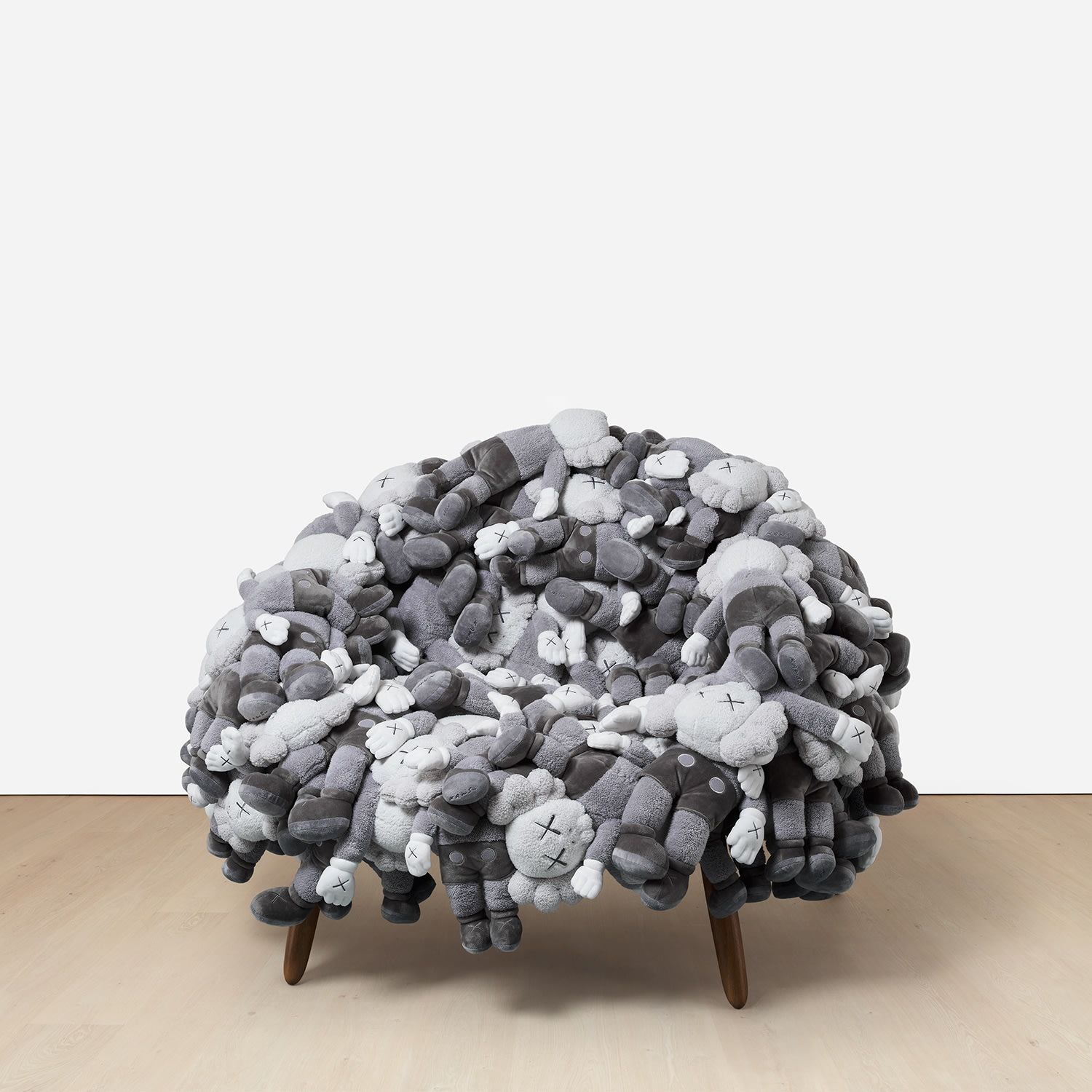
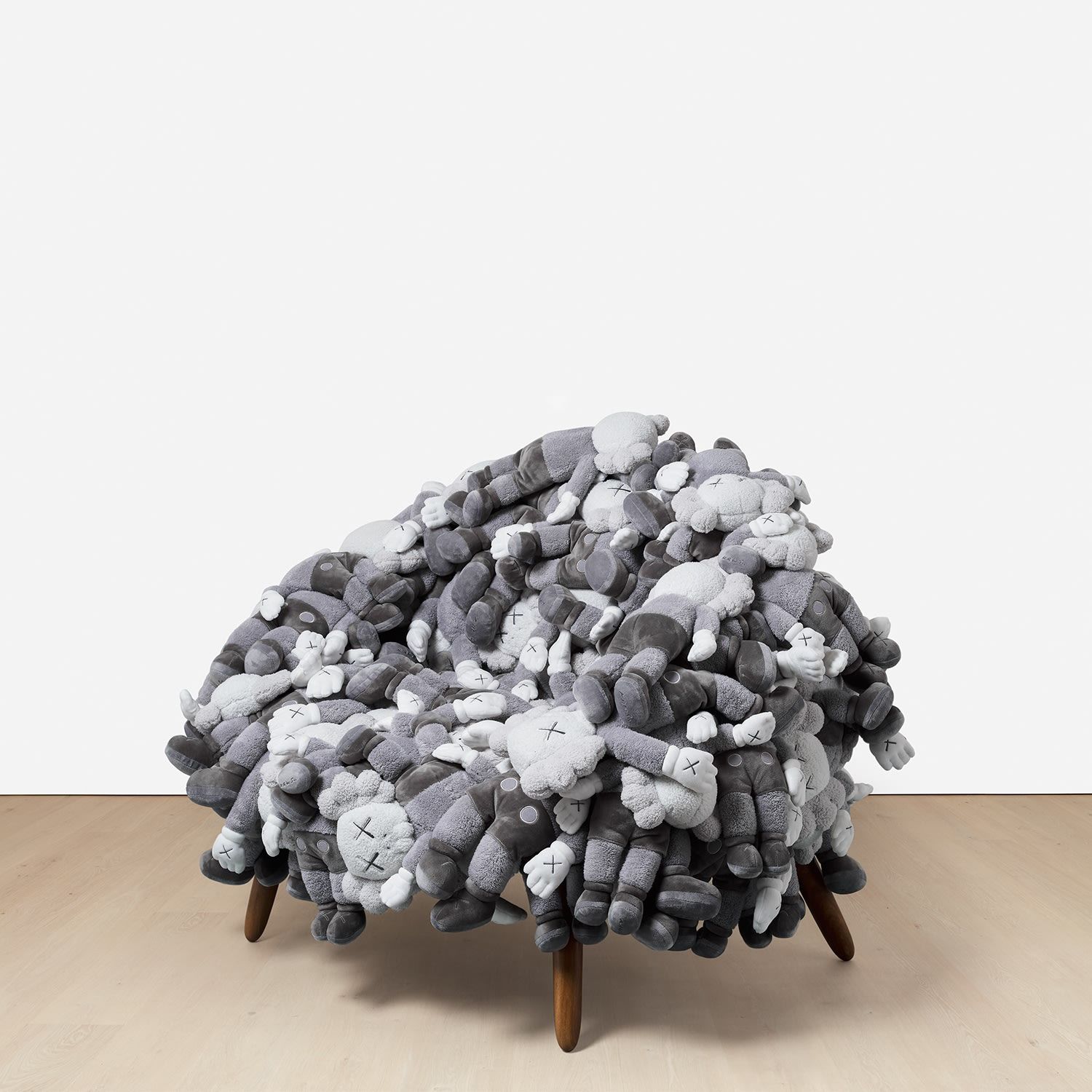
Companion Chair (Grey)
by KAWS
Year: 2019
Medium: Plush toys, Stainless steel and Cumaru wood
Size: 36 × 52 × 41 in
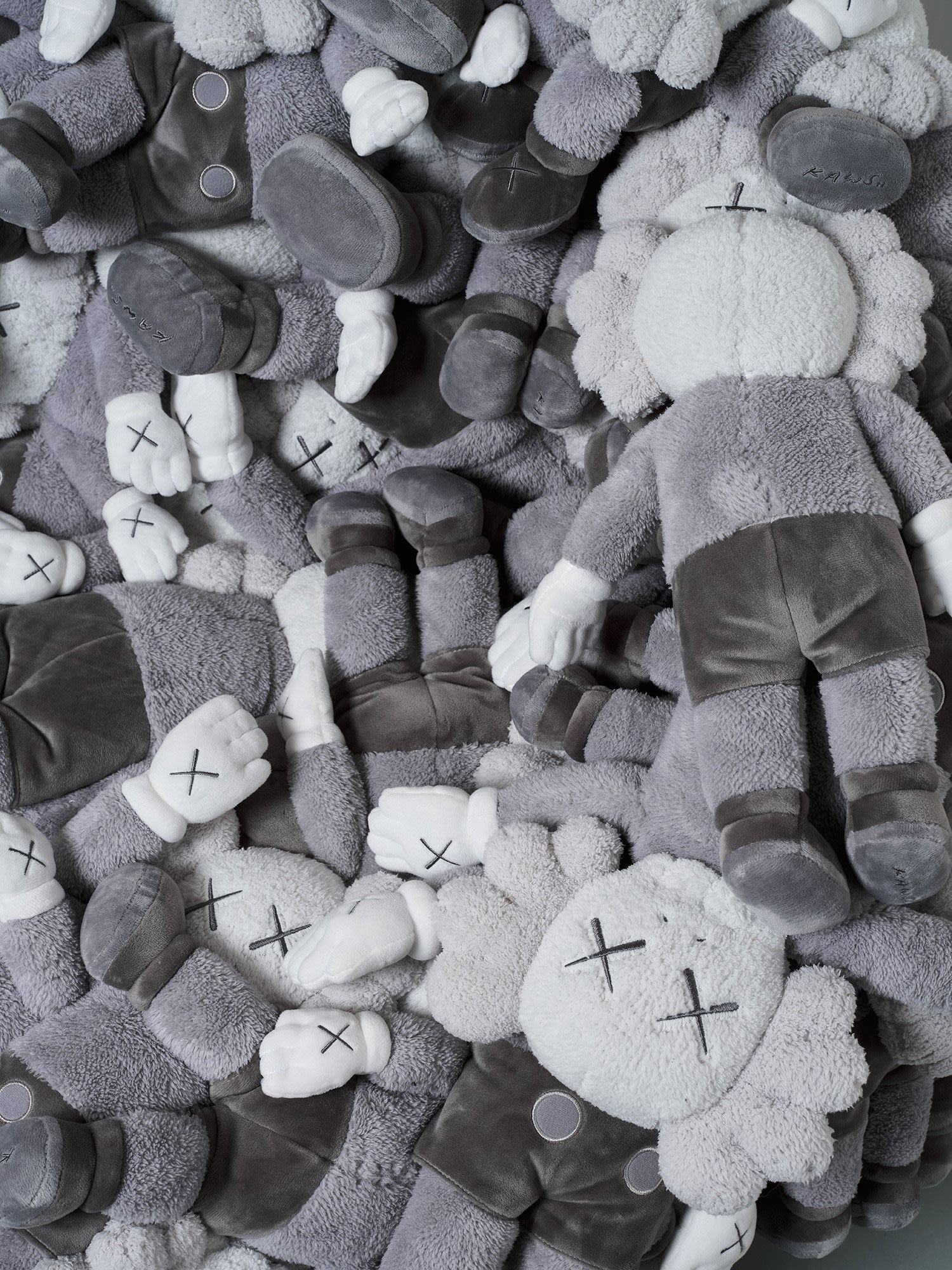
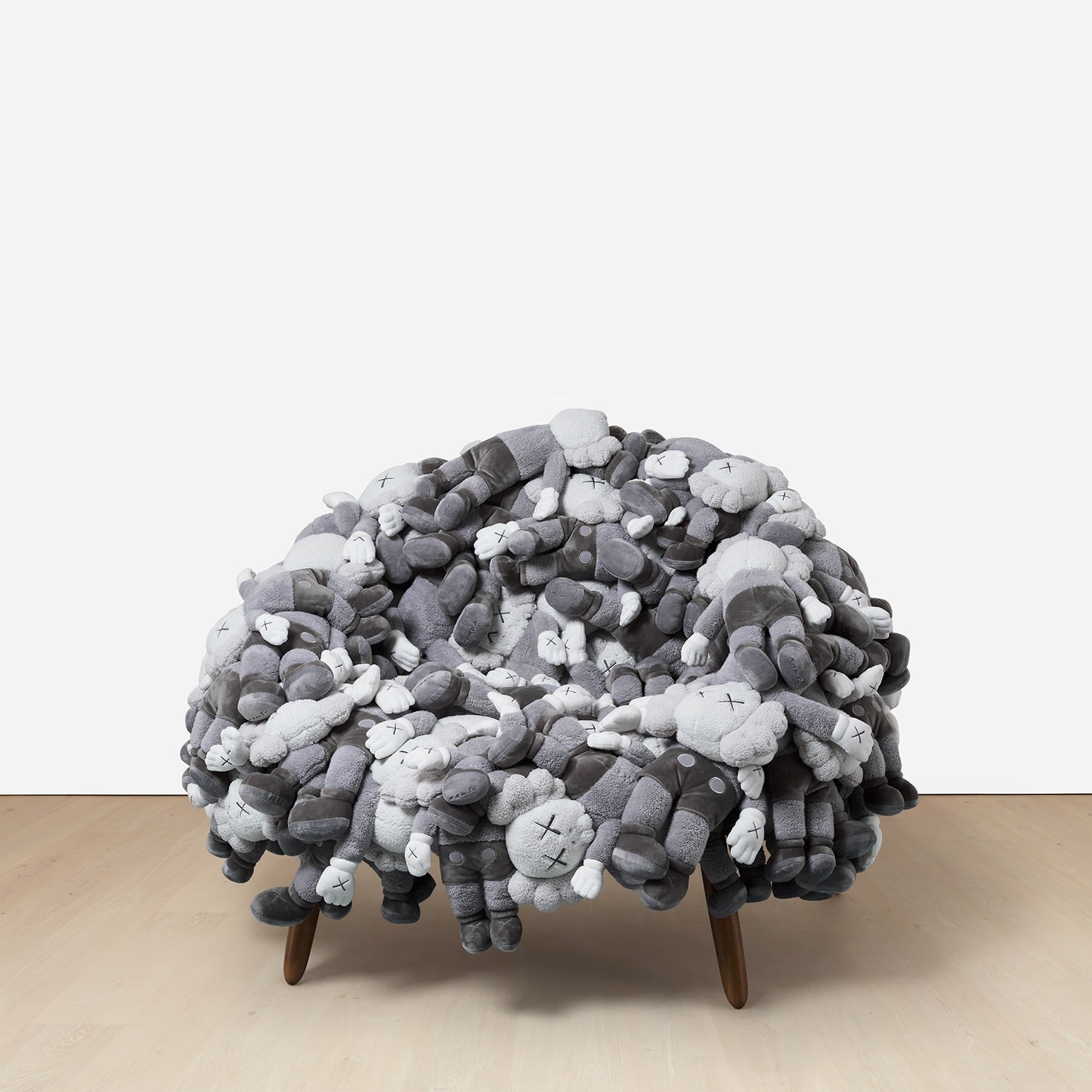
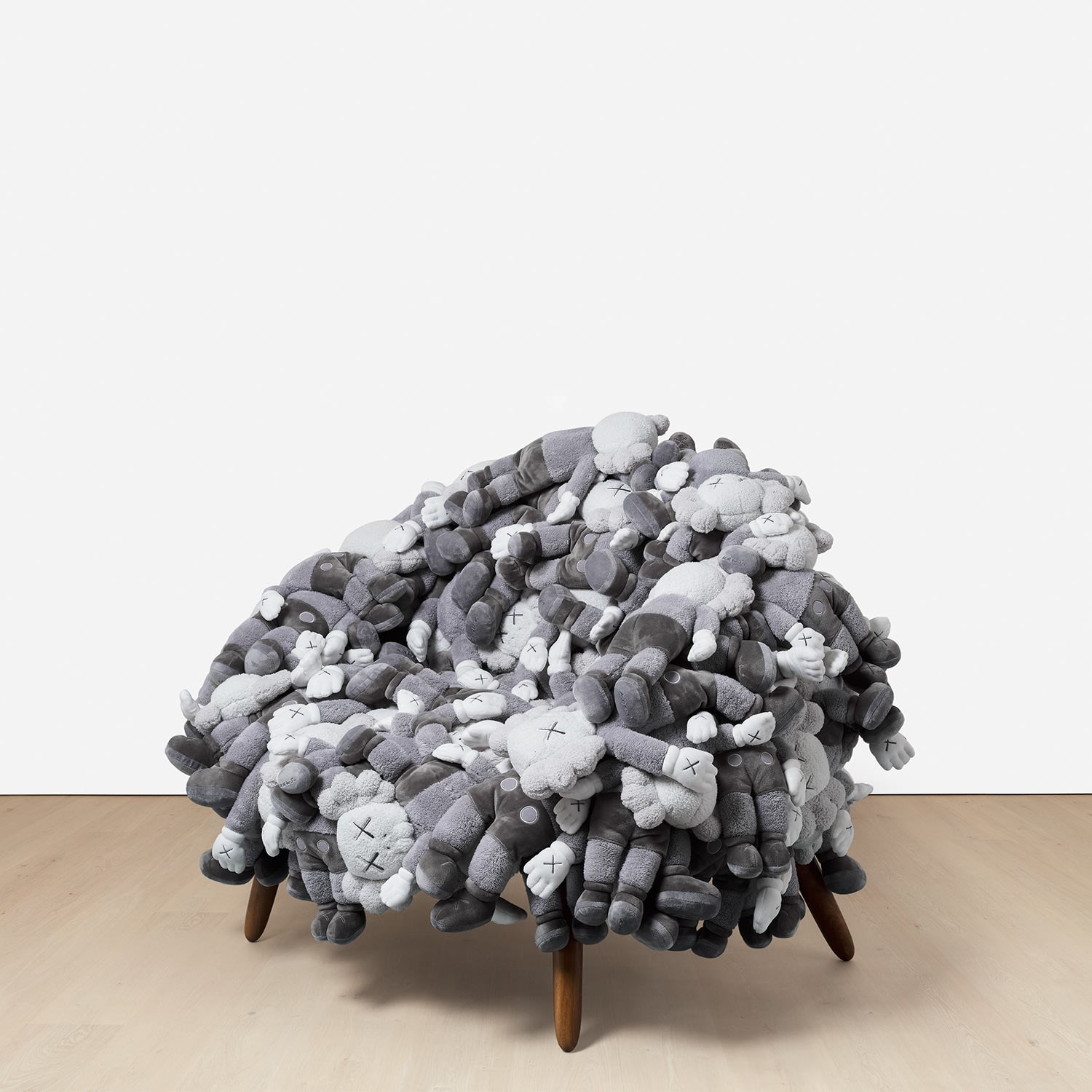
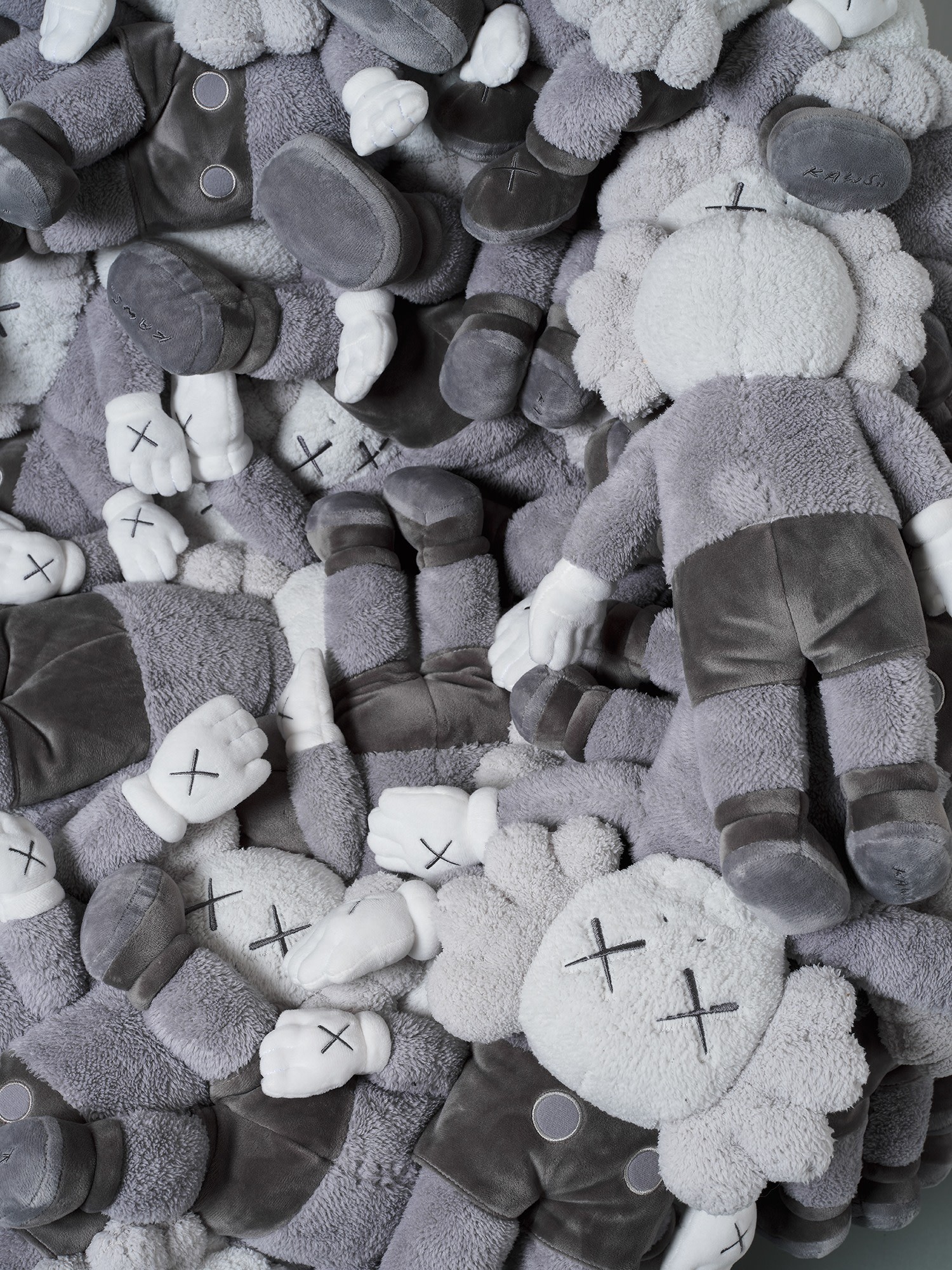
Blurring the boundaries between sculpture, furniture, and collectible design, KAWS’ Companion Chair (Grey) (2019) combines plush toys, stainless steel, and Cumaru wood in a striking functional artwork measuring 36 × 52 × 41 inches. Created during the artist’s celebrated exploration of design objects, the piece transforms the iconic Companion into an immersive sculptural form. Its innovative materiality, exceptional craftsmanship, and enduring market demand make it a distinguished acquisition for discerning contemporary art collectors.
Companion Chair (Grey) is a rare sculptural work that expands KAWS’ iconic Companion character into the realm of collectible design. Created during the artist’s mature period, the piece reflects his ongoing interest in blurring the boundaries between contemporary art, functional objects, and popular culture. Unlike KAWS’ early street interventions and altered advertisements, Companion Chair (Grey) was conceived exclusively as a studio design object and collectible sculpture. It has no street graffiti version because its concept depends on craftsmanship, material quality, and three-dimensional functionality rather than public installation.
The chair transforms the familiar Companion figure into an interactive object, inviting viewers to engage physically with one of contemporary art’s most recognizable characters. Its muted grey finish emphasizes form over color, while themes of comfort, vulnerability, nostalgia, and design innovation remain central. The work demonstrates how KAWS elevates everyday furniture into an artwork without losing the emotional qualities that define the Companion series.
Collectors regard Companion Chair (Grey) as one of the artist’s most desirable functional editions. Limited production, crossover appeal between art and design, and strong international demand have reinforced its importance within the contemporary market.
At ArtLife Gallery, we see Companion Chair (Grey) as a milestone in KAWS’ evolution beyond painting and sculpture. Closely related to Companion, Chum, BFF, and his collectible furniture projects, it highlights the artist’s ability to merge design, craftsmanship, and blue-chip contemporary art into a highly sought-after collectible.
KAWS, born Brian Donnelly in Jersey City in 1974, has become one of contemporary art’s most recognisable figures by moving between street art, fine art, fashion, and design. After studying illustration at New York’s School of Visual Arts, he worked in animation while developing a graffiti practice that soon evolved into a distinctive artistic language.
His iconic characters, including Companion, BFF, Chum, and Accomplice, blend cartoon-inspired forms with X-shaped eyes and expressive gestures. Beneath their playful appearance, KAWS explores isolation, friendship, consumer culture, and human connection. These figures have appeared across paintings, sculptures, drawings, vinyl editions, and public works, creating a visual identity that is instantly recognisable.
Collaboration became a defining part of his career. Partnerships with Medicom Toy, Uniqlo, Nike, Dior, Supreme, and other global names helped blur the boundaries between contemporary art, fashion, product design, and popular culture. His Tokyo label, OriginalFake, strengthened this crossover during the 2000s. Even today, KAWS’ approach to collaboration shows how art can move naturally between galleries, retail spaces, and everyday life.
KAWS has exhibited internationally at major museums and institutions, presenting paintings, sculptures, drawings, and collectibles to audiences far beyond the traditional gallery system. His ability to pair accessibility with artistic ambition has made him a defining figure in 21st-century visual culture. This wide reach also helps explain why KAWS has become so famous.
His influence extends into the global art market, where scarcity, edition size, provenance, condition, and cultural significance can affect value. For anyone considering investing in KAWS art, understanding the factors behind his investment market and the prices achieved at auction offers useful context for evaluating his enduring position in contemporary art.
More KAWS Works to Explore



Companion Chair (Grey)
by KAWS
Year: 2019
Medium: Plush toys, Stainless steel and Cumaru wood
Size: 36 × 52 × 41 in
Blurring the boundaries between sculpture, furniture, and collectible design, KAWS’ Companion Chair (Grey) (2019) combines plush toys, stainless steel, and Cumaru wood in a striking functional artwork measuring 36 × 52 × 41 inches. Created during the artist’s celebrated exploration of design objects, the piece transforms the iconic Companion into an immersive sculptural form. Its innovative materiality, exceptional craftsmanship, and enduring market demand make it a distinguished acquisition for discerning contemporary art collectors.
Companion Chair (Grey) is a rare sculptural work that expands KAWS’ iconic Companion character into the realm of collectible design. Created during the artist’s mature period, the piece reflects his ongoing interest in blurring the boundaries between contemporary art, functional objects, and popular culture. Unlike KAWS’ early street interventions and altered advertisements, Companion Chair (Grey) was conceived exclusively as a studio design object and collectible sculpture. It has no street graffiti version because its concept depends on craftsmanship, material quality, and three-dimensional functionality rather than public installation.
The chair transforms the familiar Companion figure into an interactive object, inviting viewers to engage physically with one of contemporary art’s most recognizable characters. Its muted grey finish emphasizes form over color, while themes of comfort, vulnerability, nostalgia, and design innovation remain central. The work demonstrates how KAWS elevates everyday furniture into an artwork without losing the emotional qualities that define the Companion series.
Collectors regard Companion Chair (Grey) as one of the artist’s most desirable functional editions. Limited production, crossover appeal between art and design, and strong international demand have reinforced its importance within the contemporary market.
At ArtLife Gallery, we see Companion Chair (Grey) as a milestone in KAWS’ evolution beyond painting and sculpture. Closely related to Companion, Chum, BFF, and his collectible furniture projects, it highlights the artist’s ability to merge design, craftsmanship, and blue-chip contemporary art into a highly sought-after collectible.
KAWS, born Brian Donnelly in Jersey City in 1974, has become one of contemporary art’s most recognisable figures by moving between street art, fine art, fashion, and design. After studying illustration at New York’s School of Visual Arts, he worked in animation while developing a graffiti practice that soon evolved into a distinctive artistic language.
His iconic characters, including Companion, BFF, Chum, and Accomplice, blend cartoon-inspired forms with X-shaped eyes and expressive gestures. Beneath their playful appearance, KAWS explores isolation, friendship, consumer culture, and human connection. These figures have appeared across paintings, sculptures, drawings, vinyl editions, and public works, creating a visual identity that is instantly recognisable.
Collaboration became a defining part of his career. Partnerships with Medicom Toy, Uniqlo, Nike, Dior, Supreme, and other global names helped blur the boundaries between contemporary art, fashion, product design, and popular culture. His Tokyo label, OriginalFake, strengthened this crossover during the 2000s. Even today, KAWS’ approach to collaboration shows how art can move naturally between galleries, retail spaces, and everyday life.
KAWS has exhibited internationally at major museums and institutions, presenting paintings, sculptures, drawings, and collectibles to audiences far beyond the traditional gallery system. His ability to pair accessibility with artistic ambition has made him a defining figure in 21st-century visual culture. This wide reach also helps explain why KAWS has become so famous.
His influence extends into the global art market, where scarcity, edition size, provenance, condition, and cultural significance can affect value. For anyone considering investing in KAWS art, understanding the factors behind his investment market and the prices achieved at auction offers useful context for evaluating his enduring position in contemporary art.