Investing in Basquiat Estate Prints and Whether They Are a Good Buy
Investing in Basquiat Estate Prints
Pace Prints released a new Basquiat screenprint on July 28. The edition ran to eighty-five impressions and sold out within weeks. No price was ever published. Releases from the Estate of Jean-Michel Basquiat have been ending that way since 2015. The program has been running since 2001, and the estate has kept the editions to sixty or eighty-five impressions throughout. Each one closes when it sells out.
Flexible gives the clearest measure of what that scarcity has been worth. The estate put it out in 2016 at forty thousand dollars, and Sotheby’s sold one in Singapore seven years later for roughly two hundred and eighty thousand.
What the Estate Released in July
The print is titled M, after a panel painting Basquiat made in his Venice, California studio in 1984. Pace places it alongside Gold Griot and Flexible from the same year, all three built around the griot, the West African storyteller who keeps the memory of a community. The sheet measures 60 by 48 inches on Saunders Waterford paper. Flatiron Editions published it. Pace sold it exclusively. Lisane Basquiat and Jeanine Heriveaux, the artist’s sisters and the administrators of his estate, stamped and signed every impression.
King Alphonso preceded it by nine months, an edition of 60 released on November 5, 2025. The image reproduces a drawing of 1982 to 1983 in acrylic and charcoal, a three-point crown over a head with a name lettered underneath in capitals. No other mark did more to make Basquiat famous outside the art world. Pace identifies the figure as Alfonso XIII, the last ruling monarch of Spain, who held the throne from 1886 to 1931 and picked up the nickname El Africano.
Both releases followed one formula. A single image, one publisher, one seller, a fixed number of sheets, and no second run.
Avery Andon, chief executive of ArtLife Gallery, watched both of them move. “Eighty-five impressions is a small number for an artist at this level, and Pace sold through them in weeks. Our clients ask about estate prints more than almost anything else in the Basquiat category, and I understand why. A painting from 1984 trades in the tens of millions. A print drawn from that same body of work, authorized by his family and made to the standard the estate has held since 2001, puts you close to the imagery for a small fraction of the money. Most buyers work that out for themselves fairly quickly.”
Basquiat Made Almost No Prints While He Was Alive
Warhol and Haring built substantial practices around printmaking. Basquiat painted and drew, leaving roughly a thousand paintings and three thousand works on paper behind him, along with one print project of any consequence from his lifetime.
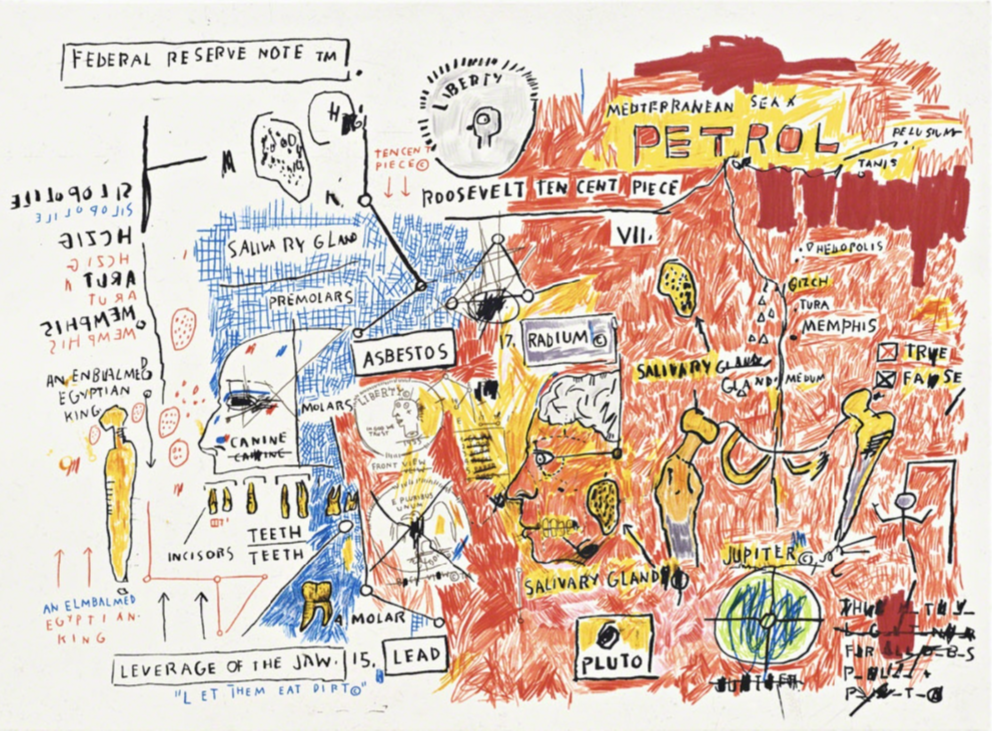
Anatomy is the exception, a portfolio of eighteen screenprints from 1982. He made it in the basement studio Annina Nosei had given him at her gallery in SoHo, the year of his first American solo show there. Jo Watanabe pulled the sheets. Sotheby’s catalogue entries record impressions signed in pencil by the artist, which accounts for what the portfolio costs today. Nosei hung the prints beside intergalactic paintings and drawings by Rammellzee, billing the two artists as solo shows in conjoining galleries, and he performed live at the opening.
The anatomical subject goes back to the copy of Gray’s Anatomy his mother gave him after a childhood accident, one of the formative episodes in his life. The sheets are largely black, worked over in white lines and handwriting, and they look nothing like the crowns and heads most people picture when they hear his name.
Demand for that better-known imagery kept building after his death in 1988. His paintings were disappearing into museum collections. The one lifetime portfolio answered a question almost nobody was asking.
The Program Began in 2001 and Has Stayed Small
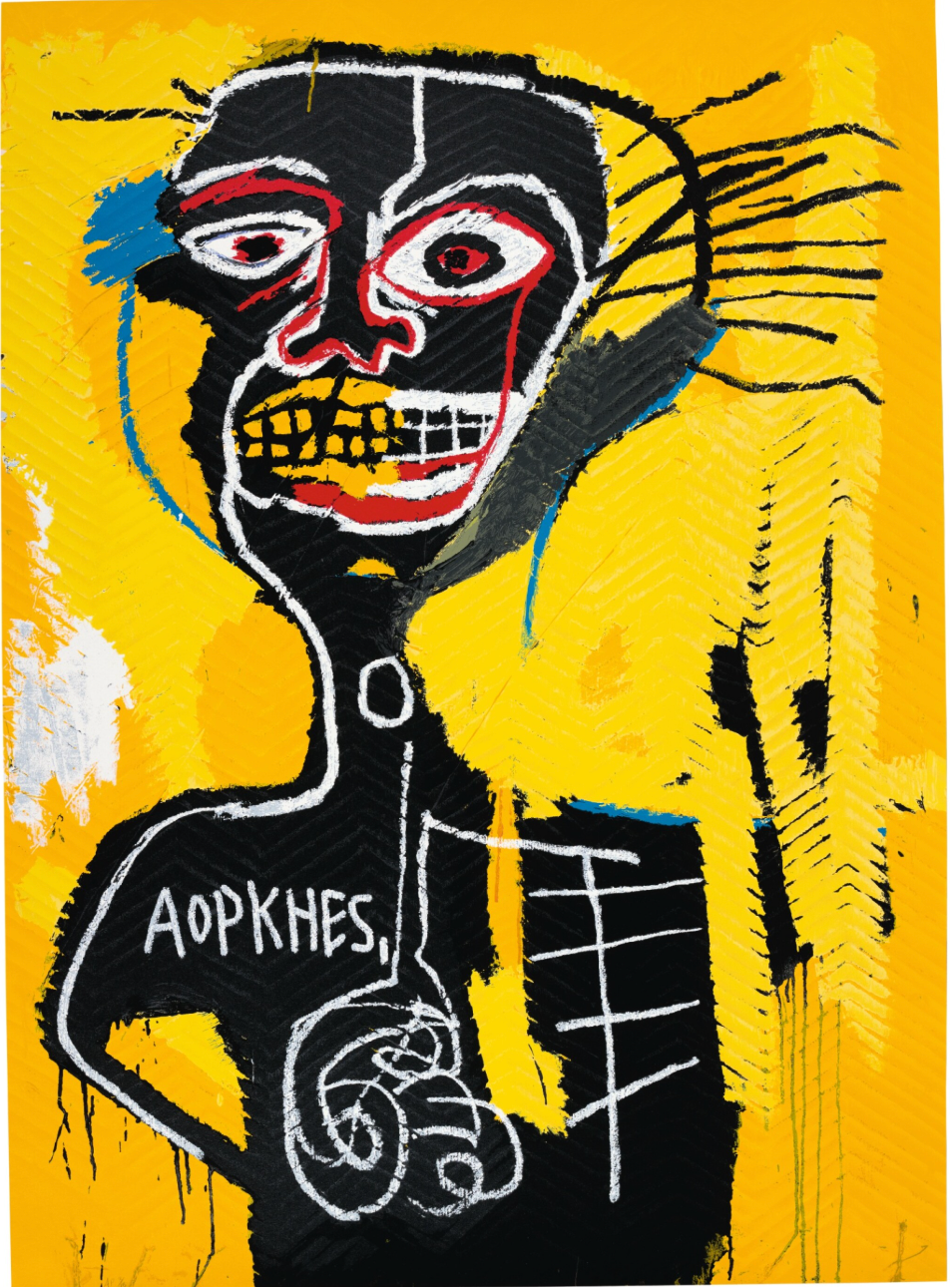
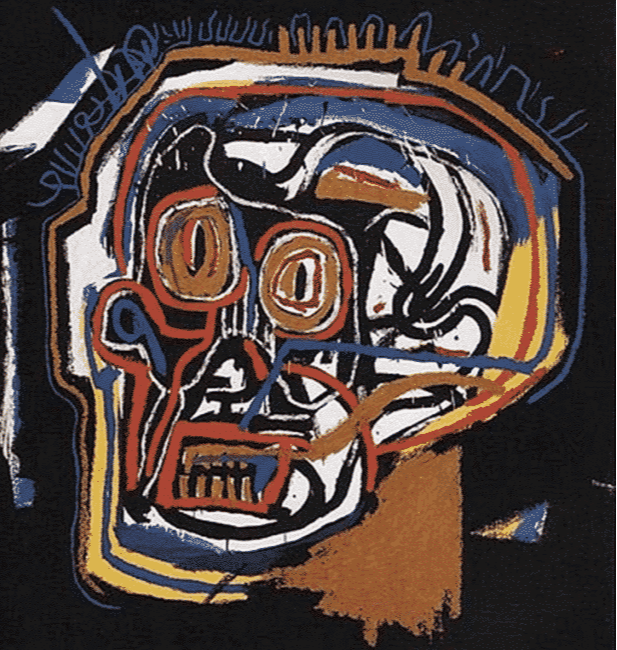
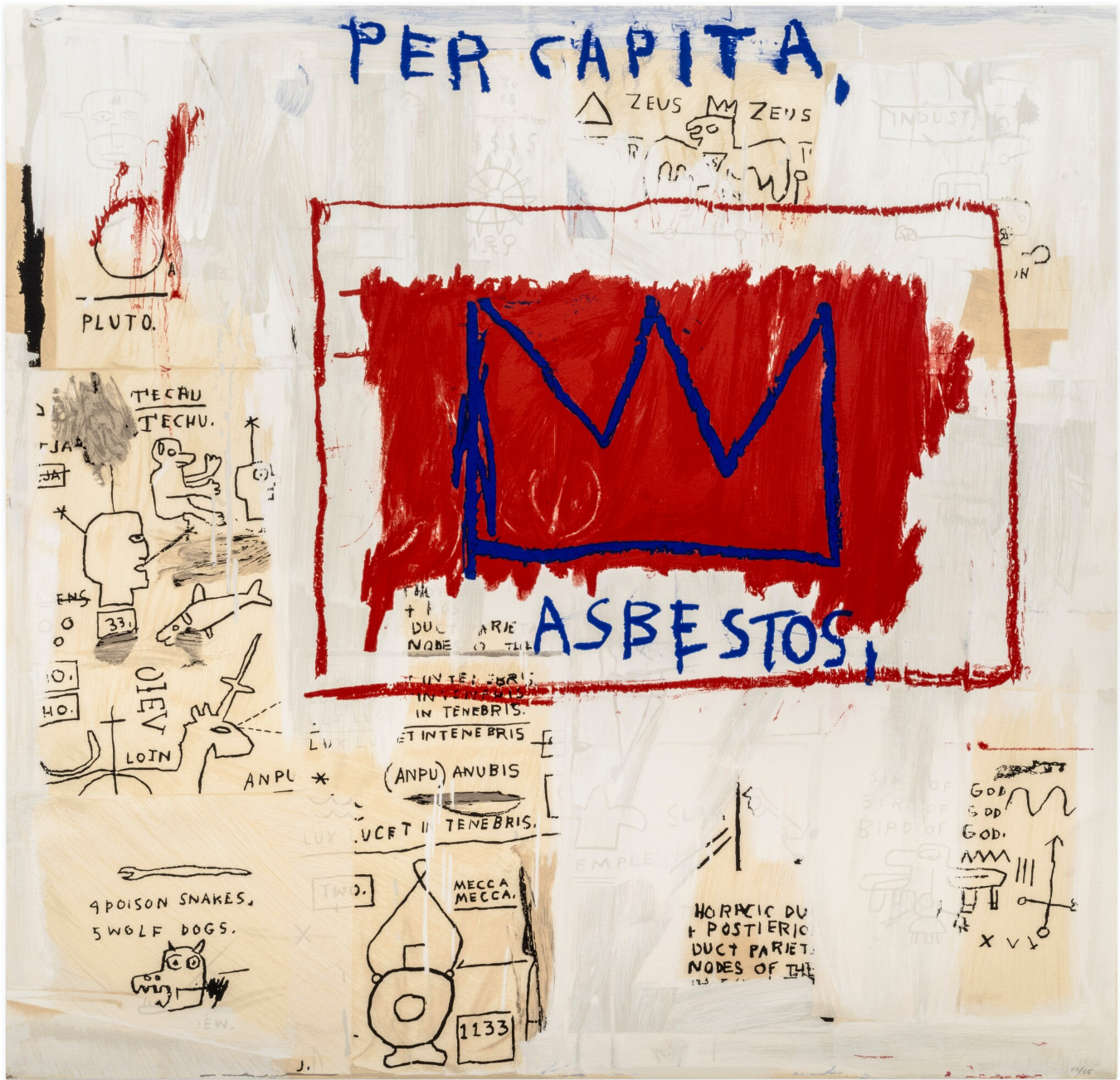
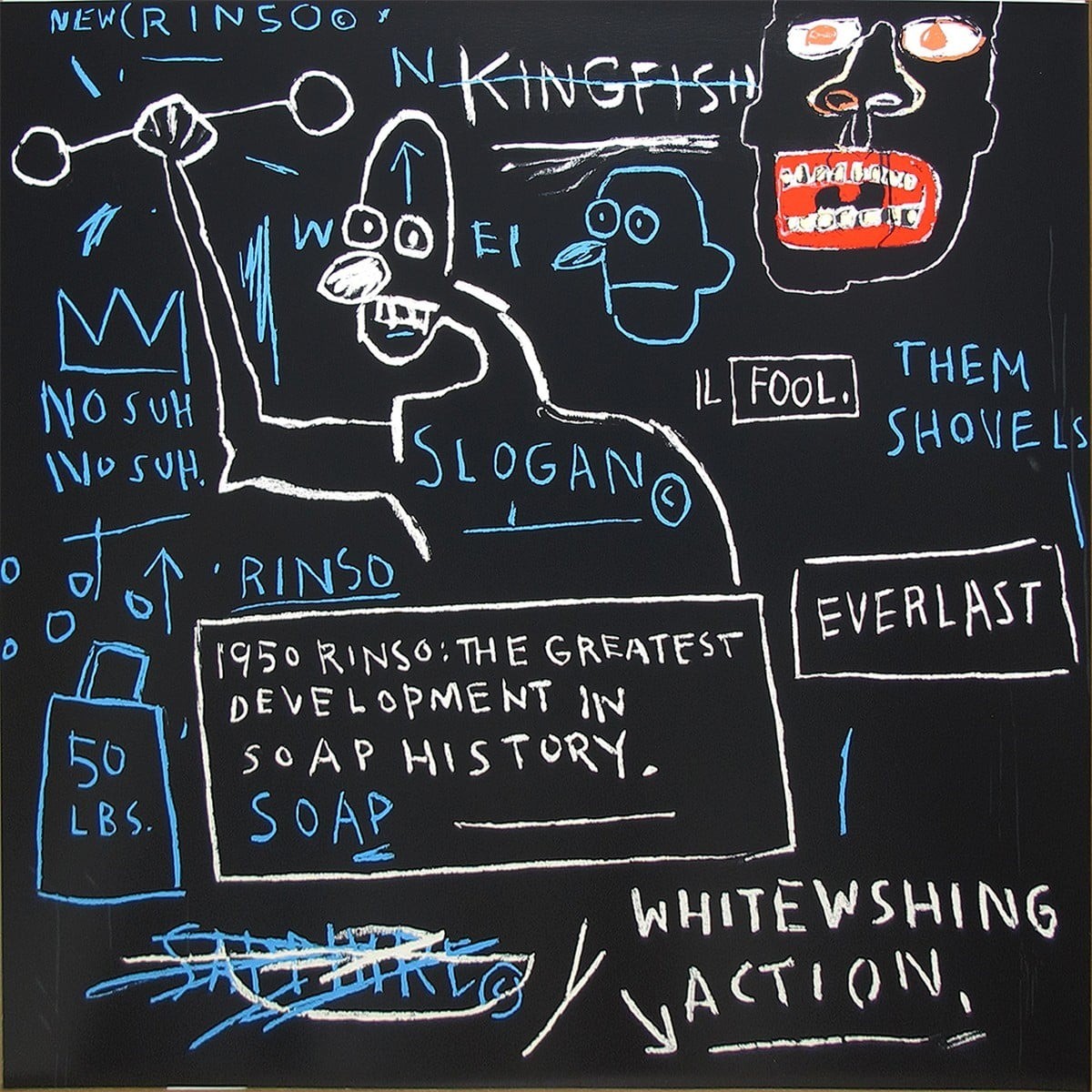
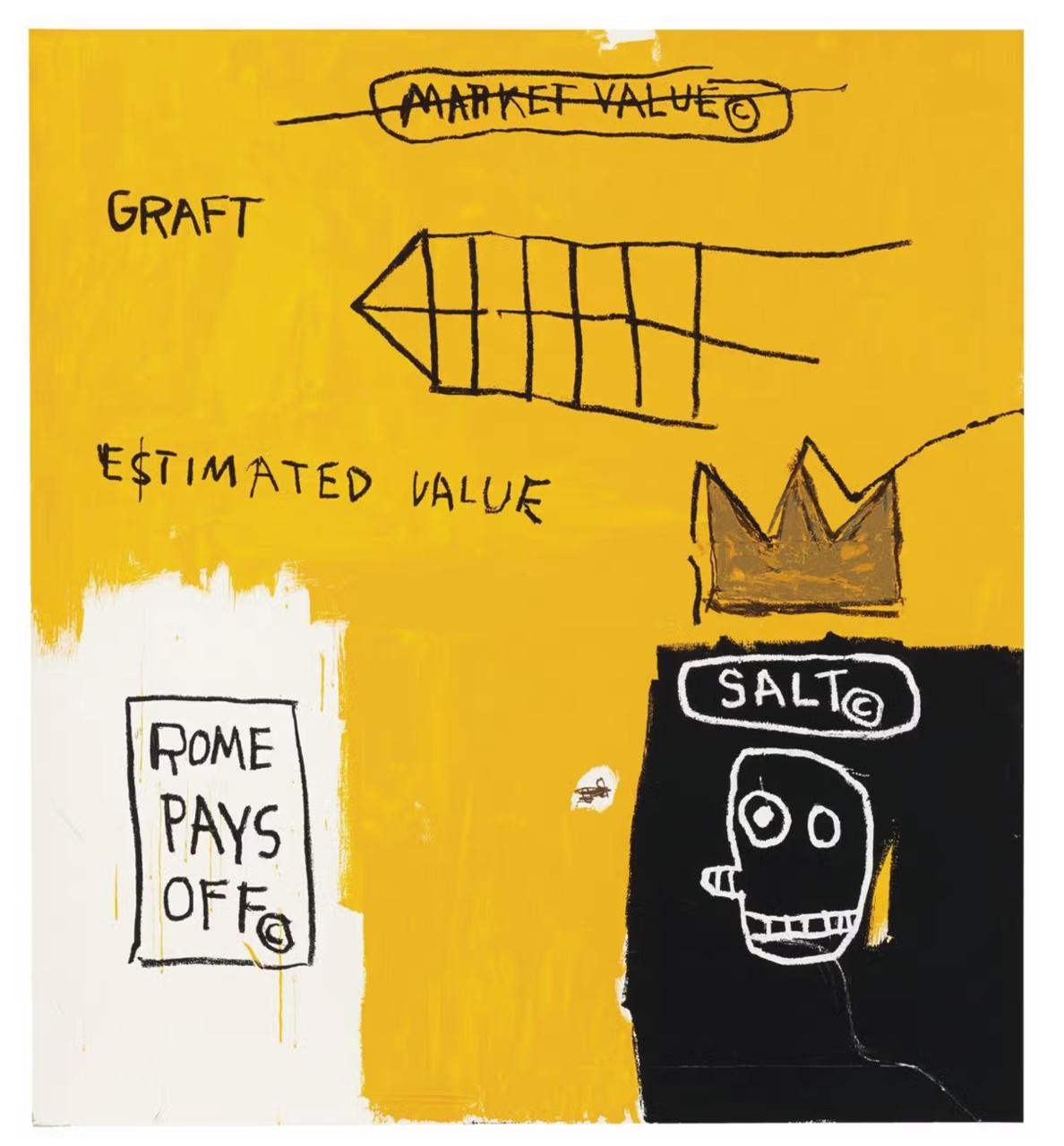
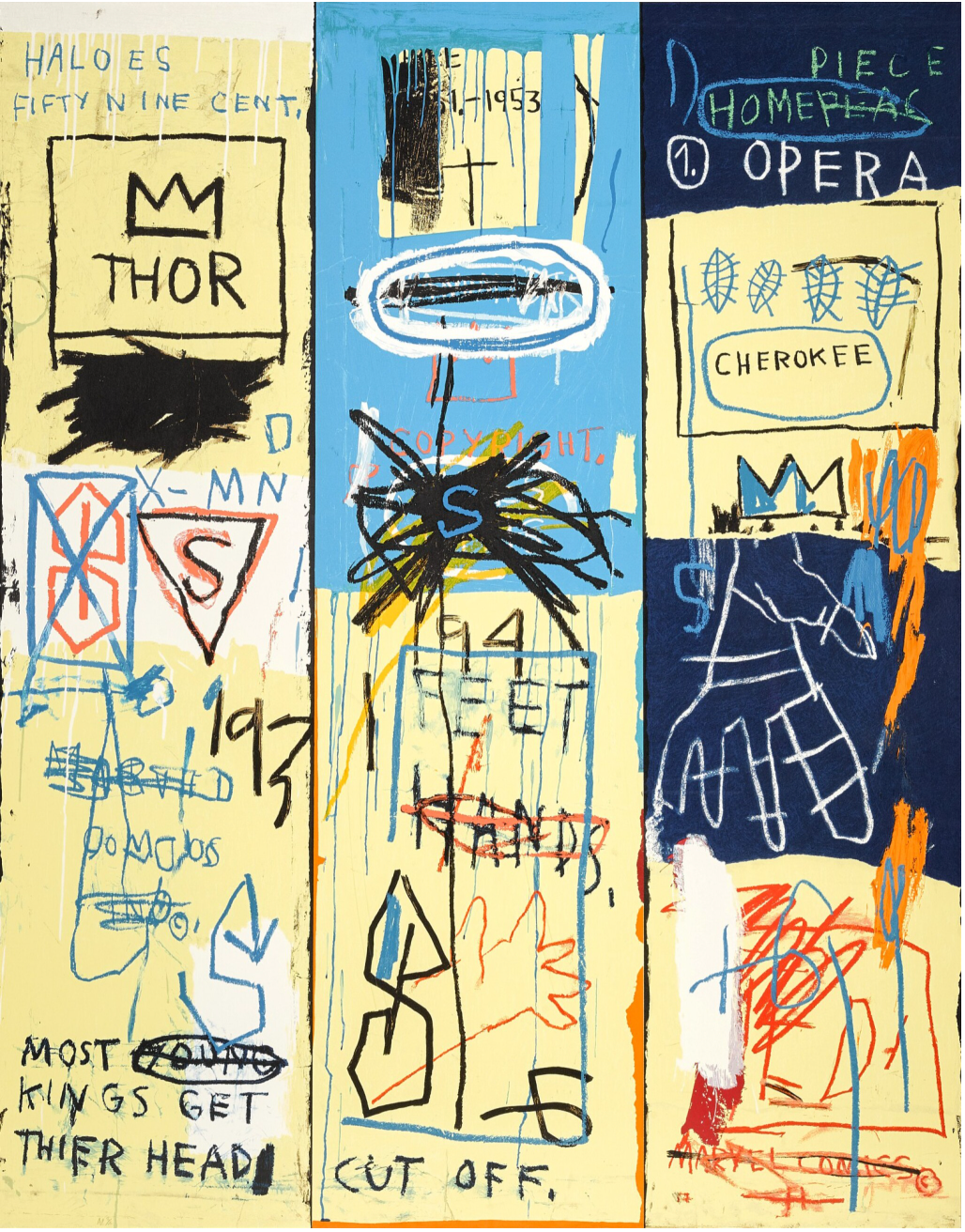
Gerard Basquiat, the artist’s father, ran the estate first. He authorized Portfolio I in 2001, four screenprints taken from paintings of 1983, and dated a signed certificate on the back of each one. The images were Ernok, Per Capita, Rinso, and Untitled (Head), in editions of 85. Portfolio II followed in 2004 with Charles the First, Cabeza, Jawbone of an Ass, and Rome Pays Off. The program then went quiet for a decade.
It restarted in October 2015 with Hollywood Africans in front of the Chinese Theater, an edition of 60 priced at $50,000, which artnet reported as the first estate-authorized release since 2005. Gerard had died by then and his daughters had taken over. Editions have arrived at roughly one a year ever since.
Five releases since 2016 come up regularly on the secondary market.
- Flexible came out in 2016 in an edition of 85, drawn from the 1984 panel painting, and it has become the most frequently traded of the estate editions.
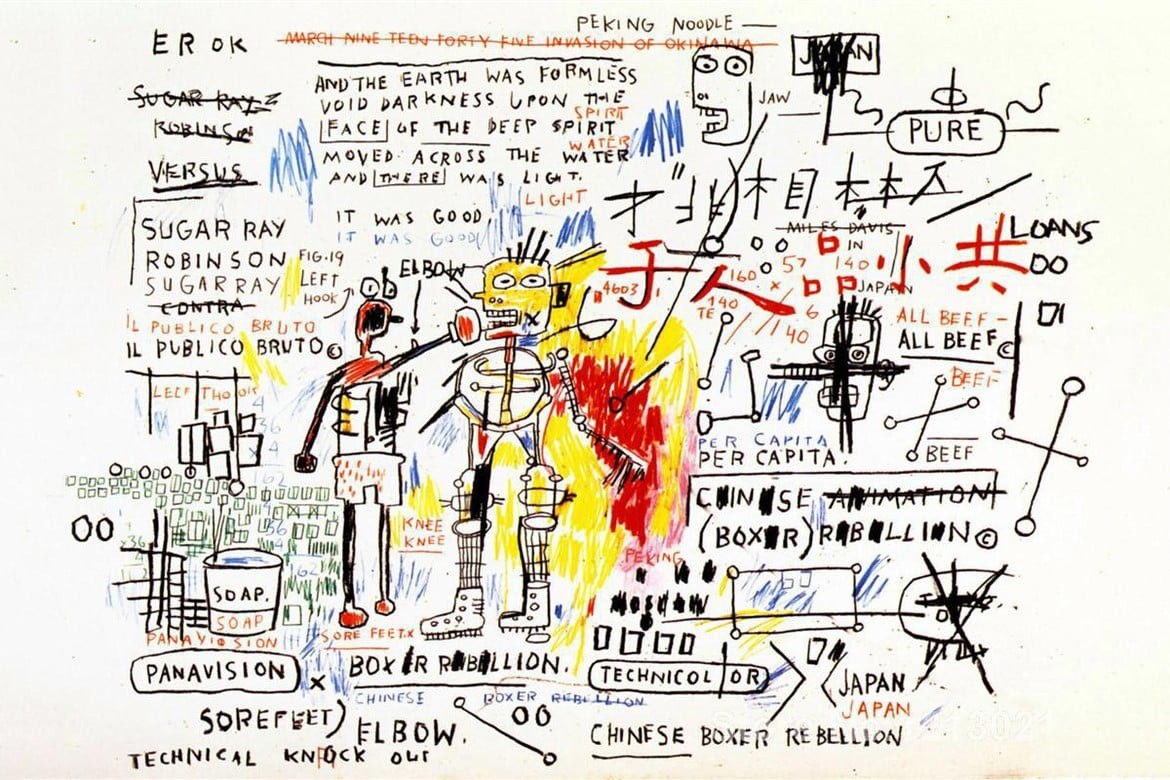
- Boxer Rebellion followed in 2018 in an edition of 60, an eighteen-color screenprint measuring 29 by 39½ inches, with tiered pricing that opened at $35,000.
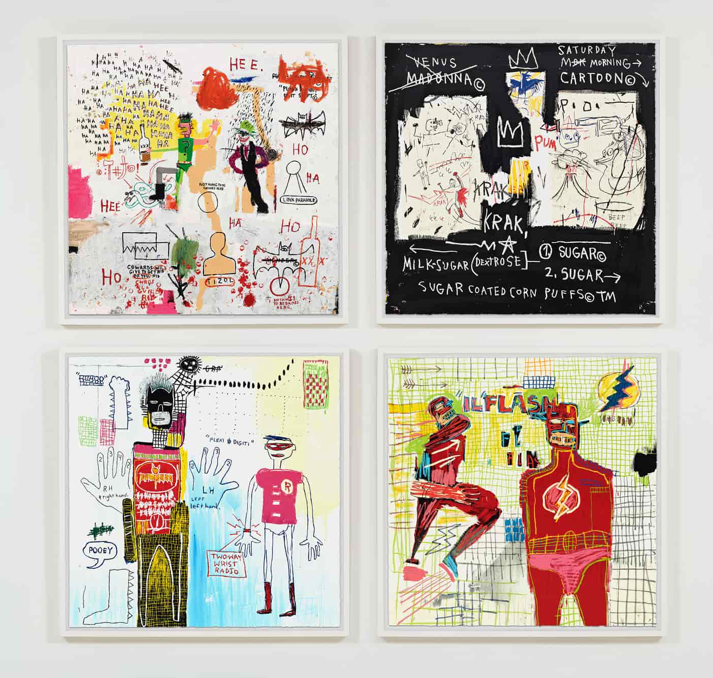
- The Superhero Portfolio appeared in 2022, four images of 40 by 40 inches in editions of 85. Phillips sold a complete set for $190,500 in April 2025, inside an estimate of $150,000 to $250,000.
- The Figure Portfolio landed in 2023 with five screenprints, also in editions of 85.
- Odours of Punt followed in 2024 from a painting of 1983, an edition of 60 measuring 42 by 84 inches, among the largest sheets the estate has released.
Nico Hayes, senior director at ArtLife, puts more weight on the discipline than on any single image. “Twenty-five years is a long record for a print program, and the estate has handled it carefully. They release rarely, usually about once a year. Edition sizes have stayed at sixty or eighty-five since 2001. That kind of restraint tends to protect the people who already own these. An estate that keeps adding editions of the same images puts pressure on everything it released before, and this one has largely avoided that. The auction results seem to reflect it.”
What the Resale Numbers Actually Show
The Singapore result deserves the detail behind it, because Flexible has the longest auction history of any estate edition.
Pace released the print in June 2016 in an edition of 85, with 15 artist’s proofs, 15 hors commerce sheets, 5 printer’s proofs, and one bon à tirer alongside. The 24-color screenprint measured 60¼ by 45½ inches on museum board. Pricing opened at $40,000 and climbed in tiers from there.
Seven years later Sotheby’s sold one in Singapore for SG$381,000, roughly US$281,753, and the house recorded the result at more than three times the high estimate. The painting behind the print carries its own number. Phillips sold the original Flexible, eight and a half feet of painted picket fence consigned by the estate, for $45.3 million in May 2018. The distance between those two figures explains the appetite for the editions, and the same dynamic runs through the wider Basquiat market.
Andon frames that jump in value as the ultimate proof of concept. “Flexible is the clearest example we have. It came out at forty thousand dollars. Seven years on, Sotheby’s got upwards of two hundred and eighty thousand for one in Singapore, beating the high estimate three times over. Not every edition moves like that, and nobody should read a single result as a forecast. What I would say is that this category has generally rewarded people who bought early and held, and buyers who come in at or near a release tend to end up in a stronger position than those who wait.”
How to Check That a Print Is Real
The estate stopped authenticating works in 2012, which leaves documentation doing the job an authentication board used to do. Any Basquiat estate print worth owning arrives with paperwork a specialist can read line by line.
Confirm all of the following before agreeing a price:
- The estate stamp appears on the sheet, together with the signatures of Lisane Basquiat and Jeanine Heriveaux. Editions from 2001 and 2004 carry a stamped certificate signed and dated by Gerard Basquiat on the reverse.
- The edition number matches the published size for that image, whether 60, 85, or a portfolio count.
- The publisher is named and correct. Flatiron Editions published everything from 2015 onward, while the 2001 and 2004 portfolios came from DeSanctis and were printed by Brand X Editions.
- A certificate of authenticity or a portfolio colophon accompanies the work.
- The paper or board specification matches what the publisher recorded at release.
- Provenance traces back to Pace, to a recognized gallery, or to a named collection.
Condition deserves equal attention. Several of these sheets run wider than four feet, and a crease or a scuff inside the printed area costs real money at resale. Ask for photographs under raking light before anything is agreed.
Sheets marked HC or AP fall outside the numbered edition while carrying the same imagery and the same paperwork. Hors commerce impressions were historically held back for the publisher and collaborators. They trade alongside the numbered sheets and have on occasion set the top price for an image.
Two Things Happening in 2026
The Netflix documentary is the first film about Basquiat his family helped make. It premiered at Tribeca in June, and the estate confirmed in July that it streams worldwide later this year. Quinn Whitney Wilson and Viridiana Lieberman directed. Lisane and Jeanine are executive producers, which puts the same two people behind the film and behind every edition the estate has authorized since 2015.
The salesrooms have been busy alongside it. In May, Sotheby’s sold Museum Security (Broadway Meltdown), a painting of 1983, for $45.3 million at the hammer and $52.7 million with fees. New York co-named the block of Great Jones Street where he lived and worked in October 2025, and a Toronto gallery opened a show built around twenty-five years of estate editions.
Hayes reads the timing as the part collectors should be weighing. “A documentary on Netflix reaches people who will never look at an auction result. His sisters made it, and it arrives this year. Meanwhile the paintings kept selling through the spring at levels most collectors will never approach,” he adds. “Both of those tend to push interest toward the editions, where the numbers are small and the paperwork is clear. I like being in position before that kind of attention arrives.”
Where This Leaves a Buyer
Supply is capped and cannot grow. The family controls what appears and has released very little. The imagery comes from 1981 through 1984, the years collectors want most. And the paintings keep selling for sums that put them permanently out of reach for almost every private buyer.
Recognition well outside the art world keeps demand running ahead of the small number of sheets in existence. Several market cycles have come and gone, and the arithmetic has not changed.
M sold out in weeks with no published price. The next release will do something similar, and the collectors who hear about it first will be the ones already in contact with somebody watching this category. ArtLife holds authenticated Basquiat estate prints and follows the market daily. Speak with our specialists about what is available now and about positioning ahead of the next estate release.
Ready to Start Your Collection?
Success in this market hinges on insight and access. ArtLife delivers both. We source investment-grade prints and blue-chip canvases that build real portfolio value. Contact ArtLife today to access our private inventory and acquire your next asset.