KAWS at Auction: Every Record-Breaking Sale, Ranked
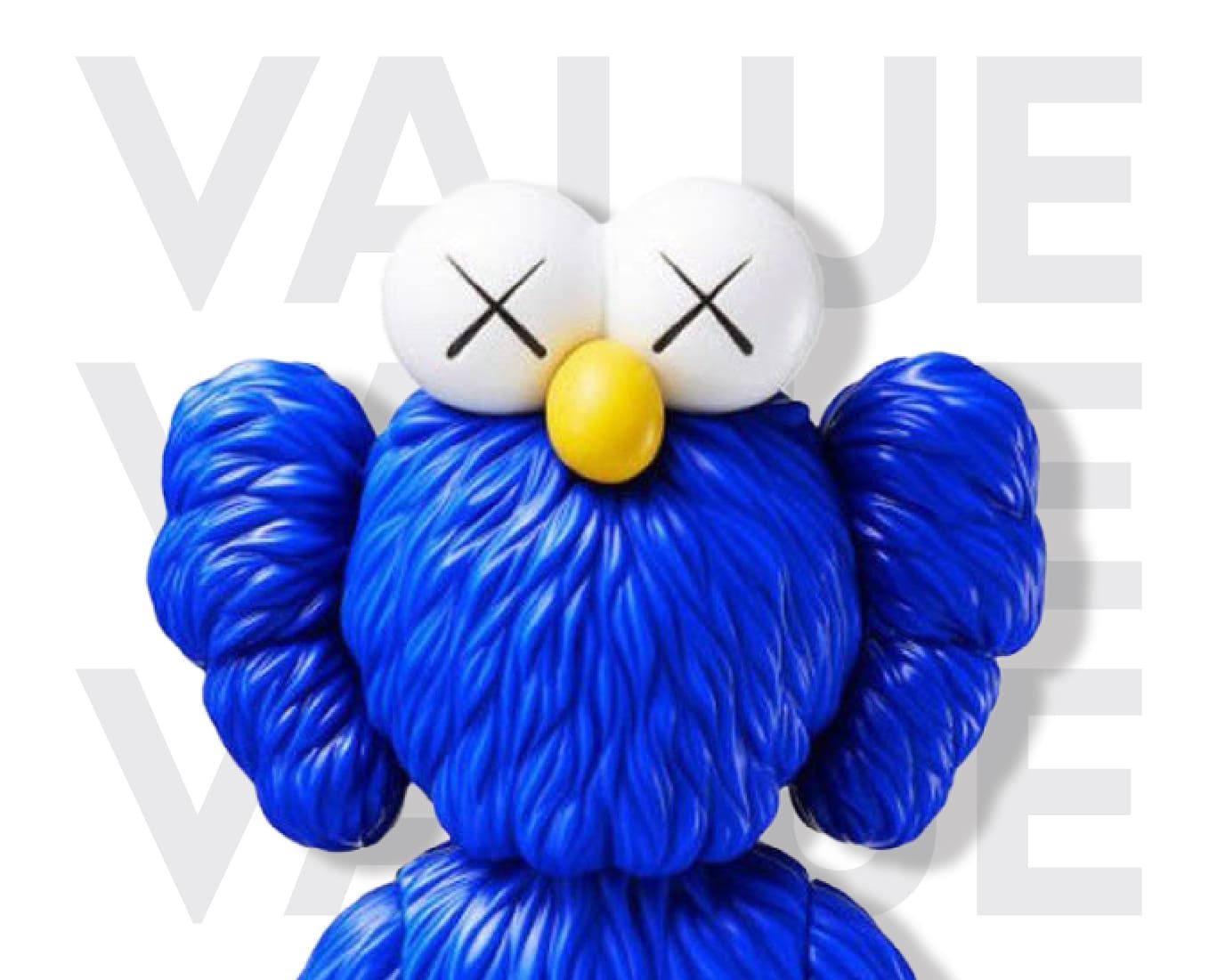
KAWS at Auction: Every Record-Breaking Sale
In April 2019, a painting of a cartoon family with crossed-out eyes sold for nearly $15 million in Hong Kong. For many collectors, that moment marked a turning point—not just for Brian Donnelly, the artist behind the KAWS name, but for how the contemporary art market thinks about pop culture and value.
This artist built his career outside the traditional gallery system, starting with hijacked bus stop billboards and limited vinyl figures. Over two decades, those roots grew into something far larger.
Today, his work sells alongside 20th-century masters at Sotheby’s, Christie’s, and Phillips, and the people buying it treat his canvases as long-term holdings, not impulse buys.
The best way to understand where the KAWS market stands today is to look at what buyers have actually been willing to pay. We reviewed years of sales data across the three major houses to identify the ten highest prices his work has ever achieved.
What Determines the Value of KAWS Art?
You can’t appraise a KAWS piece by aesthetics alone. Price is shaped by a handful of concrete factors: edition size, physical condition, and the ownership history behind the work.
Edition Size and Rarity
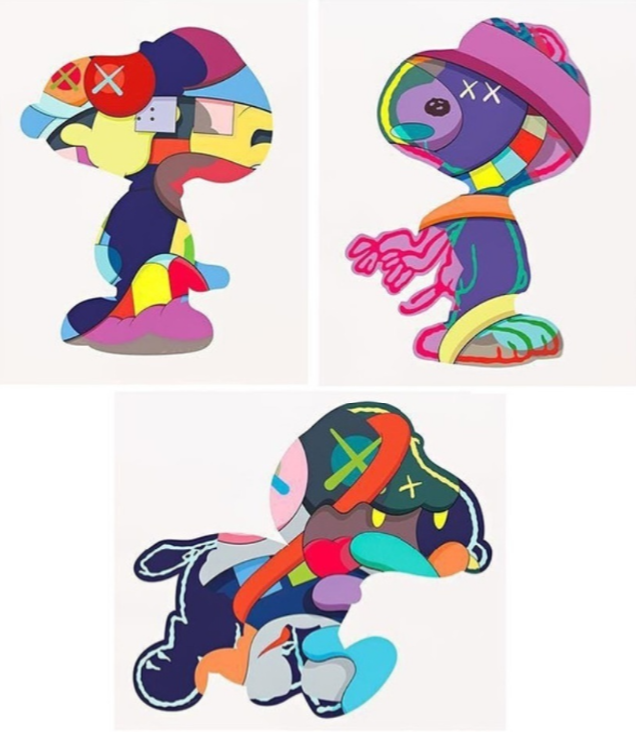
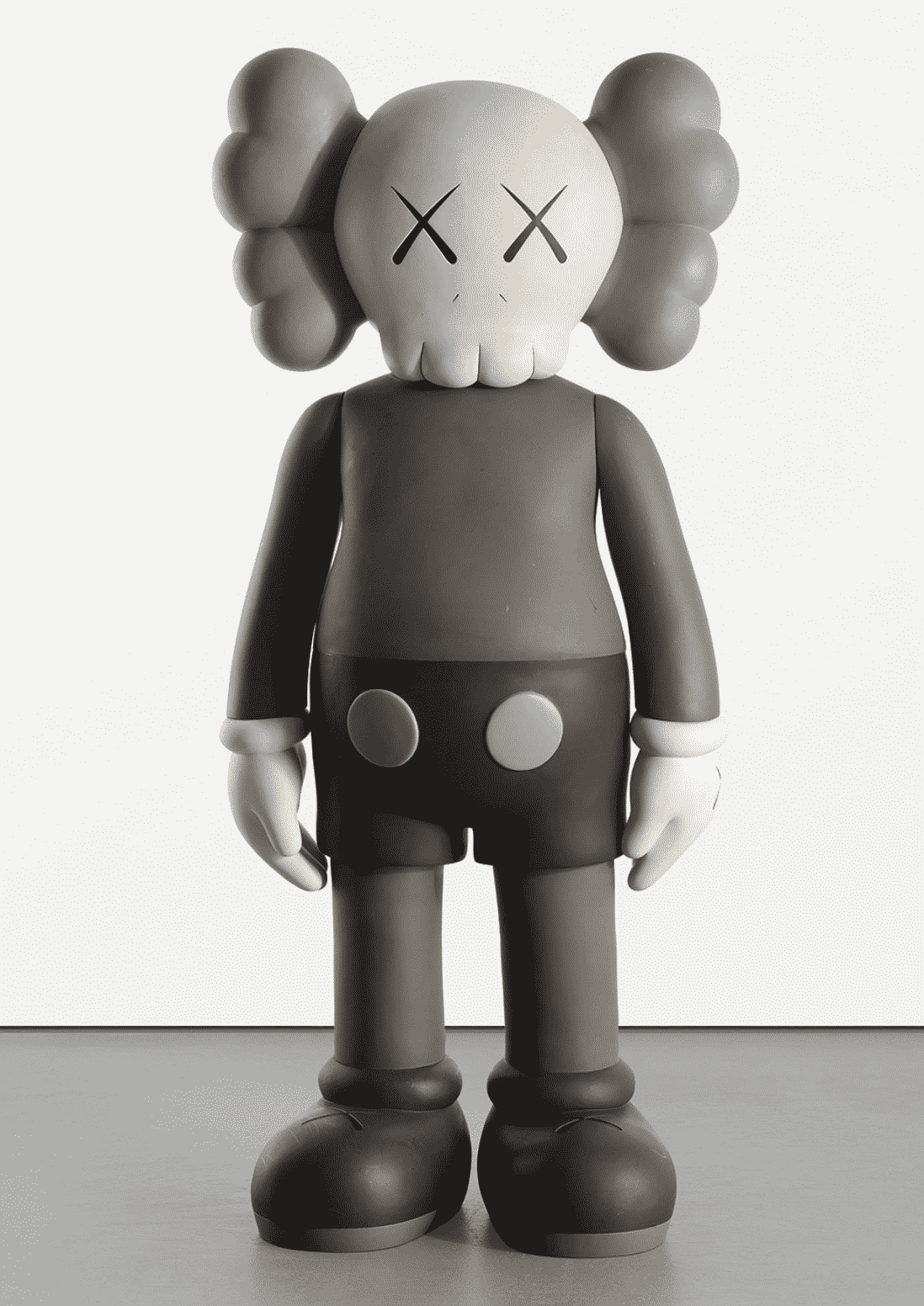
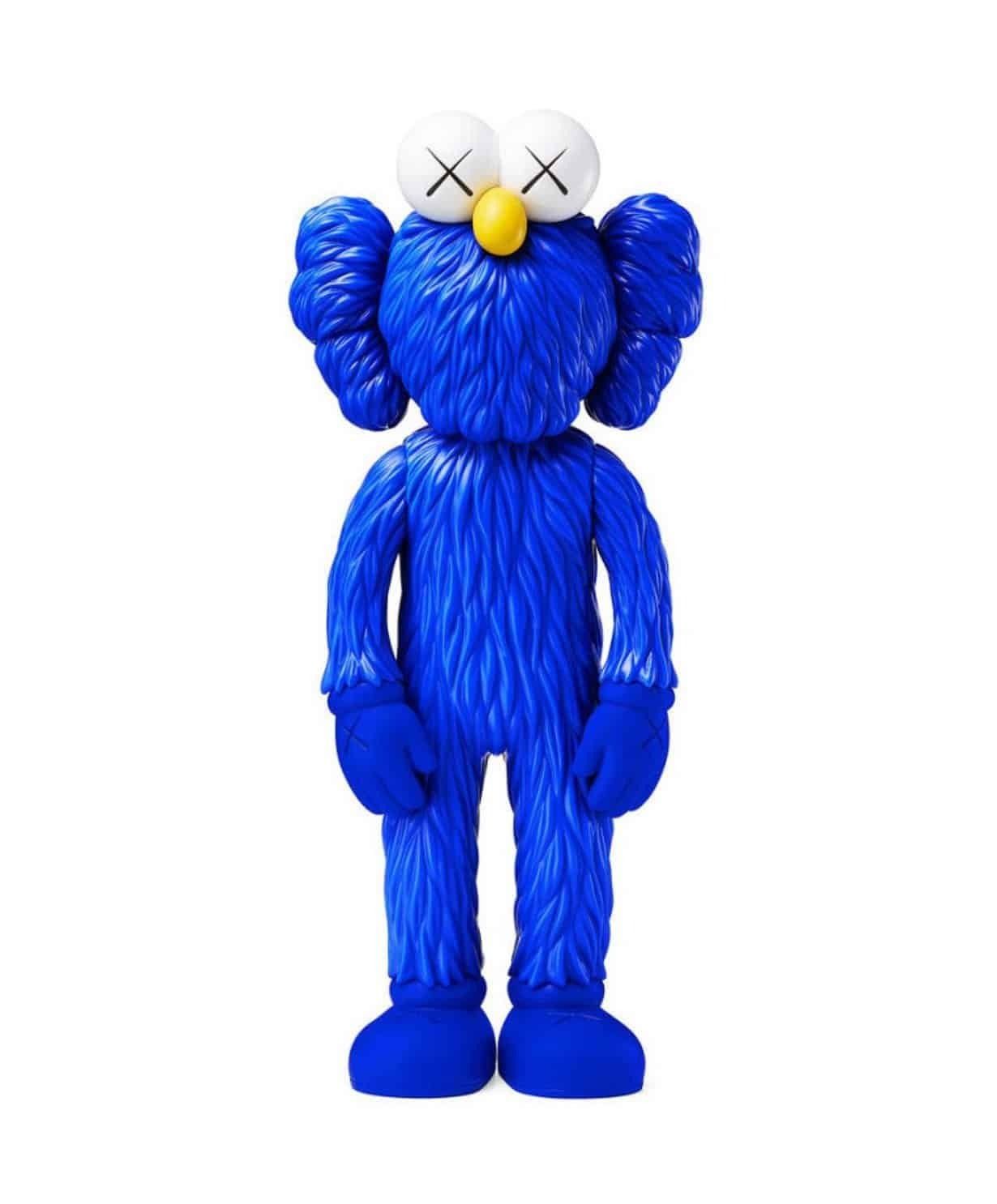
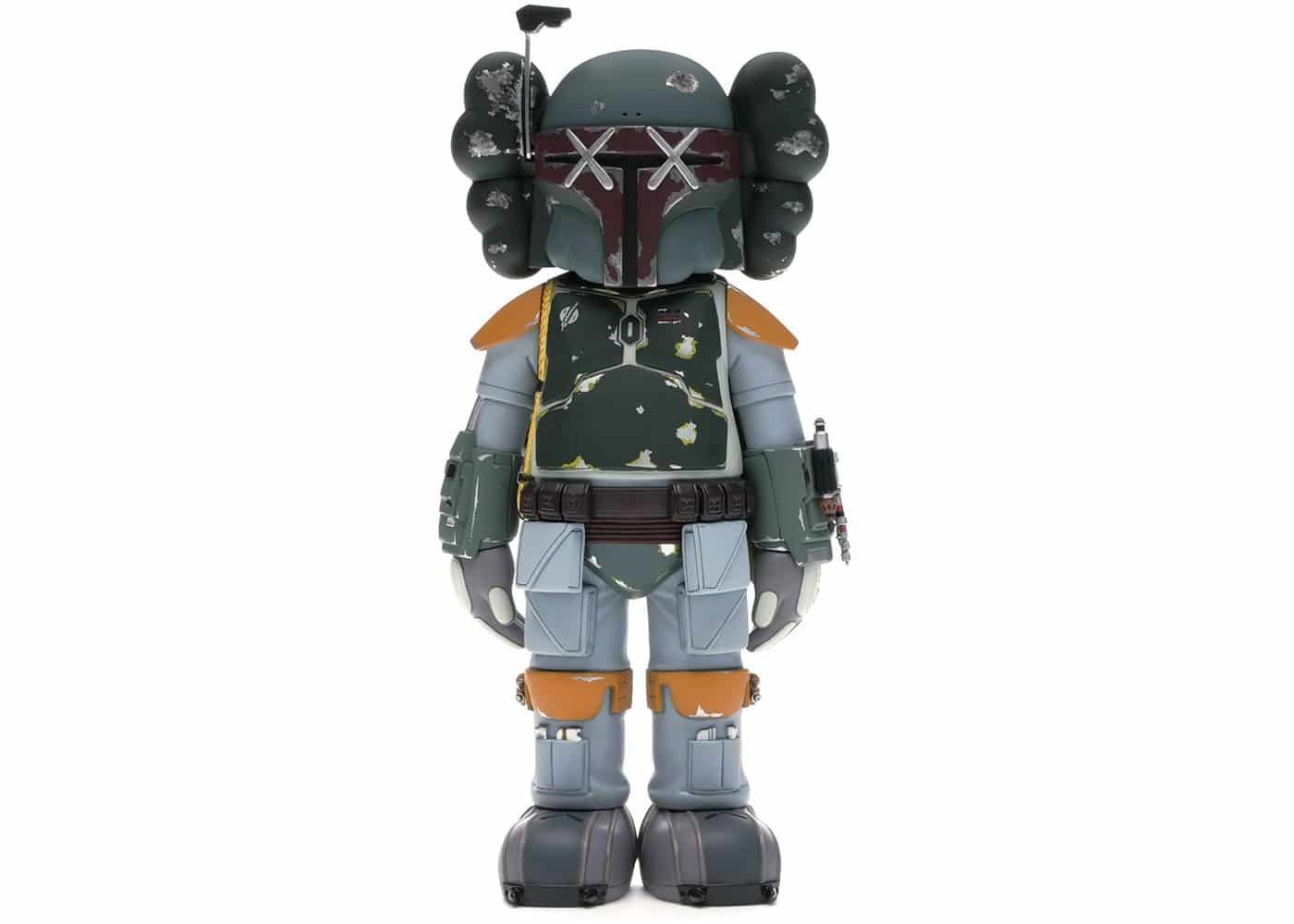
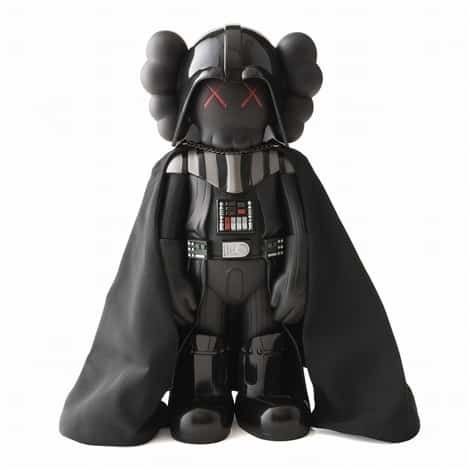
Scarcity is the primary driver in contemporary art pricing, and Donnelly has always understood this. Open-edition vinyl toys keep his brand visible at street level, but they don't hold significant investment value. If you’re interested in KAWS figures for sale, the distinction between tiers matters enormously.
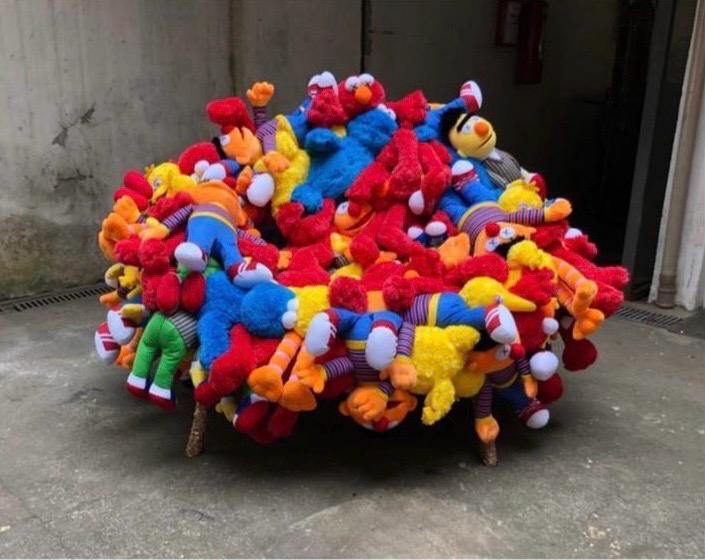
The real market sits at the top of that hierarchy, with unique acrylic paintings on canvas and sculptures cast in bronze or wood in editions of three to ten, and those are the works that move rooms at auction.
Signature and Condition
At the multi-million dollar level, buyers expect flawless work. KAWS’ flat, highly saturated acrylics and precise line work leave little room for imperfection.
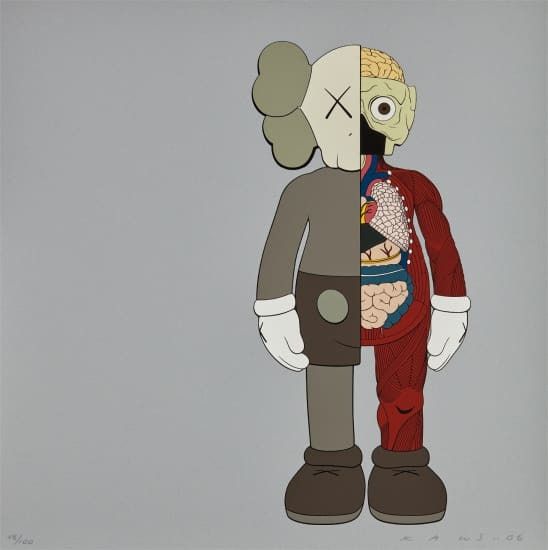
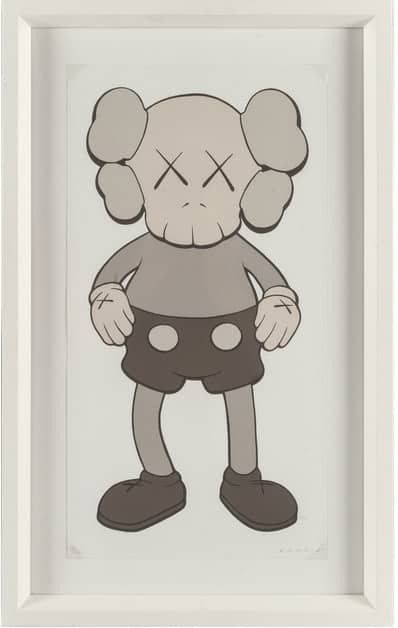
A scratch, a clumsy restoration, or UV fading can meaningfully reduce what a piece fetches at auction. On the flip side, a standard print with original hand-drawn additions or a personal dedication can push well past its usual estimate.
Provenance and Demand
Where a work has been matters. A canvas from the private collection of someone like NIGO, the Japanese streetwear entrepreneur behind A Bathing Ape, carries weight that a comparable piece from an anonymous collection simply doesn’t.
KAWS’s ongoing collaborations with Dior, Nike, and Uniqlo also reinforce his standing with institutional buyers, who see those partnerships as evidence of sustained cultural relevance, not just market hype.
The 10 Most Expensive KAWS Works Ever Sold
The top of the KAWS market is a short list. Only a handful of works have ever crossed the million-dollar threshold, and fewer still have done it more than once. So why is KAWS so famous and expensive? What separates a $50,000 print from a $14 million canvas comes down to a few specific factors. The ten sales below show exactly how those factors play out when serious money is on the line.
10. Untitled (Kimpsons #3), 2003
- Medium: Acrylic on canvas
- Sold: Sotheby’s Hong Kong, April 2019
- Price: $2.2 million
This 2003 canvas belongs to the “Kimpsons” series, which marked KAWS’s formal move from street-level work into painting. The familiar TV family has been stripped of any warmth—each figure bears his signature skull motifs, the whole scene carrying the weight of something gone quietly wrong. Sotheby’s estimated the lot at $764,300. It closed at $2.2 million.
9. Untitled (Kimpsons), 2003
- Medium: Acrylic on canvas
- Sold: Sotheby’s Hong Kong, April 2019
- Price: $2.2 million
This piece was part of NIGOLDENEYE Vol. 1, a Sotheby’s sale devoted entirely to NIGO’s personal collection. A dark blue background contrasts sharply with the yellow figures, giving the composition a stranger, more unsettling tone than the cartoon it references.
Like the previous entry, it sold for $2.2 million—nearly five times its $509,600 estimate. The pairing confirmed that provenance from NIGO’s collection adds a consistent premium.
8. Untitled (Fatal Group), 2004
- Medium: Acrylic on canvas
- Sold: Phillips New York, November 2018
- Price: $2.3 million
Nostalgia plays a significant role in how KAWS collectors buy. Here, the artist reimagines the main cast of Fat Albert and the Cosby Kids, posing them together with their arms raised, each face replaced by his trademark skull. Phillips estimated the piece at $900,000. It sold for $2.3 million, briefly setting a new world auction record for the artist at the time.
7. Kurf (Hot Dog), 2008
- Medium: Acrylic on canvas
- Sold: Sotheby’s New York, May 2019
- Price: $2.6 million
By the late 2000s, KAWS had turned his attention to The Smurfs, renaming his versions “Kurfs.” This painting features a single blue figure holding a giant hot dog—a pairing that says something about American pop culture without needing to explain itself.
The canvas has the look of something that rolled off a factory line: deliberate, precise, with none of the gestural marks you’d expect from a hand-painted work. That tension between fine art and mass production is central to what KAWS does. Estimated at $1.5 million, the lot closed at $2.6 million.
6. Kurfs (Tangle), 2009
- Medium: Acrylic on canvas
- Sold: Christie’s New York, May 2019
- Price: $2.7 million
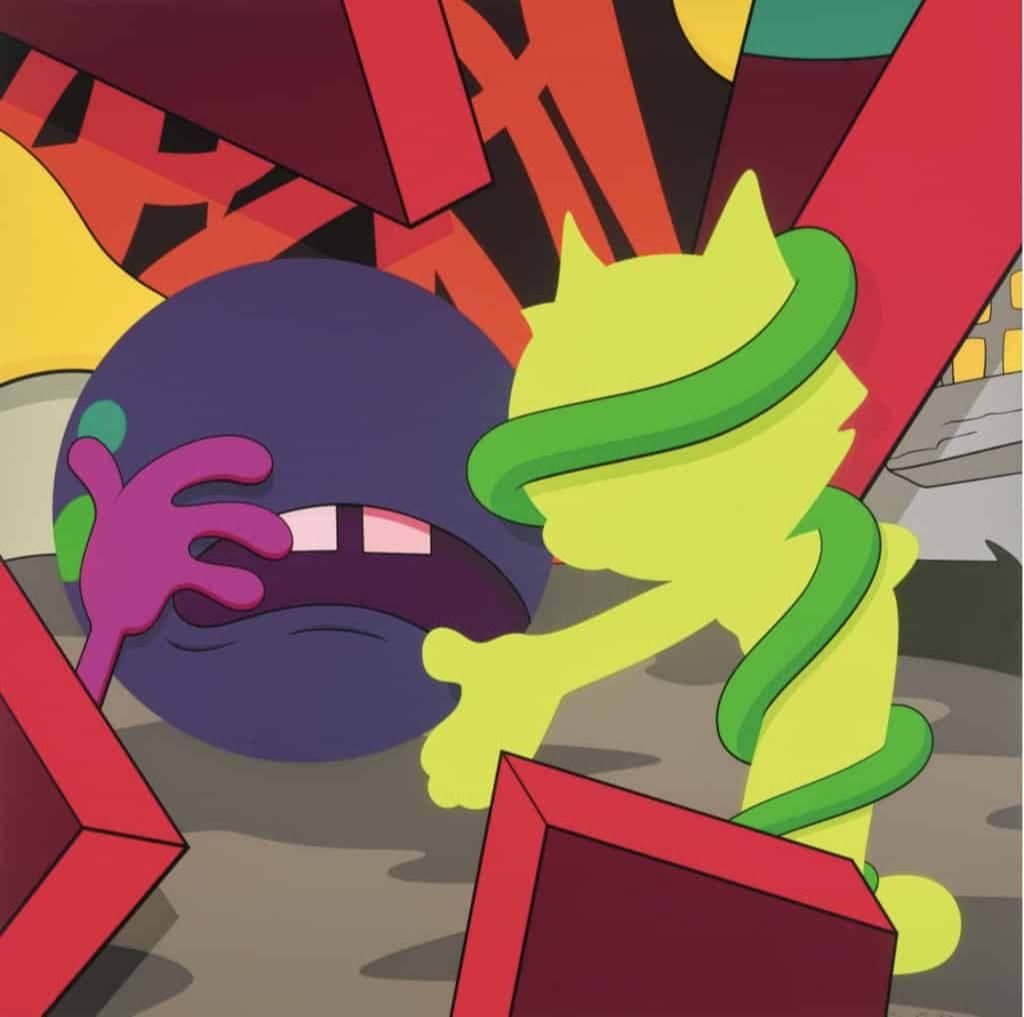
Sold hours before the Sotheby’s Kurf lot, this Christie’s piece traps a Kurf inside a tangle of neon green vines, its body twisted against a background lifted straight from a children’s Saturday morning cartoon.
The contrast is the whole point—innocent visuals, unmistakable tension. That collision between childhood imagery and adult anxiety is a recurring theme in Donnelly’s work. The painting came from a California private collection and sold for $2.7 million against a $600,000 estimate, one of several results from that week proving just how liquid the KAWS market had become.
5. Armed Away, 2014
- Medium: Acrylic on canvas
- Sold: Christie’s Hong Kong, May 2019
- Price: $3 million
Armed Away doesn’t announce itself. The canvas reads as pure chaos—color, fragmentation, movement—until the shapes start to resolve. What emerges are Tom and Jerry, barely recognizable, scattered across what the artist himself describes as a scene of environmental disaster.
It’s one of the few KAWS paintings where the background is as developed as the figures, and it’s that rare compositional depth that drove the result. The piece originally debuted at Honor Fraser Gallery in Los Angeles as part of the MAN’S BEST FRIEND exhibition. Christie’s sold it for $3 million, coming in nearly double what the house had projected.
4. In the Woods, 2002
- Medium: Acrylic on canvas
- Sold: Christie’s New York, May 2019
- Price: $3.9 million
KAWS worked briefly as a freelance background painter for Jumbo Pictures, a Disney-owned production studio, early in his career, and that background shows here. Snow White stands among wide-eyed forest animals in a dark woodland, her face replaced by the hollow features of his Companion character.
The $430,000 it fetched at Sotheby’s in 2016 looks almost modest by comparison. When Christie’s offered the same canvas three years later, it closed at $3.9 million, a return that few traditional asset classes could match over the same period.
3. The Walk Home, 2012
- Medium: Acrylic on canvas
- Sold: Phillips New York, May 2019
- Price: $6 million
SpongeBob SquarePants, or “Kawsbob,” as the artist calls him, screams in the center of a chaotic composition surrounded by floating, disembodied arms. The lot drew an unusually competitive phone room.
Specialists Kevie Yang, Jonathan Crockett, Jean-Paul Engelen, and Miety Heiden drove the bidding past every expectation before it finally settled at $6 million, exactly ten times the low estimate of $600,000. For many observers, this was the sale that announced KAWS had broken through to a different tier entirely.
2. Untitled (Kimpsons #1), 2004
- Medium: Acrylic on canvas
- Sold: Sotheby’s Hong Kong, October 2019
- Price: $7.4 million
Size sets this painting apart from anything else in the Kimpsons series. At nearly nine feet tall, it was commissioned directly by NIGO as a full-scale reckoning with the couch gag, the kind of work that stops a room when it enters it.
Sotheby’s used it as the anchor lot for their contemporary art evening sale. It surpassed its $617,600 estimate to close at $7.4 million, confirming the Kimpsons series as the most valuable segment of his catalog.
1. The KAWS Album, 2005
- Medium: Acrylic on canvas
- Sold: Sotheby’s Hong Kong, April 2019
- Price: $14.8 million (HK$115,966,000)
This is the record. Sourced from NIGO’s collection, The KAWS Album is a parody of The Yellow Album—a Simpsons record cover that was itself a parody of the Beatles’ Sgt. Pepper’s Lonely Hearts Club Band.
The painting layers pop culture references three deep, featuring a full ensemble of Kimpsons characters in place of the original lineup. Bidding opened at HK$5 million. The $1 million high estimate was overtaken almost immediately. The final price of $14.8 million placed Donnelly among the most expensive living artists working today.
How the KAWS Market Has Evolved?
The KAWS market peaked in hype terms between 2018 and 2021, generating headlines almost weekly. Since then, the noise has died down and the profile of who’s buying has changed.
Short-term speculators have largely moved on; the buyers now tend to be institutional collectors, private funds, and long-term holders who treat his work as a dependable contemporary asset.
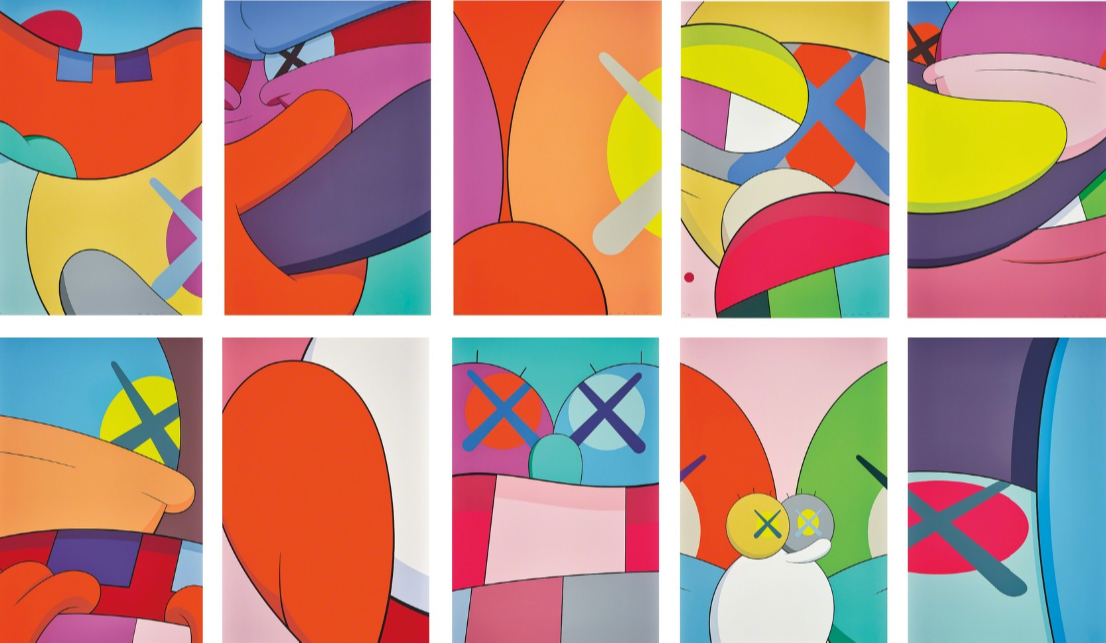
His print market reflects that shift. Average prices for KAWS screenprints have grown steadily over the last five years, making them a reliable entry point for mid-tier collectors who want real liquidity without committing to a seven-figure canvas.
Museum retrospectives have also reinforced his standing. Shows at the High Museum of Art in Atlanta, the Modern Art Museum of Fort Worth, and the Brooklyn Museum have grounded his work within art history, not just pop culture. Public installations like the 121-foot inflatable Companion floating in Hong Kong’s Victoria Harbor keep him in the conversation globally.
5 Tips for New Buyers and Experienced Collectors
If you’re buying KAWS art as an investment, provenance verification and authentication are non-negotiable. His global appeal has made him a target for bad actors. Counterfeit prints and replica sculptures circulate freely through channels that offer no accountability whatsoever.
Before you spend anything, run through these steps:
- Verify provenance first: Request original purchase receipts, gallery certificates of authenticity, and a detailed condition report before transferring any money. The full ownership history of a work matters, especially at higher price points where the stakes are greater.
- Buy through established channels: Work through reputable galleries or auction houses whenever possible. They handle authentication, condition assessment, and shipping logistics in a way that private-market transactions rarely do. At ArtLife Gallery, we guide collectors through every step of that process to make sure you’re buying with confidence. If a deal feels informal, treat that as a warning sign.
- Watch out for forgeries: His global recognition has made KAWS one of the most forged names in contemporary art. Fakes show up everywhere: private sales, social media storefronts, peer-to-peer marketplaces. If the price looks too good, it probably is.
- Consult a specialist before committing: For any significant purchase, an expert can validate authenticity, assess fair market value, and flag anything in the provenance history that doesn’t add up.
- Be clear about your goals: Open-edition vinyl figures are enjoyable to collect, but they won’t appreciate meaningfully over time. If the objective is long-term value and capital preservation, focus on signed limited-edition screenprints, rare bronze or fiberglass sculptures, and original acrylic canvases—the top tier of his output where scarcity is real and documented.
Why the Prices Keep Holding?
KAWS’s market holds for a few specific reasons that go beyond hype. His visual language—the XX eyes, the skull motifs, the corrupted pop icons—needs no explanation. It registers immediately for buyers in Tokyo, London, and New York alike. That universality gives him a global collector base that few contemporary artists can match.
He has also avoided the trap of staying exclusively within fine art. Collaborations with Nike, Uniqlo, and Dior keep his name in front of collectors who may not follow the auction market today but often end up buying his work later.
The pipeline from streetwear consumer to gallery buyer has repeated itself across his career for over two decades. It’s the proof of concept behind his entire market strategy.
The major auction houses treat him accordingly. Sotheby’s, Christie’s, and Phillips place KAWS lots in their premier evening sales without exception, a signal that carries real weight for high-net-worth buyers deciding where to commit capital.
Frequently Asked Questions
What is the most expensive KAWS work ever sold?
The KAWS Album (2005) holds the current record at $14.8 million, sold at Sotheby’s Hong Kong in April 2019. It parodies the Beatles’ Sgt. Pepper cover using the artist’s Kimpsons characters.
Can I buy KAWS art online safely?
Yes, through reputable galleries and established auction houses. At ArtLife Gallery, we offer authenticated works with full provenance documentation. Avoid unverified secondary platforms and informal resale channels, where the risk of buying a fake is real.
How do I verify a KAWS work is authentic?
Authentication involves examining the signature, confirming edition numbers against official catalogues, and tracing the full ownership history. Consult a specialist art advisor or gallery before any high-value purchase.
What makes a KAWS sculpture valuable?
Material, scale, and scarcity. Mass-produced vinyl holds modest value. Bronze or fiberglass pieces in editions of three to ten command significant premiums, sometimes hundreds of thousands of dollars.
Add KAWS Art to Your Collection Today
Ready to buy? Explore ArtLife Gallery’s selection of authenticated KAWS works, each backed by full provenance documentation.