Biggest Collectors & Celebrity Owners of Basquiat Art
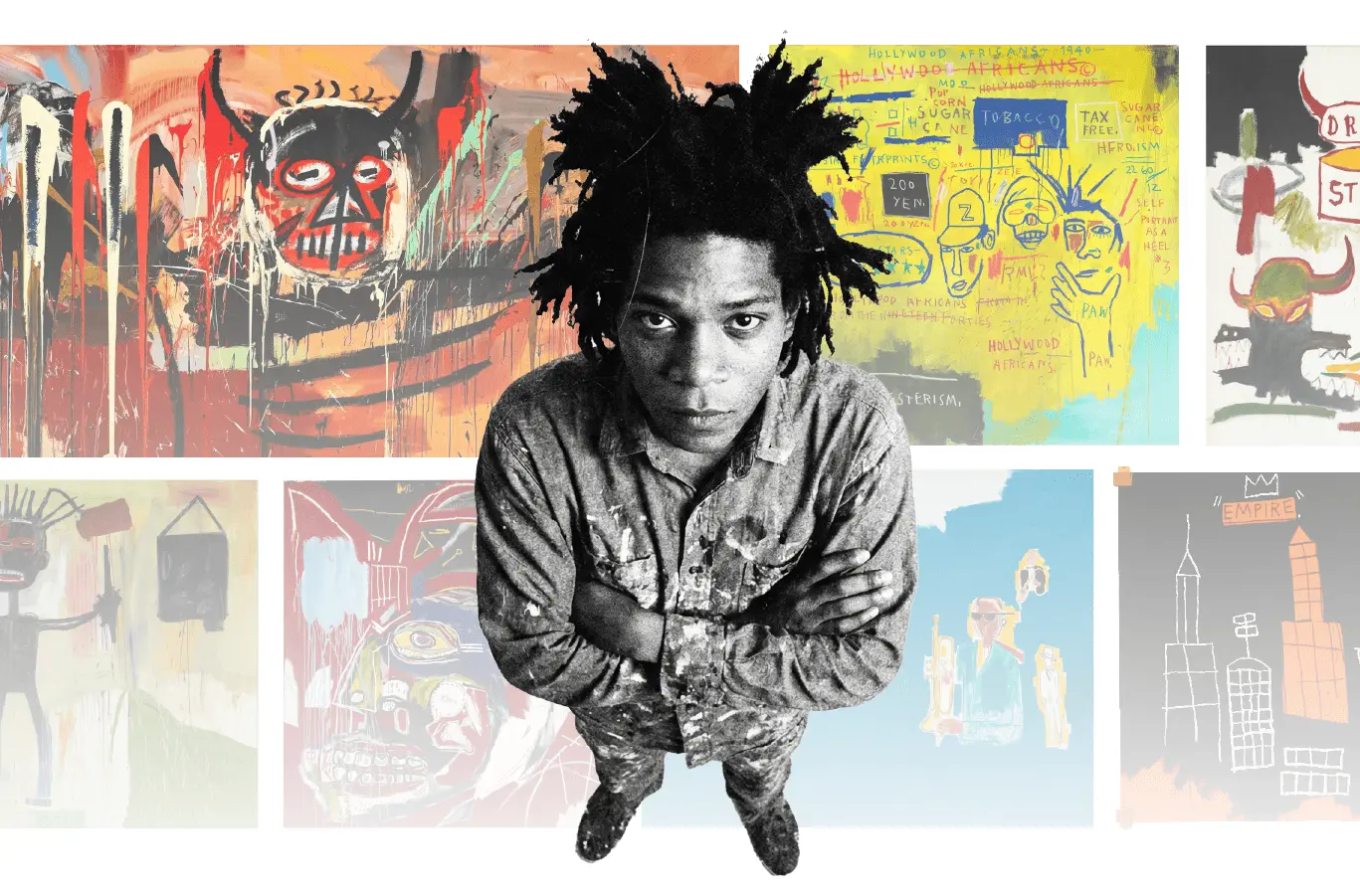
Famous owners of Basquiat
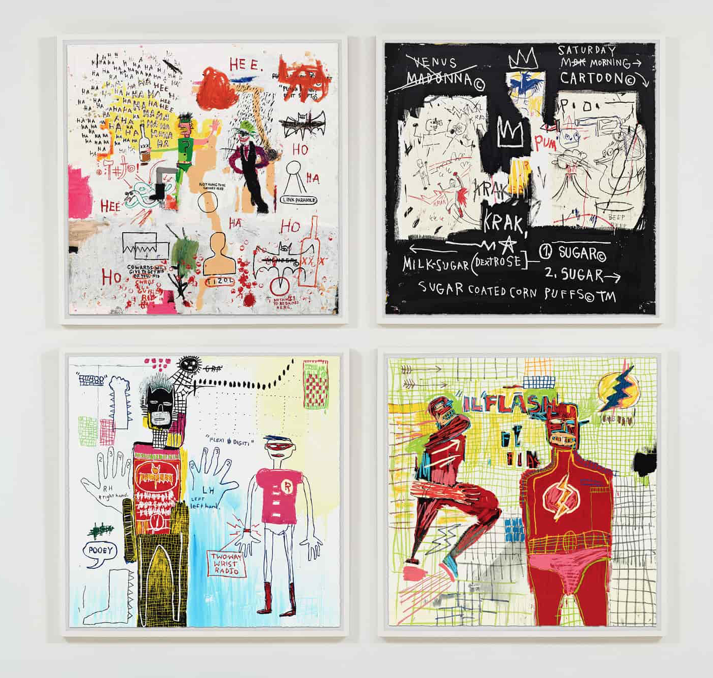
Jean-Michel Basquiat dominates the high-end art market. His paintings sell for prices that compete with the most famous artists in history. Auction houses in New York and London see constant demand for his canvases.
For the global elite, a Basquiat is a required asset that offers a combination of high demand and low supply, and signals a specific level of wealth and cultural knowledge.
This circle of owners includes billionaires, fashion leaders, and Hollywood stars who buy these works as a financial hedge and a social badge.
Since his career was short, he left behind a limited number of museum-scale masterpieces. Every auction is a rare event. Investors choose Basquiat because his value holds steady during economic shifts. He appeals to a new generation of wealthy buyers who want a stable asset with high growth potential.
Related: Why Is Jean-Michel Basquiat So Famous?
Tracking the 1982 “Golden Year” Market
The year 1982 is the most important date in the Basquiat market. Collectors call this his “golden year.” During this time, he moved into a professional studio provided by dealer Annina Nosei.
He produced many of his most recognized and forceful works during this time. Prices for these specific paintings are significantly higher than works from any other period of his life.
Related: 10 Facts You Should Know About Jean-Michel Basquiat
The $110.5 Million Record Sale
In May 2017, the art world saw a historic moment at Sotheby’s. A painting titled ‘Untitled’ (1982) sold for $110.5 million. The work depicts a monumental skull against a blue background. The buyer was Japanese billionaire Yusaku Maezawa.
The sale set a new record for an American artist at auction and positioned Basquiat among the highest-priced artists in auction history.
Several factors explain why works from 1982 are especially prized:
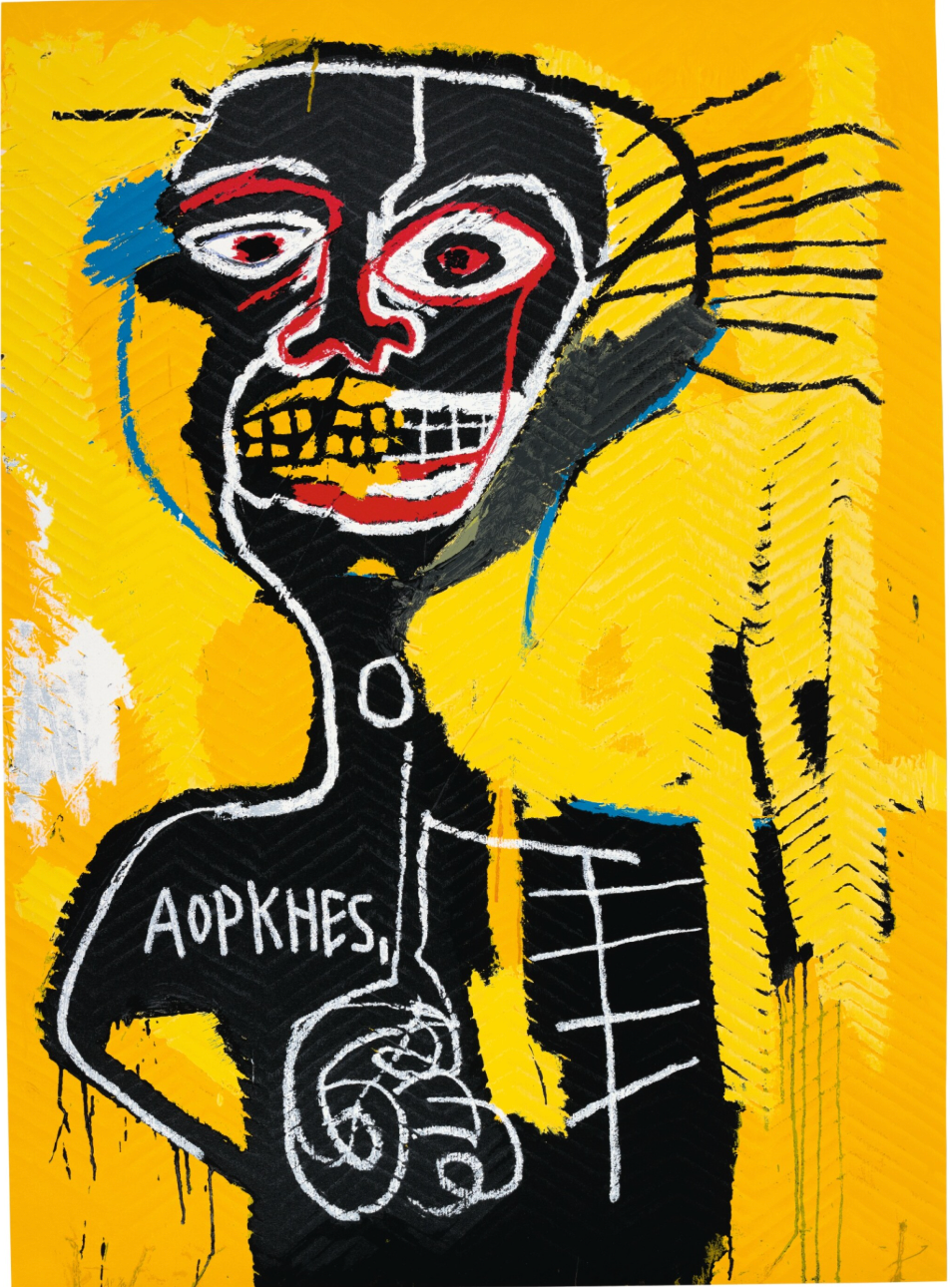
- The Skull Theme: The ‘head’ paintings are the most expensive category in his market.
- Physical Scale: Many 1982 works are large-scale canvases that fit the walls of private museums.
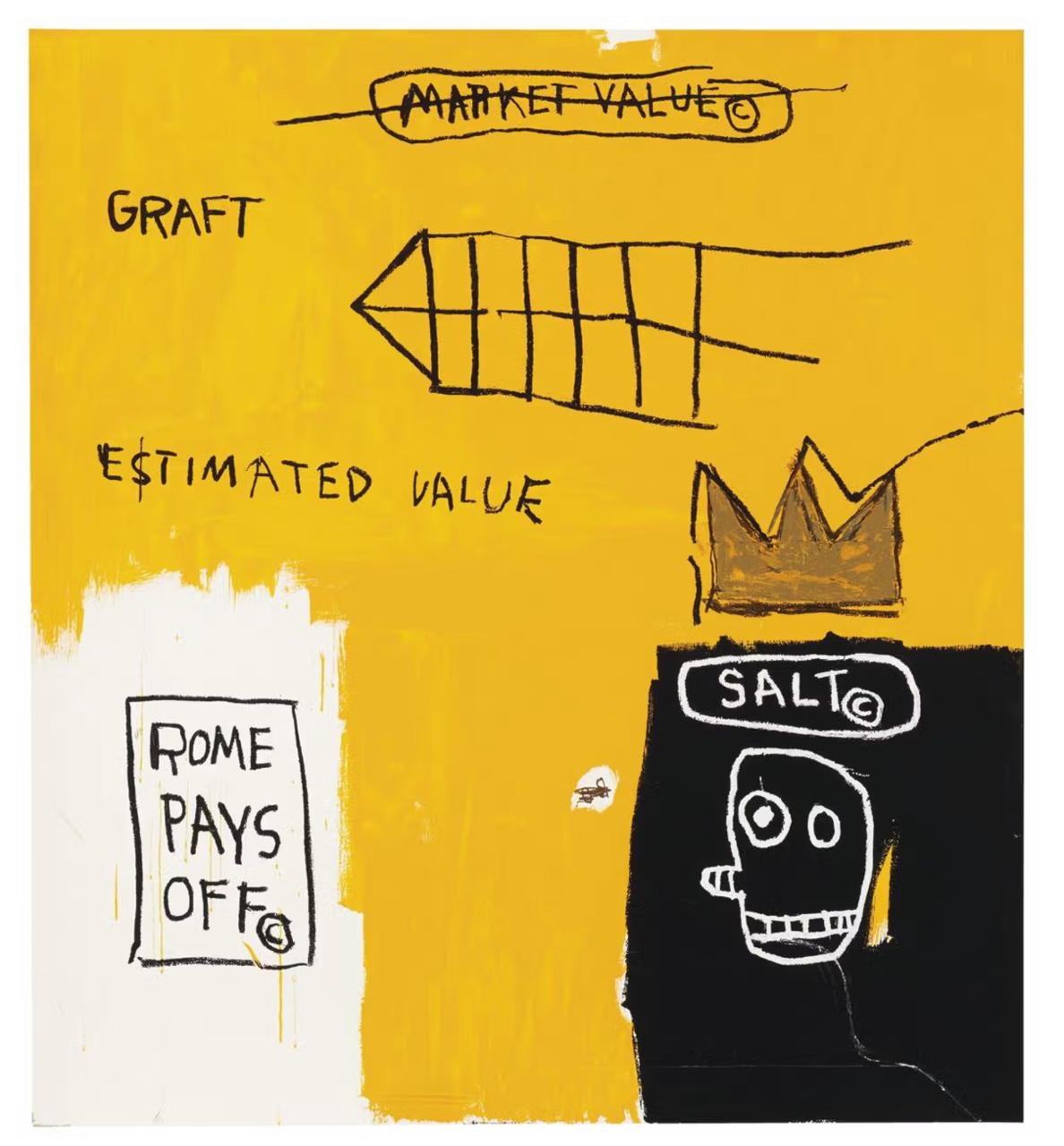
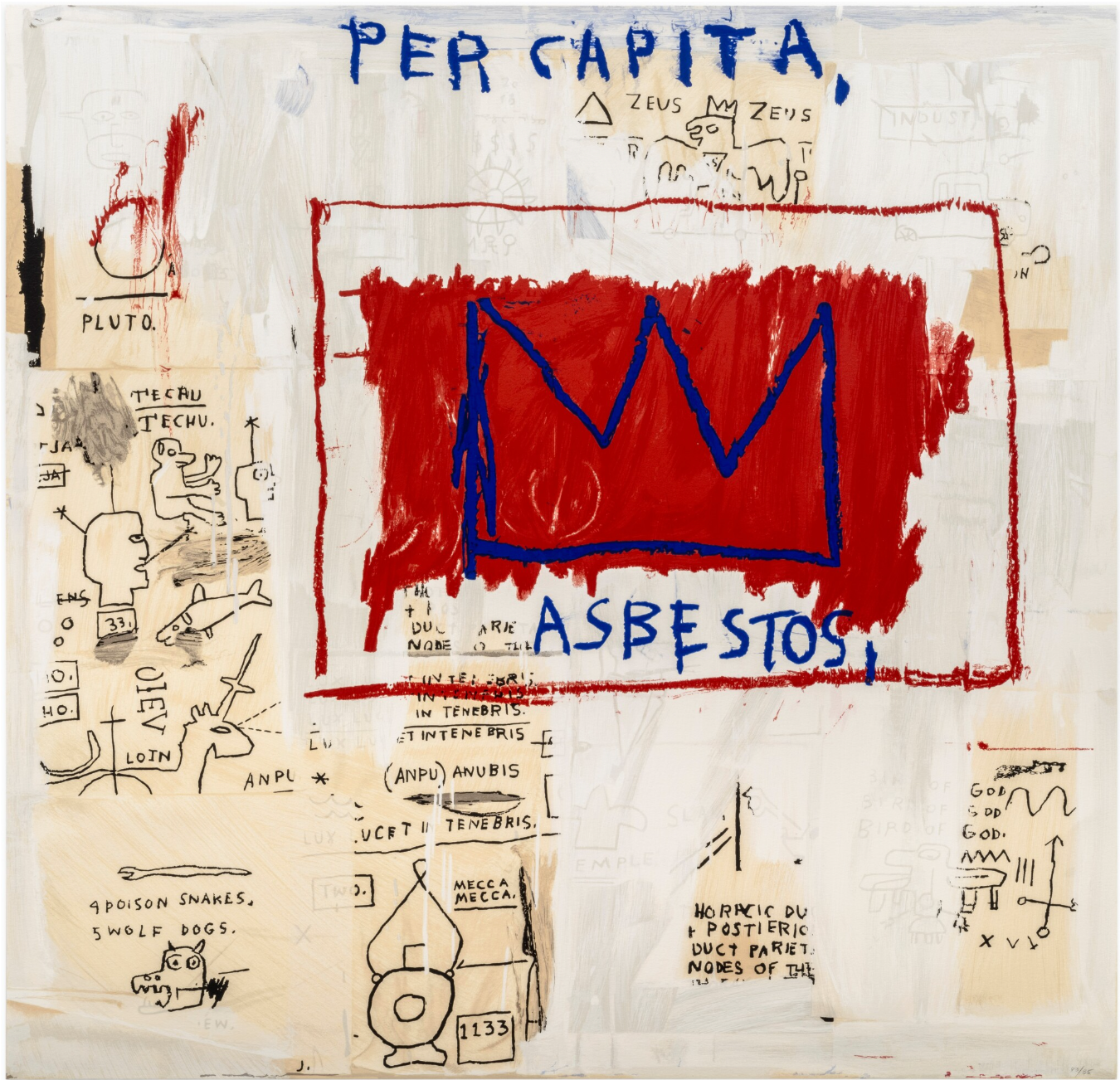
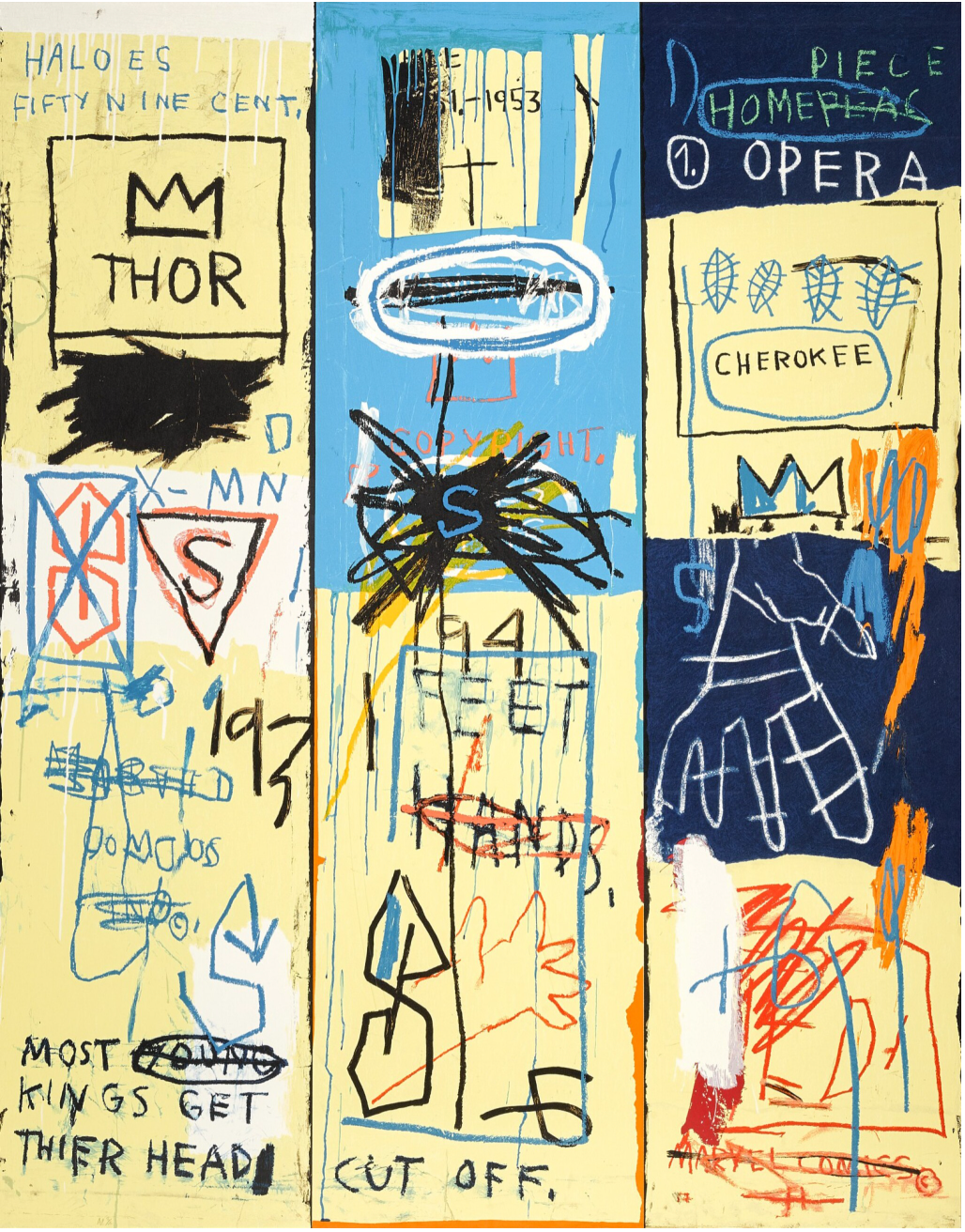
- The Crown Signature: Pieces featuring his signature three-pointed crown have a higher resale value.
- Studio Transition: These works represent his peak transition from street art to the professional gallery world.
Recent High-Price Auction Results
Other sales reinforce this trajectory. In 2021, In This Case (1983) sold for $93.1 million at Christie’s. The painting, featuring a red skull, came from the collection of Giancarlo Giammetti, longtime business partner of Valentino Garavani.
In 2022, Yusaku Maezawa sold another Untitled (1982) for $85 million, having acquired it in 2016 for approximately $57 million. These results underscore the strength of Basquiat’s top-tier market.
Related: Why Jean-Michel Basquiat Is Still the Ultimate Investment Artist
Major Institutional Basquiat Owners: Museums and Foundations
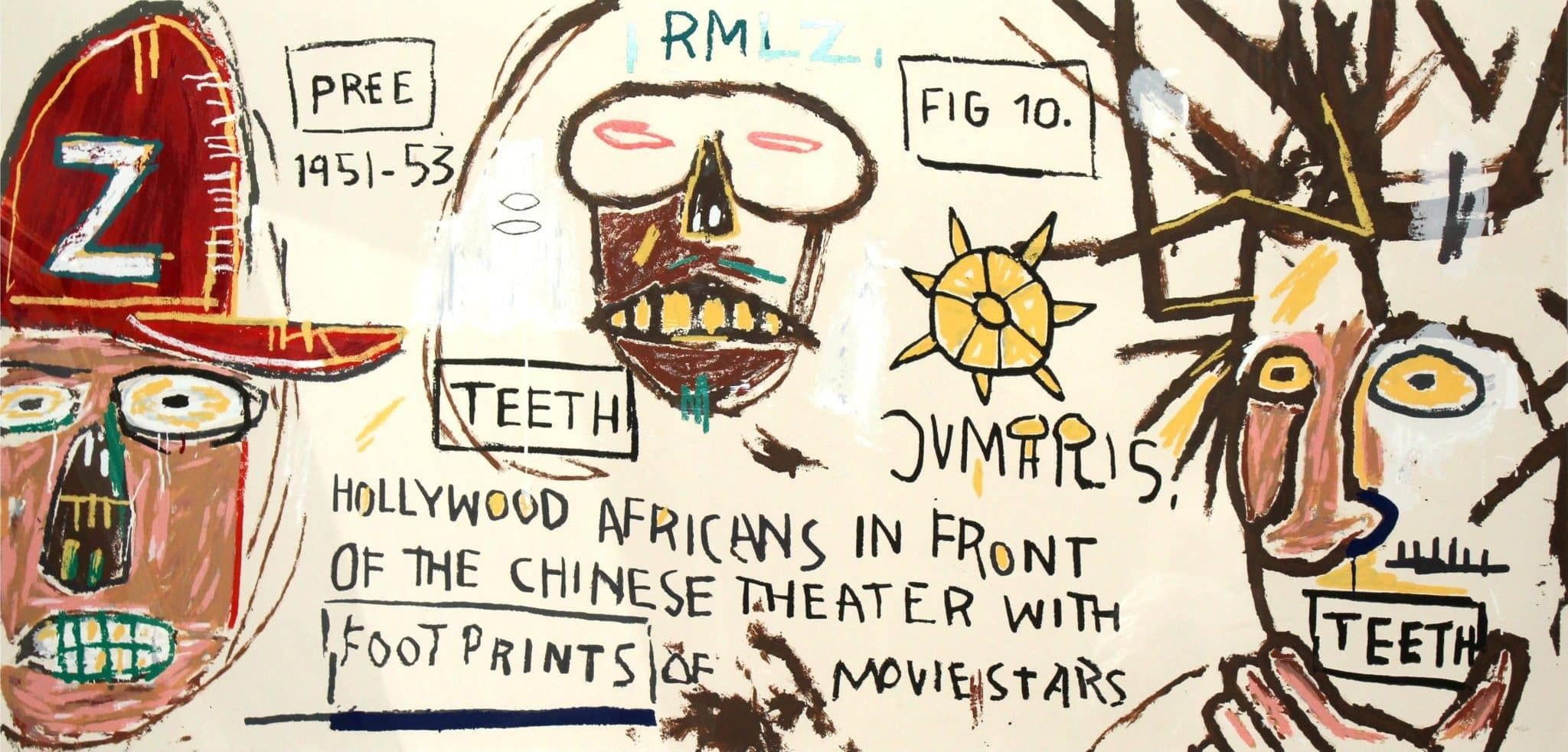
Public institutions hold some of Basquiat’s most important works. Major museums including the Broad, the Whitney, and MoMA house definitive canvases like Irony of Negro Policeman and Hollywood Africans.
The Broad Museum
The Broad holds one of the largest and most prominent public collections of Basquiat in the world. Eli and Edythe Broad acquired 13 original works, making their museum a primary destination for his art.
Key pieces in this collection include Untitled (1981), a foundational head painting, and Irony of Negro Policeman (1981). Their holdings also feature Untitled (1982), which are frequently on loan to major international exhibitions.
The Whitney Museum of American Art
The Whitney is a central guardian of Basquiat’s cultural narrative. It owns Hollywood Africans (1983), a critical work that explores the racial stereotypes of the American film industry. The museum also holds various drawings and works on paper that document Basquiat’s early artistic process and his connection to the New York City street scene.
The Museum of Modern Art (MoMA)
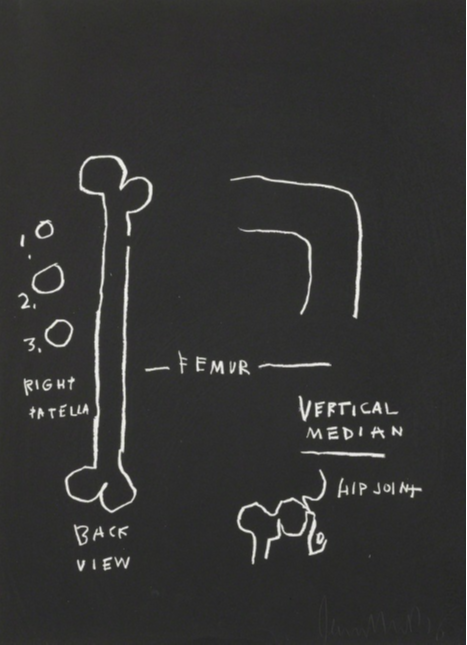
MoMA houses several seminal works that place Basquiat in the context of global art history. Its collection includes major drawings and the painting Glenn (1984), dedicated to his friend Glenn O’Brien. MoMA’s decision to display these works on paper gives collectors a clear way to judge the artist’s technical drawing skills and his use of text.
The Brooklyn Museum
The Brooklyn Museum has a unique, lifelong connection to the artist, who was a member of the institution as a child. The museum owns Untitled (1982), a large-scale work on a wood-slat door, and several other pieces that highlight his local roots. Their collection often focuses on the intersection of his Haitian and Puerto Rican heritage with the urban environment of Brooklyn.
Fondation Louis Vuitton
Through the Arnault family’s LVMH connection, this foundation manages a massive archive of Basquiat’s work. They hold numerous canvases from the peak 1982 period and have organized some of the largest retrospectives in history. Their collection is instrumental in driving the artist’s market value in Europe and Asia.
MACBA
The Barcelona Museum of Contemporary Art (MACBA) houses works that represent Basquiat’s mature period. The collection includes Sterno (1985), Self-Portrait (1986), and the iconic King Zulu (1986), a piece that explores the artist’s interest in jazz history and performance. These works reinforce Basquiat’s lasting impact on the European contemporary scene.
MOCA
The Museum of Contemporary Art (MOCA) in Los Angeles holds some essential canvases that define Basquiat’s early 1980s output. Key acquisitions include the masterpiece Six Crimee (1982) and a powerful 1981 Untitled work, further solidifying the city’s role as a major hub for his legacy.
The Private Juggernauts: Power Players in the Market
The most influential private collectors of Jean-Michel Basquiat include the Mugrabi Family, the Arnault Family of LVMH, Peter Brant, and Yusaku Maezawa, whose acquisitions consistently shape market demand and pricing.
- The Mugrabi Family: This family holds a massive inventory of Basquiat and Warhol. They are known for aggressive bidding. If a Basquiat piece is at risk of selling for a low price, they often step in to buy it themselves. This protects the value of the rest of their inventory.
- The Arnault Family (LVMH): They own many important pieces, including Equals Pi, which was featured in a Tiffany & Co. campaign with Jay-Z and Beyoncé.
- Peter Brant: A longtime collector who began acquiring Basquiat in the early 1980s. His foundation holds numerous early and historical works.
- Yusaku Maezawa: A central figure in the contemporary market, known for lending major works to international museum exhibitions.
Celebrity Collectors: The Famous Owners of Basquiat
Basquiat is the ultimate prize for the entertainment industry. For many stars, owning his work is a sign of ultimate success. The most prominent celebrity collectors of Jean-Michel Basquiat include Jay-Z, Beyoncé, Madonna, Elton John, and the duo of Swizz Beatz and Alicia Keys.
Jay-Z and Beyoncé
Jay-Z bought Mecca for $4.5 million in 2013. The work features the Empire State Building topped with a crown, a motif the rapper often uses to represent Black excellence. The couple’s influence peaked in 2021 during the Tiffany & Co. ‘About Love’ campaign.
Appearing next to Equals Pi (1982) drove a massive spike in search interest for the artist. While the Arnault family owns that specific piece, the association with the Carters consolidated Basquiat’s role in modern luxury.
Madonna: An Early Peer
Madonna’s holdings date back to the early 1980s. As a member of the same downtown New York social circle, she acquired works long before they reached multi-million dollar levels. She is a vocal advocate for his legacy, frequently discussing his raw creative energy in interviews.
Elton John
Sir Elton John collects Basquiat’s technical studies. His collection focuses on the emotional intensity of the artist’s line work and drawings. A long-term commitment that helps keep the artist’s profile high among traditional European collectors
Swizz Beatz and Alicia Keys
Through their Dean Collection, these two prioritize the preservation of Black art. They own significant canvases and drawings, often echoing Basquiat’s own mission for creative independence.
Leonardo DiCaprio
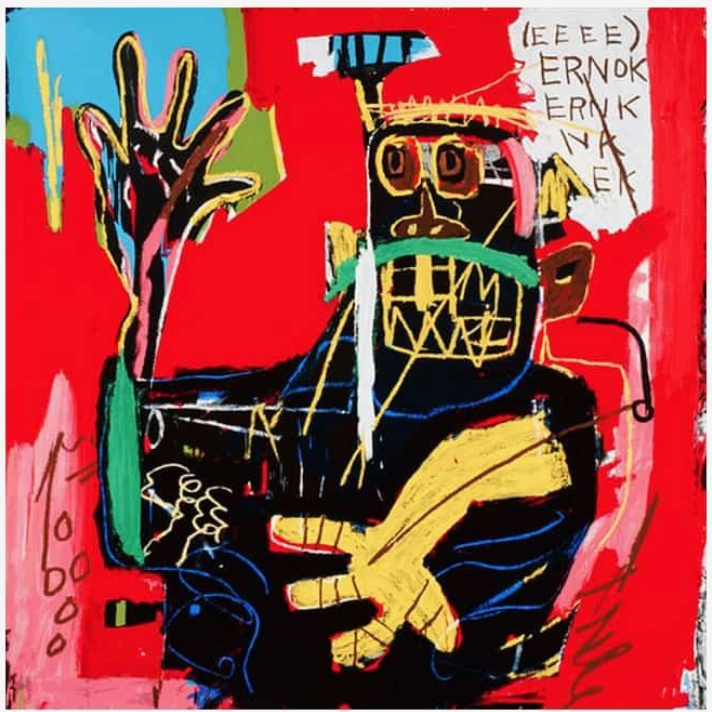
DiCaprio is a regular at New York’s major evening sales. He owns Red Man One and the 1981 drawing Untitled. He typically targets works with strong historical or social narratives, monitoring the market in person to stay ahead of trends.
Johnny Depp
In 2016, Depp liquidated nine pieces at Christie’s in London, including a significant Self-Portrait. The sale brought in over $11.5 million. It was a clear demonstration of how an early passion for the artist can result in a massive financial return.
Lenny Kravitz
Lenny Kravitz began buying in the mid-80s. He lives with the work in his homes to stay inspired, viewing the art as a reflection of the energy that shaped his own career. He is a prime example of a long-term collector who prioritizes historical value over a quick resale.
Angelina Jolie
Jolie’s connection is physical. In 2023, she leased the building at 57 Great Jones Street—the artist’s former home and studio. By launching Atelier Jolie in that space, she has focused global attention on the preservation of Basquiat’s physical history in Manhattan.
Lars Ulrich
The Metallica drummer perfectly timed the market in 2008. He sold Untitled (Boxer) for $13.5 million just weeks before the global financial crash. Having owned the piece for nearly ten years, Ulrich’s sale is a landmark for celebrity art transactions.
Hard Evidence: The Authentication Barrier
High market prices attract sophisticated fraud. In 2022, the FBI raid on the Orlando Museum of Art reshaped due-diligence standards for Basquiat collectors. Federal agents seized 74 paintings from the Orlando Museum of Art in 2022. The institution claimed these works were a “lost” collection discovered in a storage unit. Forensic analysis later confirmed the paintings were forgeries.
The scandal resulted in the immediate dismissal of the museum’s director and a federal investigation. It established a new standard for due diligence. In today’s market, a “found” collection without a direct link to the artist’s estate is an automatic red flag.
The Verification Process
The official Basquiat Authentication Committee closed in 2012. Collectors now rely on a specific set of tools to verify a work’s legitimacy:
- The Enrico Navarra Catalogue: The market turned to Enrico Navarra’s multi-volume catalogue as a key reference. Works not included face major hurdles at top-tier auction houses.
- Provenance Auditing: Buyers require a documented chain of ownership stretching back to the original gallery sale in the 1980s.
- Exhibition History: Documented exhibitions at the Whitney, MoMA, or the Brant Foundation materially strengthen a work’s market credibility.
- Forensic Pigment Analysis: Scientific testing confirms if the chemicals in the paint match the specific materials available in New York during the artist’s lifetime.
The Future of Basquiat Ownership
Basquiat is now a global commodity. Demand in China, Japan, and South Korea is driving the market to new levels. In 2021, the painting Warrior sold in Hong Kong for $41.8 million, setting a record for Western art sold in Asia. His appeal extends far beyond the New York auction scene.
The supply is permanent and finite. As more masterpieces enter museum collections, the number of pieces available for private purchase drops, making remaining canvases more valuable. For billionaires and cultural icons, a Basquiat remains the ultimate tool for demonstrating power and status.
Build a Collection with Strategy
Acquiring a Basquiat artwork requires a disciplined approach and expert guidance. The market rewards those who prioritize quality and absolute verification. At ArtLife Gallery, our specialists manage the due diligence and sourcing needed to secure works with long-term value. For a confidential consultation on your next acquisition, contact our experts today.
Ready to Start Your Collection?
Success in this market hinges on insight and access. ArtLife delivers both. We source investment-grade prints and blue-chip canvases that build real portfolio value. Contact ArtLife today to access our private inventory and acquire your next asset.