Why Is KAWS So Famous? 10 Things to Know About the Artist
10 things to know about KAWS
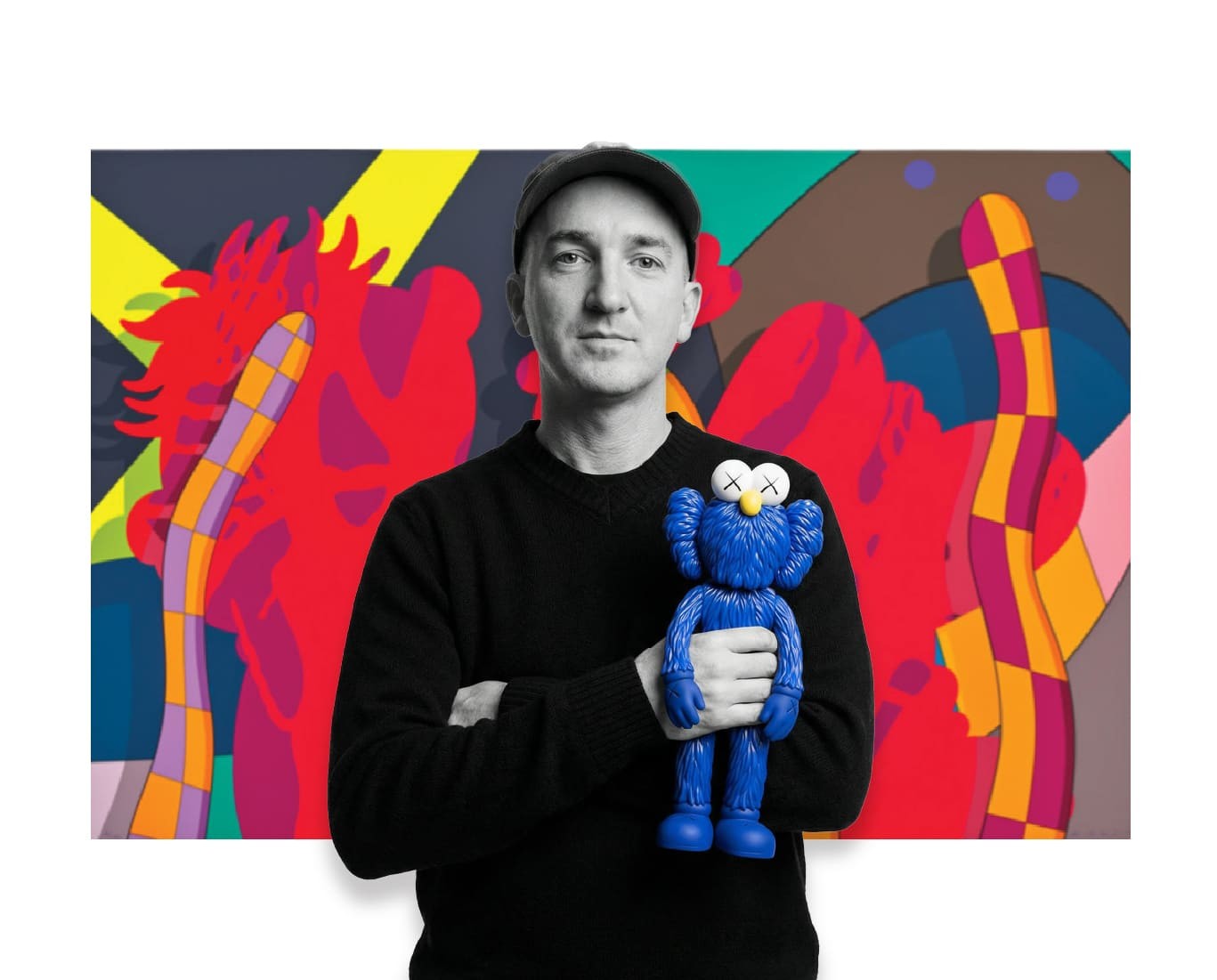
The name KAWS shows up in a lot of places: record-breaking sales at Christie’s, Uniqlo storefronts, museum retrospectives, and Nike collaborations. Behind all of it is Brian Donnelly, a New Jersey-born artist who has spent three decades building one of the most commercially and critically recognized careers in contemporary art.
The crossed-out eyes and skull motifs that defined his early street work are the same ones that appear in museum collections in New York, Melbourne, and London today. The visual language never changed. The venues did. These ten things explain how he got there.
Key Takeaways
KAWS is Brian Donnelly, born 1974 in Jersey City, New Jersey. He studied illustration at the School of Visual Arts in New York, worked briefly as a background painter for Disney, and established his early reputation through street intervention in Manhattan.
- Sale record: $14.8 million for The KAWS Album, Sotheby’s Hong Kong, 2019.
- Average compound annual return: 16.2%, per Sotheby’s Mei Moses data.
- Exhibited at the Brooklyn Museum, Serpentine Gallery, National Gallery of Victoria, and more.
- KAWS’s iconic Collaborations with Nike, Dior, Uniqlo, Supreme, and Audemars Piguet.
The 10 Things to Know About KAWS
KAWS’s career spans graffiti, toys, sculpture, painting, and commercial collaboration simultaneously. Collectors who buy KAWS figures, prints, and canvases today are investing in one of the most documented bodies of work in contemporary art. These ten factors explain why the market behind it has held.
1. He Built His Audience Before He Had a Gallery
The gallery system was never part of the plan. KAWS entered the market through the street, tagging buildings in Jersey City and Manhattan in the early 1990s with four letters chosen purely for how they looked together.
The tagging evolved into something more calculated. He started accessing bus shelter ad displays at night, removing the commercial posters, painting over them with his figures, and putting them back before morning. Passersby began pulling the altered ads off shelters to keep them.
His subvertising spread to London, Paris, Berlin, and Tokyo before he had a single solo show. By the time institutions paid attention, he already had an audience they could not have manufactured.
2. His Visual Signature Is Impossible to Mistake
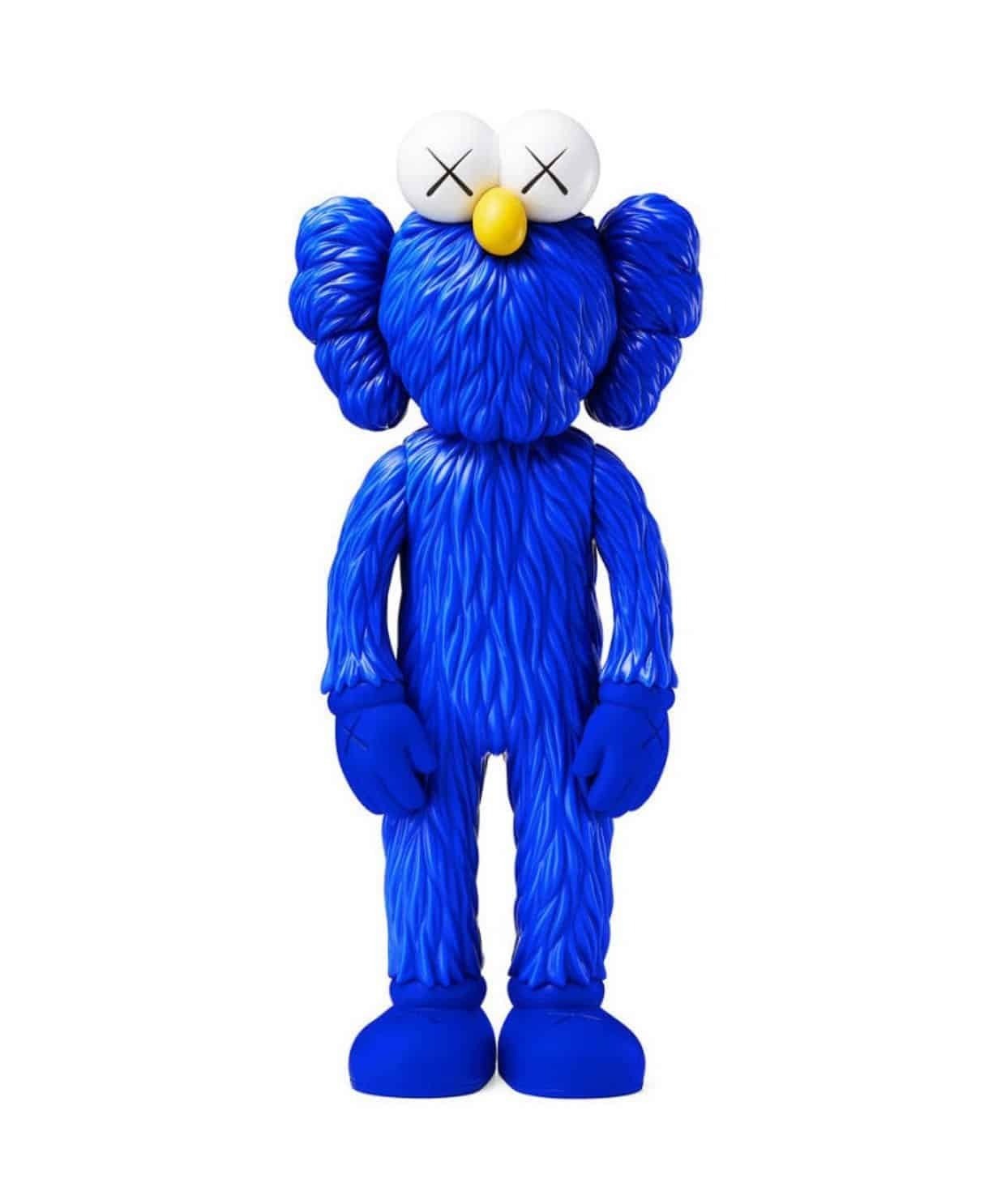
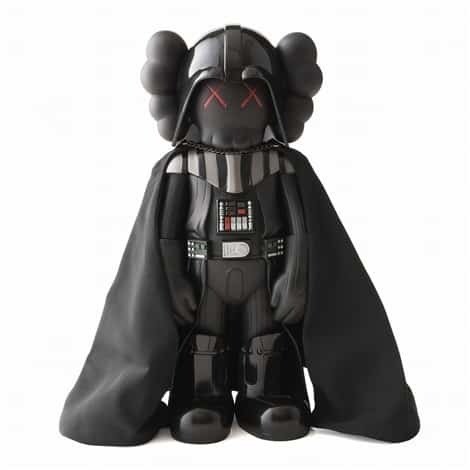
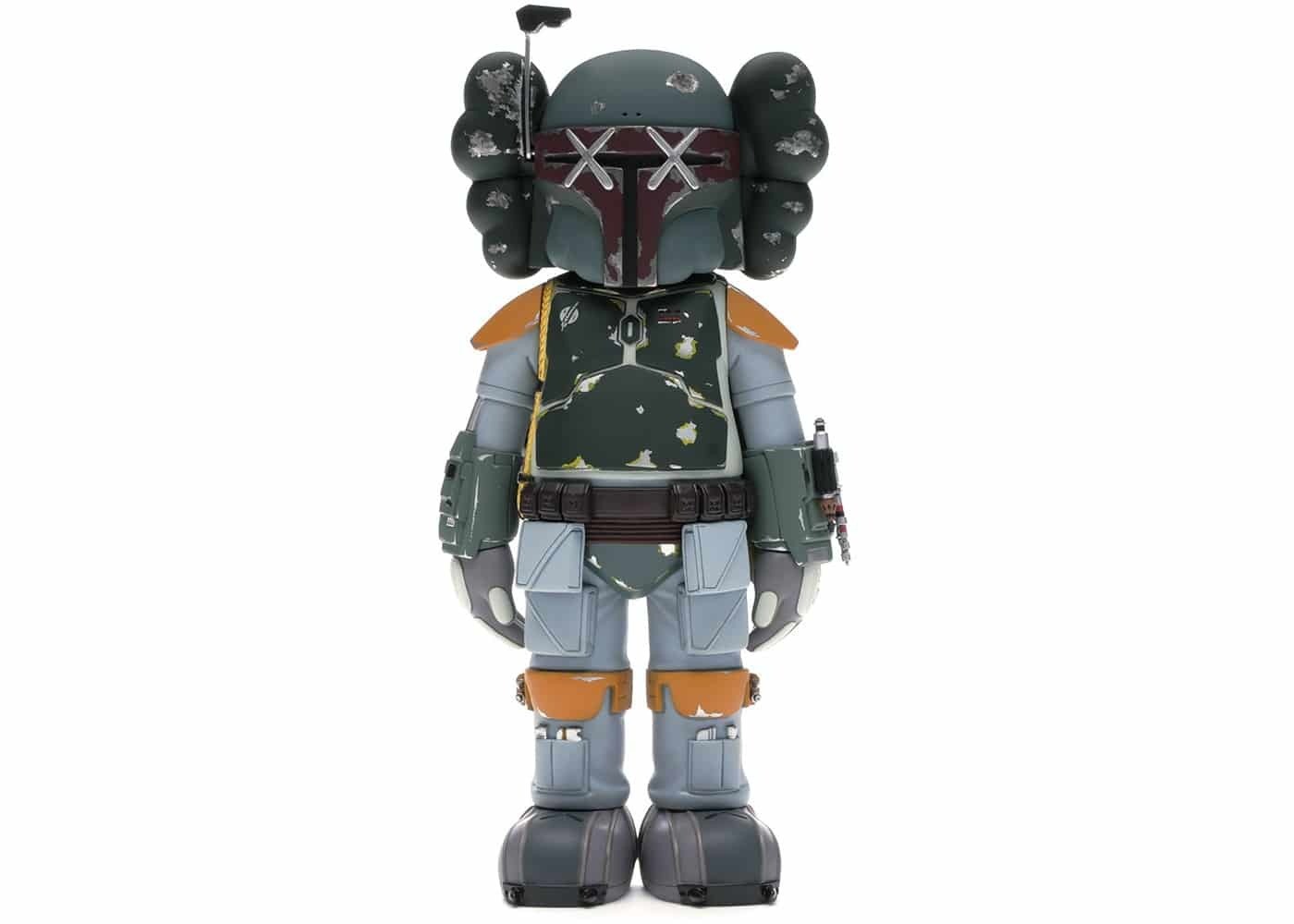
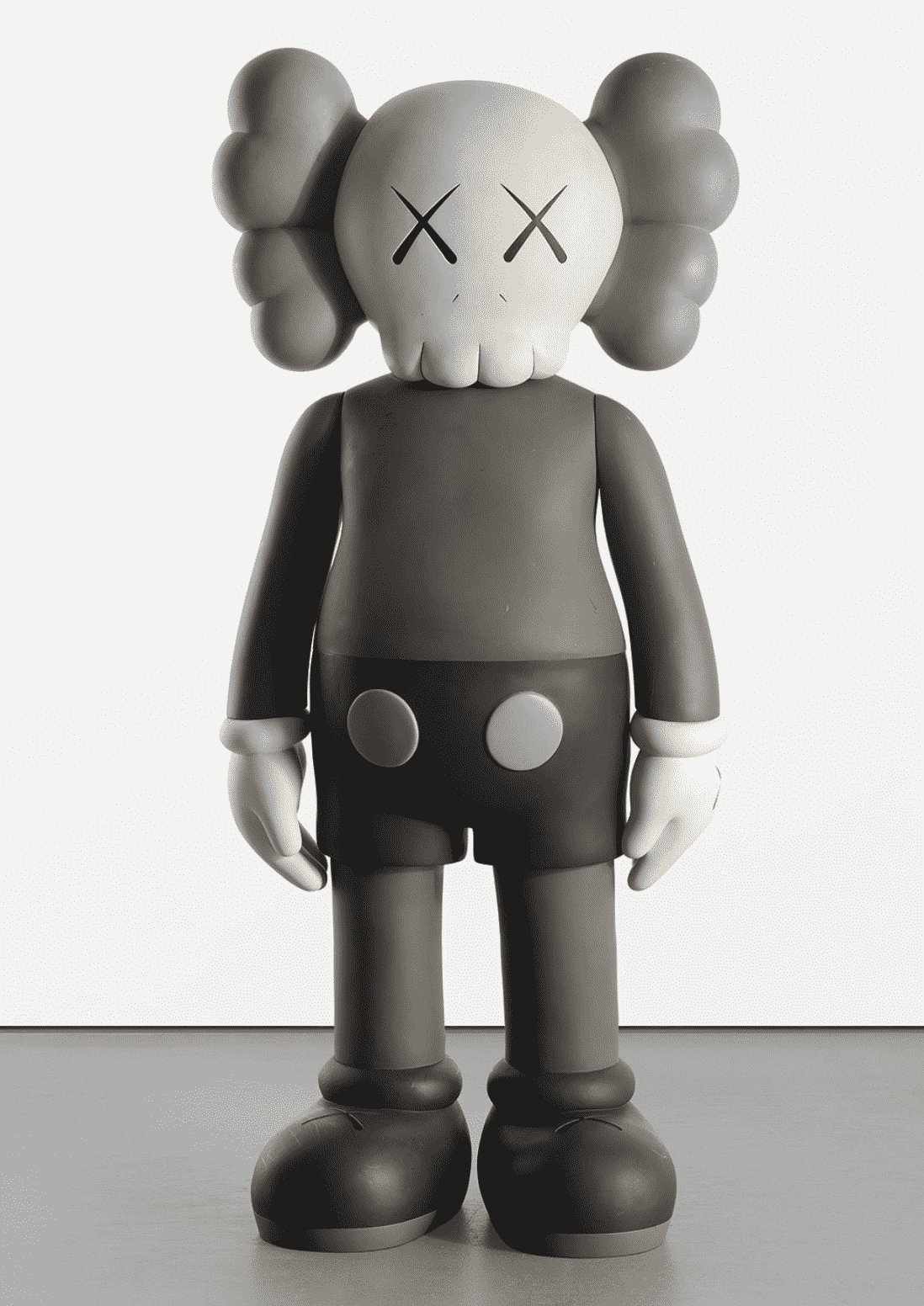
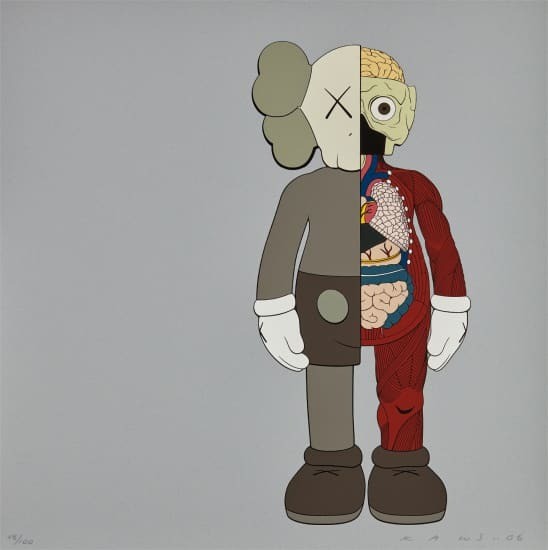
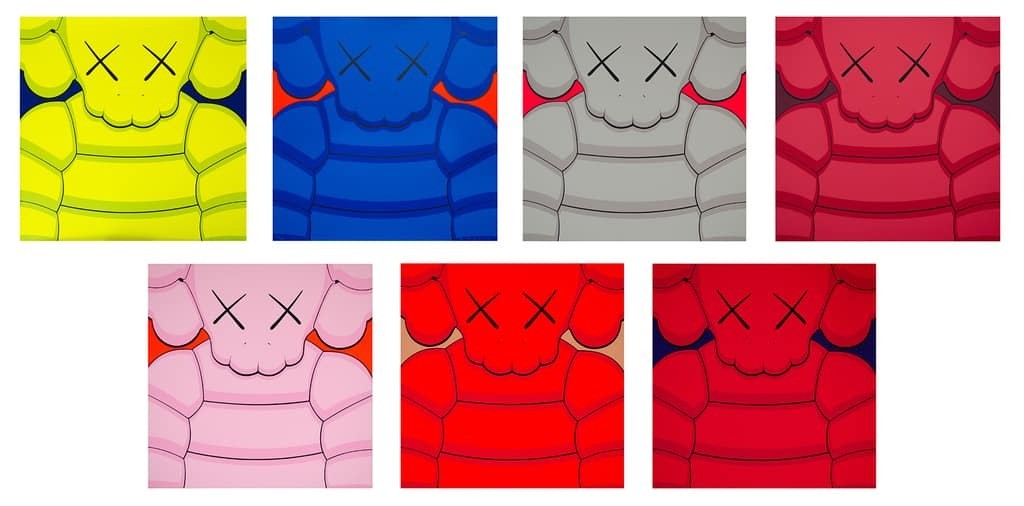
Crossed-out “XX” eyes. Skull motifs replacing faces. Figures pressing both hands over their eyes. A signature specific enough to identify at a glance and consistent enough to carry across thirty years without losing coherence.
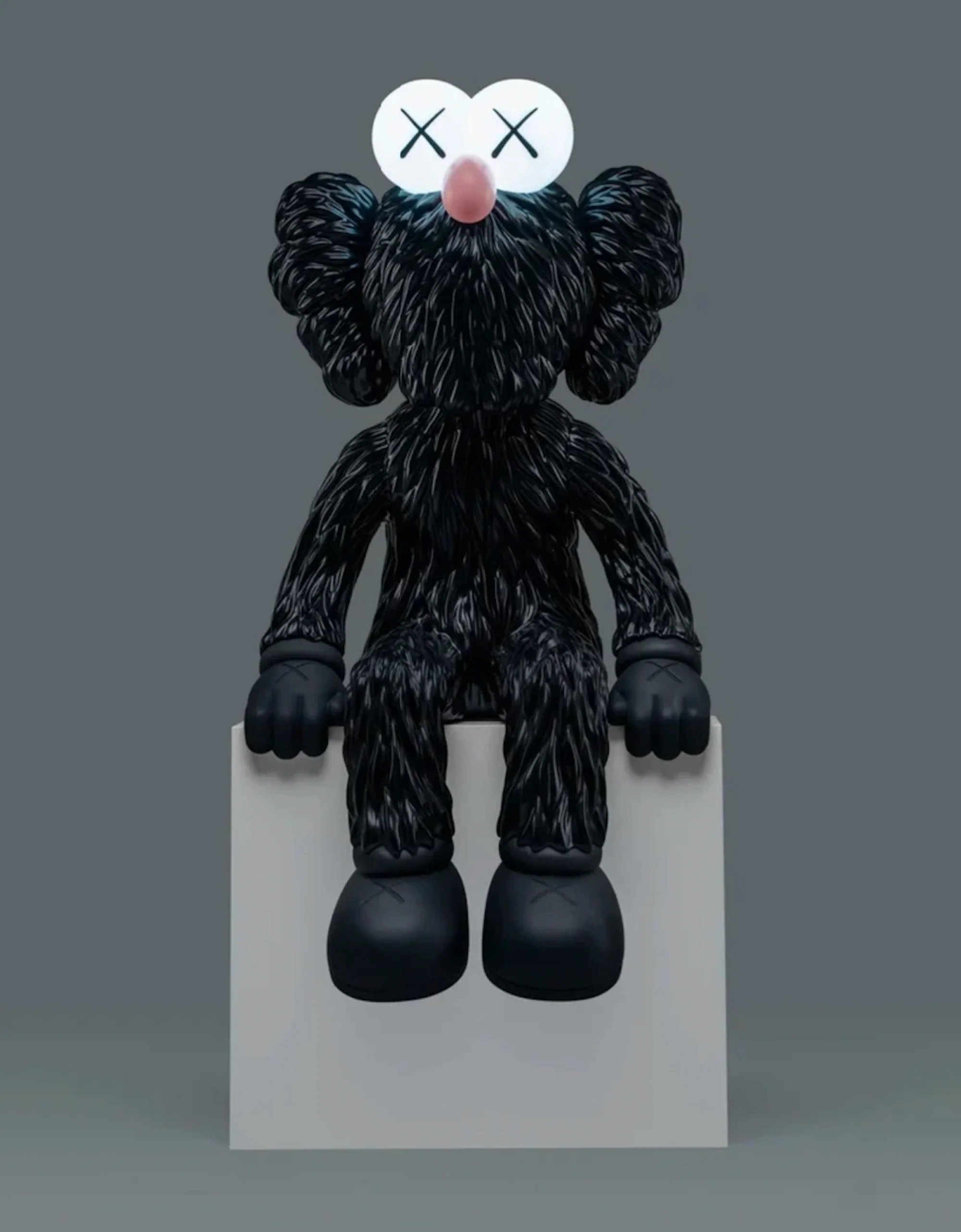
KAWS’s figures sit at a precise emotional register: silhouettes that read as familiar, details that read as wrong. That gap travels across cultures and price points without requiring translation or context. Companion, BFF, Chum, Accomplice, Bendy, and Blitz are the six most-known characters KAWS has created.
3. A Toy Launch in 1999 Opened a New Market
Japanese streetwear brand Bounty Hunter approached KAWS in 1999 about producing a vinyl figure. He created COMPANION—a character with a distorted skull face and crossed-out eyes, cast in an edition of 500. It sold out immediately.
The release cracked open the global art toy sector, concentrated heavily in Japan, where limited-edition vinyl was already taken seriously as a collectible medium. COMPANION anchored his entire output from that point forward:
- Vinyl editions in varying scales and colorways.
- Fiberglass and bronze sculptures at monumental scale.
- Inflatable public installations deployed across Asia.
- Paintings featuring COMPANION alongside other corrupted figures.
4. His Sculptures Command Public Space
KAWS works large. His sculptures have been installed in public spaces throughout the US, Europe, and Asia. A KAWS balloon appeared in the 2012 Macy’s Thanksgiving Day Parade. The following year, he redesigned the Moon Man statuette for the MTV VMAs.
The most significant public installation came in March 2019: a 121-foot inflatable COMPANION (part of the HOLIDAY series) anchored in Victoria Harbour, Hong Kong, during Art Basel. It had previously appeared in Seoul and Taipei. At that scale, the audience numbers in the millions and no gallery admission is required.
5. The Brand Collaborations Are Structural, Not Decorative
Every partnership KAWS has taken on targets a specific segment of his collector base.
- Uniqlo (since 2016): Global retail reach at under $50, putting his imagery in front of buyers who will never visit an auction house.
- Dior (2019): Paris Fashion Week debut by Kim Jones, with a 33-foot BFF sculpture as backdrop, positioning him squarely inside luxury.
- Supreme (2001): Signed CHUM skateboards that sold at Christie’s in 2020 for $30,000, cementing streetwear credibility early.
- Audemars Piguet (2024): Concept Tourbillon “Companion” watch limited to 250 editions, with a miniature COMPANION sculpture replacing the dial.
None of these partnerships required him to alter the work itself.
6. The Auction Data Is Hard to Ignore
His average sale price nearly doubled in 2017, from $42,272 to $82,063. Five works crossed $1 million each in November 2018, and that year his total sales realized over $33.8 million.
The KAWS Album hammered at $14.8 million at Sotheby's Hong Kong in April 2019—still the record. Per Sotheby’s Mei Moses data, the average compound annual return sits at 16.2%, with 100% of tracked works increasing in value. That figure attracts buyers who treat art as a hedge rather than a hobby.
For a full breakdown of the ten highest prices his work has achieved, see the 10 Most Expensive KAWS Works.
7. Museum Validation Came Early and Has Not Stopped
KAWS has accumulated a museum exhibition record that few artists in his market position can match. The institutional relationship started in 2010 and has not slowed down since, spanning major venues on four continents.
Aldrich Contemporary Art Museum, Connecticut (2010): First institutional solo show.
- Brooklyn Museum, New York (2015): Major solo exhibition in one of the most visited museums in the US.
- Modern Art Museum of Fort Worth, Texas (2016): Large-scale survey that traveled to the Yuz Museum in Shanghai in 2017.
- National Gallery of Victoria, Melbourne (2019): First major Australian institutional show.
- Serpentine Gallery, London (2022): Solo show later recreated as an explorable map inside Fortnite, making it arguably the most visited art exhibition in history by raw attendance.
- Andy Warhol Museum, Pittsburgh / Parrish Art Museum, Water Mill / The Drawing Center, New York City (2024): Three simultaneous shows open in the same year.
- The New York Botanical Garden 2027. Newly commissioned works will appear alongside pieces that have never traveled to North America in the largest-scale presentation of KAWS’s work at NYBG
8. The Cartoon Appropriations Follow a Consistent Logic
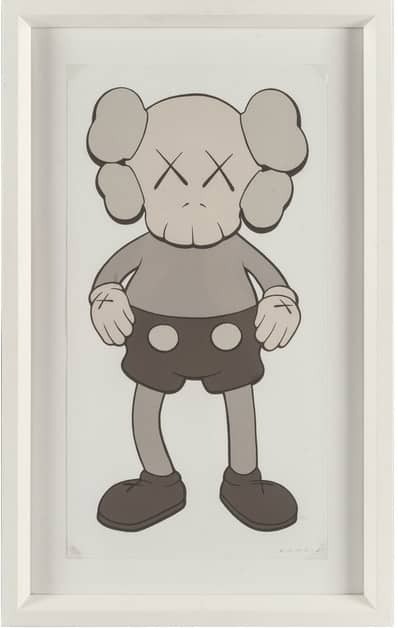
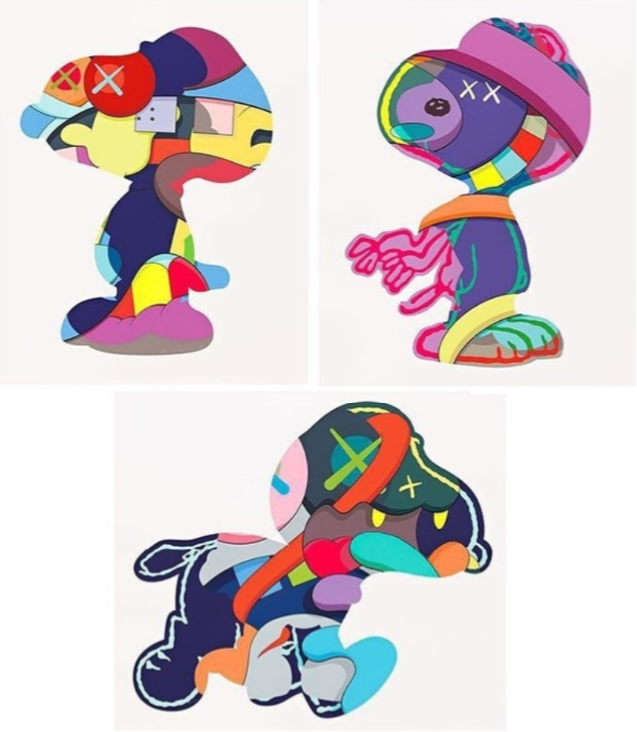
KAWS has worked with The Simpsons, Mickey Mouse, SpongeBob SquarePants, The Smurfs, Garfield, and Fat Albert.
The method is the same in each case: take a universally recognized figure, replace its identifying facial features with his own motifs, and reframe it in a context that shifts its emotional weight entirely.
The source characters carry decades of cultural meaning for audiences worldwide. KAWS inserts his signature into that shared recognition and distorts it enough to produce an entirely different reading.
Someone who grew up watching SpongeBob reads the canvas differently than someone encountering it purely as painting. Both readings are valid, and both are intentional.
9. He Operates at Every Price Tier Without Contradiction
Comparisons to Basquiat, Haring, Warhol, and Koons appear regularly in critical writing about KAWS. Each of those artists collapsed the boundary between commercial culture and fine art without surrendering credibility on either side. KAWS belongs in that conversation.
The $50 Uniqlo piece and the $14.8 million canvas share the same visual DNA. That range, maintained without contradiction for thirty years, is one of the structural reasons his work has proven durable where purely speculative contemporary art markets have not.
10. Scarcity Is Engineered Into the Model
Open-edition vinyl figures keep the brand visible at the entry level but rarely gain significant value over time. The works that move auction rooms operate under genuine, documented scarcity:
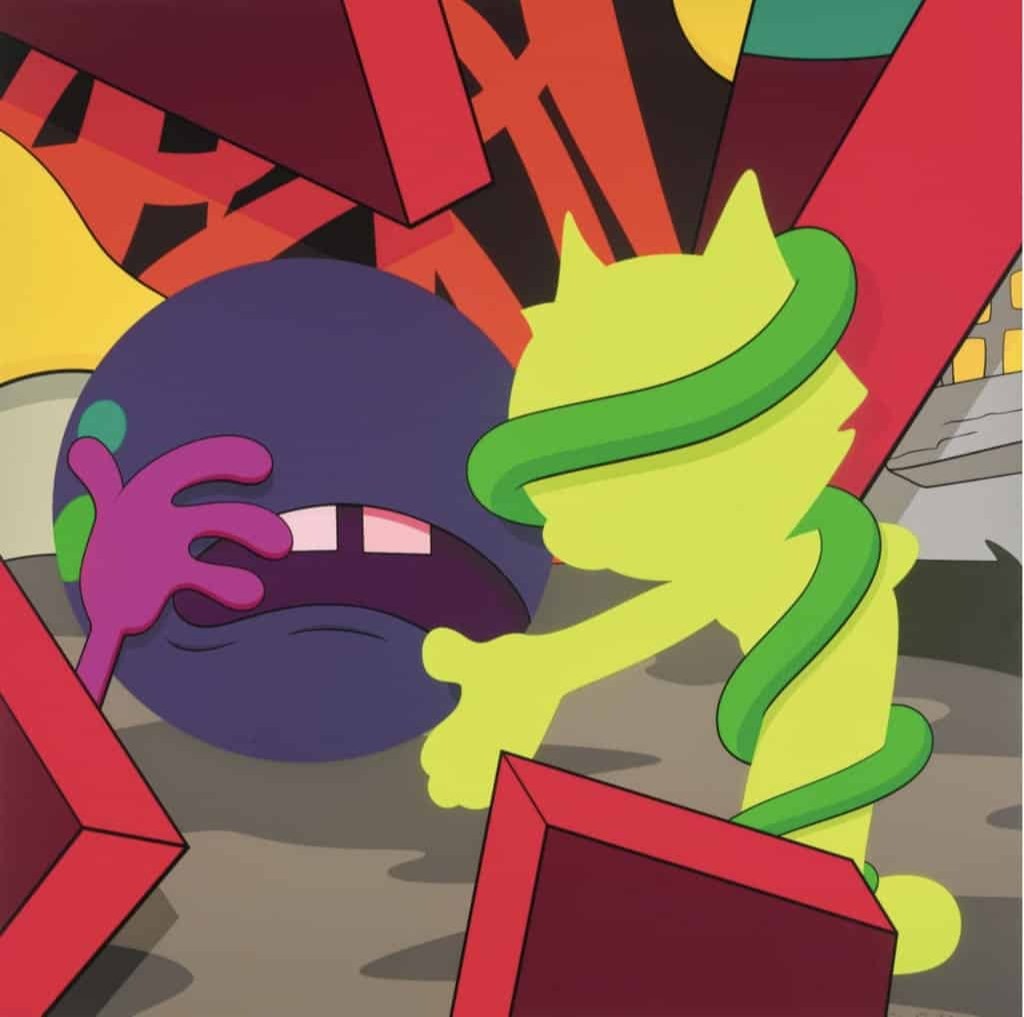
- Unique acrylic canvases (one of a kind, no edition).
- Bronze and fiberglass sculptures (typically editions of three to ten).
- Signed limited-edition screenprints (controlled runs with verified edition sizes).
KAWS has maintained this hierarchy deliberately throughout his career. Wide availability at the low end sustains the brand. Hard limits at the top protect the market. The collector base that results covers every tier: first-time buyers, mid-level collectors building screenprint positions, and private funds parking capital in blue-chip assets.
Why Collectors Are Drawn to KAWS
The investment case for KAWS is built on thirty years of public data. Works at every level of the market have appreciated consistently, the sales history is transparent, and the secondary market for screenprints stays active year-round. Whether the goal is liquidity or long-term capital preservation, the market structure supports both.
Some of the earliest COMPANION toy buyers in 1999 have followed the work for over twenty years. That depth of tenure is uncommon in markets driven primarily by short-term speculation, and it provides a stability that purely hype-driven markets cannot sustain.
For buyers entering the market now: open-edition pieces are an accessible entry point, but their value does not grow over time. Signed screenprints offer liquidity and steady value growth. Unique canvases and small-edition sculptures sit at the top of the market.
ArtLife Gallery offers contemporary art for sale, including authenticated KAWS paintings, prints, vinyl toys, and sculptures, all supported by full provenance documentation.
Fun Facts and Lesser-Known Details About KAWS
Some of the most interesting things about KAWS have nothing to do with auction records or museum retrospectives.
- The tag “KAWS” carries no deeper meaning. Donnelly chose it because he liked how the four letters looked together.
- Before his career took its current shape, he painted backgrounds for Disney at Jumbo Pictures, contributing to 101 Dalmatians, Daria, and Doug.
- His early subvertising included a mock Calvin Klein ad featuring supermodel Christy Turlington alongside one of his figures.
- He collaborated with Supreme in 2001 on signed “CHUM” skateboards. A set sold at Christie’s in 2020 for $30,000.
- He co-created a unisex perfume with Pharrell Williams and Comme des Garçons.
- The 2022 Serpentine exhibition, recreated inside Fortnite, is arguably the most visited art exhibition in history by raw attendance.
Frequently Asked Questions
Who is KAWS and what is his real name?
KAWS is the working name of Brian Donnelly, born in 1974 in Jersey City, New Jersey. He studied illustration at the School of Visual Arts in New York and began his career as a graffiti artist before moving into fine art, vinyl toys, and large-scale sculpture.
Why is KAWS famous worldwide?
KAWS built his reputation across street art, fine art, and commercial collaboration over thirty years. His work is in major museum collections on four continents and his results at the top houses place him among the most collected living artists.
What types of KAWS art are most collectible?
Unique acrylic canvases and bronze or fiberglass sculptures in editions of three to ten sit at the top of the market. Signed limited-edition screenprints offer strong secondary market liquidity at lower price points. Open-edition vinyl figures carry cultural value but rarely appreciate meaningfully over time.
How do I know if a KAWS work is authentic?
Authentication starts with three things: the signature, the edition number confirmed against official catalogues, and the full ownership history. KAWS is one of the most forged names in the market. Before any significant purchase, consult our experts at ArtLife Gallery. We sell only verified works with full provenance documentation on every piece.
Can I buy KAWS art online?
Yes, through reputable galleries and established auction houses with verified provenance. Avoid unverified resale platforms and informal channels, where the risk of acquiring a fake is significant. Authenticated works are available directly through ArtLife Gallery. You can buy KAWS figures and other verified pieces there.
How does KAWS collaborate with fashion and brands?
Each partnership targets a different segment of his audience. Uniqlo reaches global retail buyers. Dior and Audemars Piguet position him within luxury. Supreme and The North Face built streetwear credibility early. The range spans from a $50 t-shirt to a limited-edition luxury watch, all carrying the same visual signature.
How fast did the KAWS market grow?
His auction record of $14.8 million is notable not just for the number but for how quickly it was reached. His average sale price nearly doubled in a single year in 2017, and by 2019 his total annual auction volume approached $40 million, a trajectory that took most blue-chip contemporary artists significantly longer to achieve.
Ready to Add KAWS Art to Your Collection?
Explore ArtLife Gallery’s selection of authenticated KAWS works, each backed by full provenance documentation.