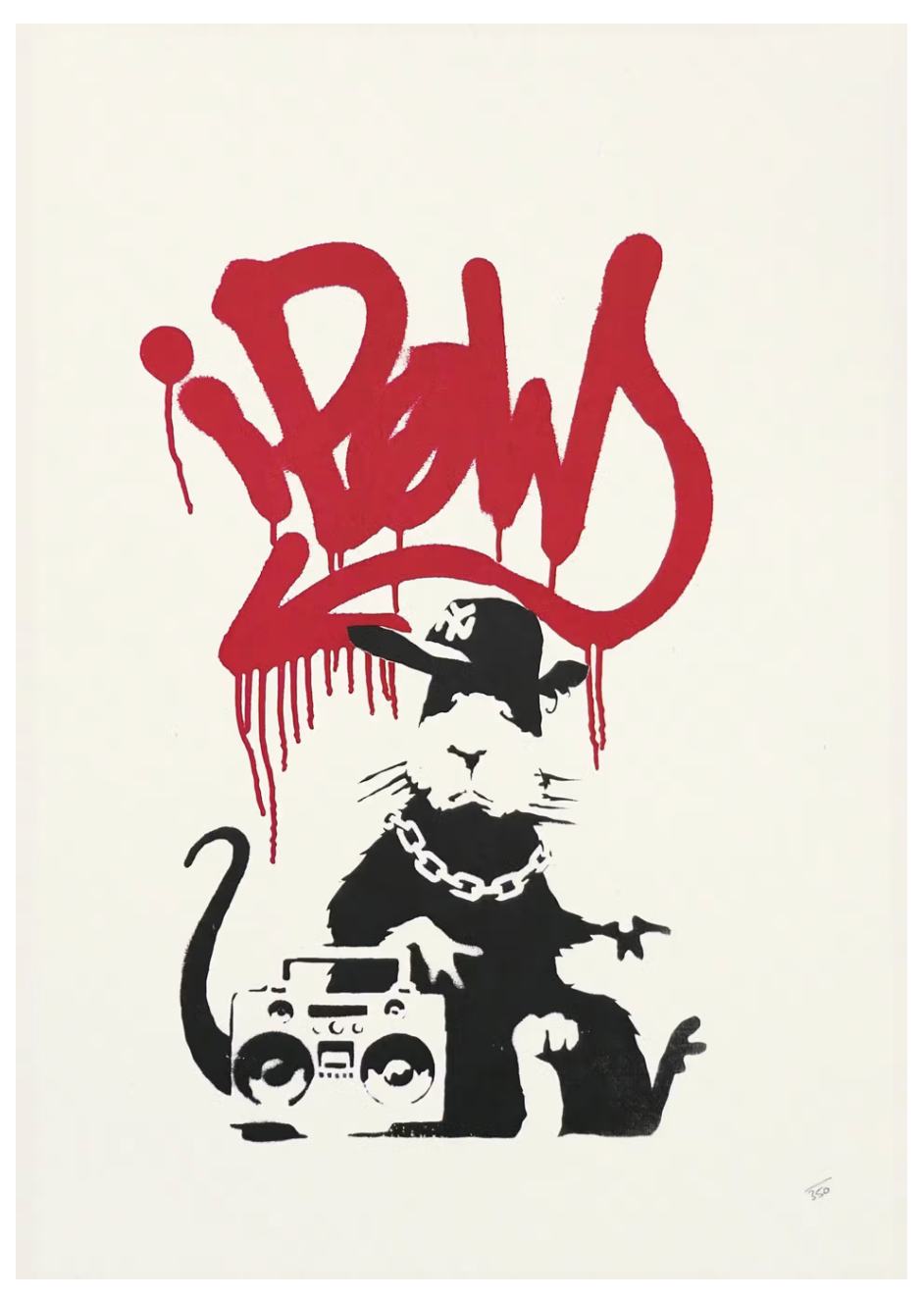
Pest Control Authentication Explained Step by Step
Pest Control Authentication Explained Step by Step
Buying a Banksy is the easy part. Proving it is real is what decides the value. The market will not treat a print as genuine without a certificate from Pest Control, and earning that certificate is a process with strict rules and a long backlog. This guide covers all of it. What the authentication actually is, how to apply, what to prepare, how long it takes, why requests get refused, and how to read a certificate well enough to catch a fake.
What Is Pest Control Authentication?
Pest Control authentication is the official process that decides whether a work is a genuine Banksy. It is run by the artist’s own office, it ends in a yes or a no, and a yes comes with a physical certificate. That validation is what makes a private opinion about a Banksy an official record the rest of the market can rely on.
Understanding the role of Pest Control
Pest Control opened in 2008. It handles the practical side of Banksy’s output, and it is the only body that can authenticate a genuine Banksy. No rival service has ever taken that role, though a few have tried.
The office examines what people send in, keeps a record of what it approves, and registers who owns it. There are limits to what it will look at. Street murals, stickers, posters, and the artist’s spoof currency are left out on purpose, since they were never made to be sold.
It also keeps Banksy himself at a distance. Questions go to the office, never to the artist, which is part of how the anonymity has lasted. Want to explore the leading theories behind his identity? Read our guide Who Is Banksy? The Story Behind the Anonymous Artist
Why does authentication matter for collectors?
For most artists, a questionable piece can be sent to a panel of scholars or to a foundation for an opinion. Banksy does not operate that way. There is no committee to appeal to, and no independent expert who can overrule the office. Pest Control is the first and last word. For a collector, that is both a relief and a risk. The answer is simple to obtain, and it is the only one that counts.
What Is a Certificate of Authenticity (COA)?
The certificate is the physical proof that a submission passed. It is not a plain letter. Each genuine COA carries half of a Di-Faced Tenner, the spoof ten-pound note Banksy made with Princes Diana’s face in place of the Queen’s. Pest Control tears the note, staples one half to your certificate, and keeps the matching half on file. The two halves fit only each other. Certificates issued after 2020 carry extra features, including a serial number and a small rat drawn inside a coffee-cup stain, printed under the banknote. It is a strange document, very hard to fake.
Why Is Pest Control Authentication Important?
Authentication matters because it is what the market runs on. A certified Banksy can be sold, insured, and borrowed against. An uncertified one mostly cannot. The certificate is the difference between owning an asset the art world recognizes and owning an object you merely believe in. That gap shows up first in money.
Protecting buyers from forgeries
The first thing a certificate does is keep your money away from a fake. Banksy is one of the most forged living artists, and the imitations are good enough to fool careful buyers. A real COA, checked with Pest Control, is the one defense that holds. It does not depend on your own eye, nor on the seller being honest. It ties the work to a record the office controls.
Supporting provenance and ownership
A certificate also settles who owns what. When Pest Control approves a submission, it records the owner, and it updates that record when it is sold on. The COA does two jobs at once. It confirms the print is real, and assures it is yours. When you come to sell, that ownership record is part of what a serious buyer will want to see.
Increasing market confidence
Confidence is what keeps a market like this working. Buyers spend freely when they trust what they are buying, and they pull back the moment that trust cracks. Authenticity is central to it, and the data shows how widely the concern is felt.
In Deloitte’s Art & Finance report, 81% of art professionals and 80% of collectors said new technology could help address authenticity problems. A trusted authenticator answers that worry directly. It is why the Banksy market keeps functioning even while fakes circulate.
Impact on resale value
At resale, the certificate is most of the value. The same print, with and without its COA, is effectively two different things at auction, and the gap between them is large. A documented edition sells at the market rate. An undocumented one, if it sells at all, goes at a steep discount, because the buyer is taking on the risk and the cost of authenticating it later.
How to Get a Pest Control Certificate in 6 Steps
The process is run entirely online and follows one fixed path from start to finish. You prepare your case, submit it through Pest Control’s website, and then the waiting begins while the office reviews it. There is no shortcut and no express lane. Everything moves at the office's pace, and it ends in a clear yes or no.
Step 1: Gather required documentation
Before you touch the website, pull together everything that proves its history. The stronger this file, the smoother everything after it. The specific documents worth collecting are covered further down, in their own section.
Step 2: Prepare artwork photos
The office never sees the work in person, so your photographs are all it has to judge from. Shoot every part of it in high resolution before you open the form.
Step 3: Submit an authentication request
Everything goes through the Pest Control website. There is no phone line and no public email. You fill in the form online, attach the images, and send it with as full a history as you can give.
Step 4: Expert review process
Now the office begins its review. It checks your images and your account against what it already knows about the edition and the records on file. This is the stage you have no control over. Once it begins, the case is in the office’s hands and out of yours.
Step 5: Receive a decision
The answer arrives by email. Yes or no. Pest Control keeps it brief, and the verdict is final as far as the market is concerned.
Step 6: Obtain your COA
If the answer is yes, the certificate is prepared and sent to you, with your half of the torn banknote attached. From that point the print is registered as authentic and registered to you. That is the document a future buyer or insurer will ask to see first.
Required Documents for a Pest Control Certificate Application
Authentication is decided largely on paper. The more complete and credible your evidence, the better your chances and the faster the review. Strong documentation tells a clear story of where the work came from and how it reached you. Thin or missing records leave the office guessing, and the office does not approve guesses.
1. Proof of purchase
Start with your own receipt. The invoice from wherever you bought it, a gallery, an auction house, a private seller, shows how it came into your hands and for how much. It is the starting point of the record, and the easiest part to produce.
2. Previous ownership records
Your receipt only covers your turn. Anything you can show about the owners before you strengthens the case, since it extends the history back toward the point it was made. Old invoices, letters, and dealer records all help here.
3. Exhibition History
If it has been shown publicly, say so, and prove it. A catalog listing or a wall label from a documented show places it in a verifiable moment and makes it harder to dismiss. Not every print has this. The ones that do carry an advantage.
4. Gallery documentation
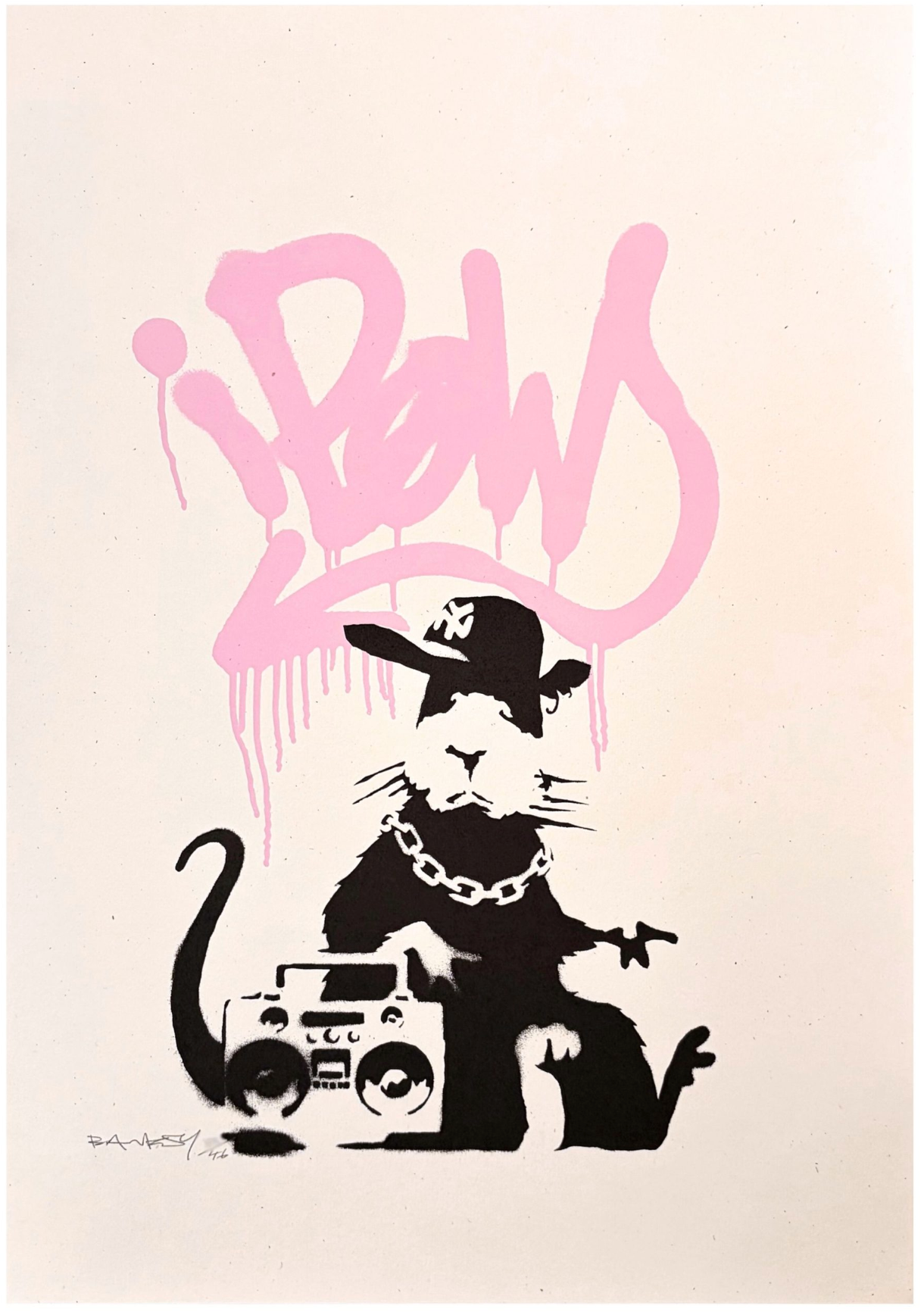
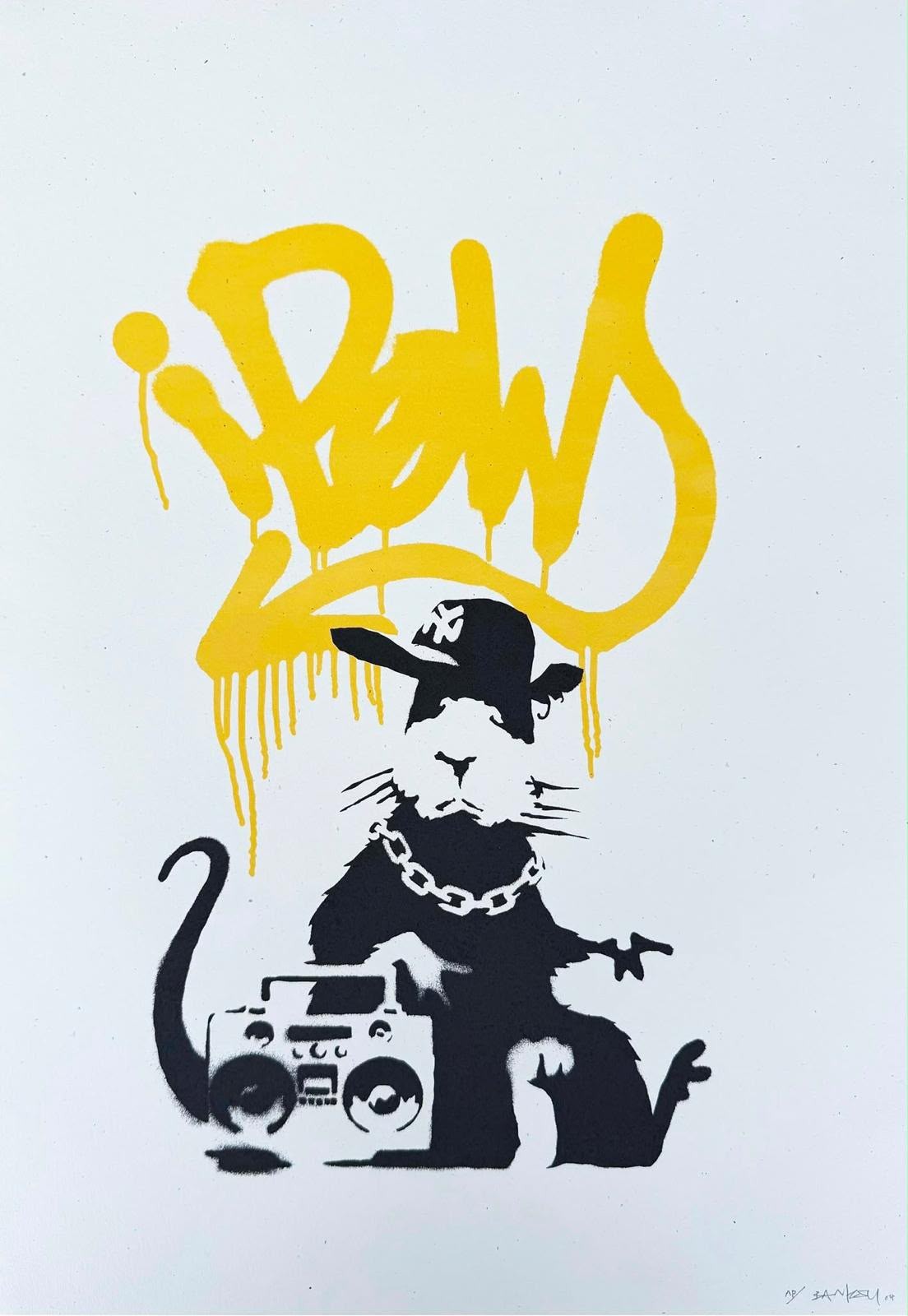
This is where Pictures on Walls matters. POW was the print publisher tied to Banksy’s early editions, and it closed in 2017. Prints that passed through it often carry a POW stamp, and buyers sometimes still hold the original confirmation emails. If you have either, include it. For older editions, that documentation is some of the strongest evidence.
5. Condition reports
A condition report describes the physical state of the artwork, the paper, the inks, any damage or restoration. It is not proof of authenticity on its own, but it gives the office a baseline, and it protects you later if a buyer claims the print arrived in worse shape than promised.
6. High-resolution images
The photographs carry more weight than anything else in the file. They need to be sharp, well lit, and complete. Front and back, the signature and edition number, and every stamp or mark that ties this copy to a genuine edition. Make sure to use a good camera in a well-lit space.
How Long Does Pest Control Authentication Take?
There is no fixed timeline. Authentication can take weeks or it can drag on far longer, and Pest Control publishes no guaranteed turnaround. The wait depends on how busy the office is, how complete your submission was, and how complicated your particular print is to verify. Patience is part of the process, not a sign that something is wrong.
Average processing times
Nobody gets a stamped delivery date. Some collectors hear back within a few weeks. Others wait many months, sometimes much longer, with no update in between. The office works through a long backlog and does not move faster for being asked.
Why do delays happen?
Some of the delay is volume. Far more submissions arrive than the office can clear quickly. And some of it, by Pest Control’s own account, is the nature of the art itself. The office warns on its website that many Banksy pieces are created in an advanced state of intoxication, which it says makes them lengthy and challenging to verify. Whether that is literal or a joke, the backlog is real.
Factors that affect review speed
You cannot control the backlog, only your own file. A clean and complete submission, with sharp images and a clear history, gives the office less to chase and usually moves faster. A thin one invites follow-up questions, and every round of back-and-forth adds time. The speed you can influence is mostly decided before you ever hit submit.
What to do if your application is delayed?
When you submit, Pest Control sends back a unique reference number. Keep it. If the wait stretches and you need to ask, that number is how the office locates your case. Beyond that, there is little to do but wait. Chasing the office repeatedly will not push your case up the list, and may do the opposite.
5 Most Common Reasons Authentication Requests Are Rejected
A rejection is hardly ever about the artwork being fake. They happen because the paperwork does not hold up. A print can be genuine and still fail, simply because its history cannot be shown clearly enough to satisfy the office. The problem is normally the file around it, not the art itself.
1. Missing provenance
Another common problem is a print with no history attached. If you cannot show where it came from before you, the office has nothing to anchor its decision to. Provenance is not optional. Without it, even a real print is a hard case to approve.
2. Insufficient documentation
Sometimes there is a history, but not enough of it. A single receipt with no supporting records, or paperwork that raises more questions than it answers, can leave the office unconvinced. A stack of paper for its own sake means nothing. The standard relies on whether the documents add up to a believable account.
3. Poor image quality
Bad photographs sink more applications than people expect. If the office cannot read the signature or inspect a stamp because the image is dark or blurred, it cannot verify anything. The fix is simple and worth repeating. Photograph the work properly the first time.
4. Ownership discrepancies
Problems also come up when the records do not match. A name on an old invoice that does not line up with the current owner, or a chain of sales with a gap in it, raises a concern the office cannot ignore. A missing link seldom signals fraud. Still, the story needs to be cleared up before a certificate can follow.
5. Suspected alterations
If an artwork looks changed from its original state, the office takes notice. A trimmed margin, or a signature that looks added after the fact, is enough to block an approval. Pest Control certifies the art as the artist made it.
One more thing worth knowing. Pest Control almost never explains a refusal. The silence is deliberate, meant to stop forgers from learning what the office looks for. A rejection often arrives with no reasoning at all, which makes getting the submission right the first time even more important.
How to Spot Fake Pest Control Certificates
As Banksy's prices climbed, the certificates themselves became a target. Forgers learned that a convincing piece of paper sells a fake faster than the fake alone ever could. Knowing what a real COA involves, and treating anything unusual as a warning, is what separates a protected buyer from an easy mark. The certificate deserves as much scrutiny as the art.
Warning signs of forged COAs
In March 2024, police in Catalonia broke up a ring producing fake Banksy prints with forged certificates, some sold for around $1,640 (€1,500) each. Months later, an Italian operation seized roughly 2,100 forged works and about 500 fake certificates and stamps, valued near $213 million (€200 million). In 2026, a New Jersey father and daughter pleaded guilty to a $2 million scheme involving fake Banksy, Warhol, and Picasso canvases. The pattern repeats. A convincing certificate is what makes the fake sellable.
Serial number red flags
Genuine certificates carry a serial number tied to Pest Control’s own records. A fake rarely gets it right. Mismatched numbers demand an immediate stop. Missing numbers on recent certificates do exactly the same thing. Halt the transaction before any money moves.
Suspicious formatting issues
Pest Control uses high-quality screen printing for the real paperwork. Forgeries fail to replicate that physical standard because they use incorrect fonts or basic photocopies instead of a torn banknote. Touching the paper can be enough to expose the fraud.
Digital manipulation indicators
More fakes now arrive as scans and PDFs, sent to close a deal at a distance. A digital certificate is easy to alter and impossible to verify on its own. Scammers edit the text or crop the image just enough to hide a missing banknote. Demand the physical paper. You have to see it in person, attached to the work itself.
When to seek expert verification?
When the stakes are high and your own eye is not enough, get help. Pest Control itself will check a certificate against its records before you buy, which is the surest route. A reputable auction house or specialist can also flag a problem you would miss. The cost of a second opinion is nothing next to the cost of a convincing fake.
Pest Control Authentication vs Provenance vs Appraisal
These three words get used as if they were the same thing. They are not. Authentication is about whether the artwork is genuine. Provenance is the documented story of where it has been. Appraisal is an estimate of what it is worth today. Different questions, different experts, and no one of them covers for the other two.
What authentication confirms?
Authentication answers the question ‘Is this a real Banksy or not?’ For his output, that answer comes only from Pest Control, and it is binary. It is a simple pass or fail. Authentication says nothing about value or history. It settles the single fact everything else depends on.
What provenance proves?
Provenance is the work’s paper biography, the chain of owners, sales, and exhibitions that traces it from the artist’s hand to yours. A strong provenance does not by itself prove a print is real, but it supports authenticity and adds to value. Gaps in the chain are what create doubt. The cleaner the history, the easier everything else becomes.
What an appraisal determines?
An appraisal is about money, nothing else. A qualified appraiser estimates what it would fetch on the open market, usually for insurance, tax, or a sale. The appraiser is not ruling on whether it is genuine. That has to be settled first. An appraisal of a fake is just a number attached to a problem.
Why do you need all three?
On their own, each leaves a gap. A certificate with no ownership history is weaker than it looks. A spotless ownership history still means nothing if it was never authenticated. Value comes last, and only once the first two are settled. Put together, they answer what every serious buyer is really asking—whether it is real, where it has been, and what it is worth.
When Is the Best Time to Buy Banksy?
You will never find the exact right moment to buy Banksy prints. The market moves up and down depending on how much work is available. Buyers do best when they ignore the news cycle and simply pay attention to the artwork.
Understanding market cycles
Prices fluctuate. The sharp peaks of the early 2020s settled down once speculators exited the market and committed collectors stayed. The broader art world is still growing. Global auction sales reached $4.55 billion in 2025, marking an 11.1% increase. Knowing which part of the cycle you are in matters more than any single sale price.
Seasonal auction patterns
The auction calendar has a rhythm worth learning. The marquee contemporary sales cluster in spring and fall, in London and New York, and that is when the best material and the deepest competition show up at once. The strongest lots in those rooms can sell well above their estimates. Quieter stretches, and lower-profile online sales, are typically where a patient buyer finds a fairer price.
Spotting value opportunities
Value is not the same as cheap. The real opportunity is quality the market has temporarily underpriced, and that appears when the broader mood turns cautious. The Bank of America report noted that lower-priced works drove much of 2025’s activity, with pieces under $50,000 making up 61% of lots sold. Starting at that more accessible end is the smartest choice for a first-time buyer.
Related: The 15 Best Banksy Prints to Buy Right Now
What smart collectors are doing now?
The most recent signal worth watching came when Reuters claimed to have finally identified Banksy. Many expected the news to soften his market. It did the opposite. In a closely watched test, a Girl With Balloon canvas sold for $18 million, meeting its high estimate and ranking among his highest auction results ever. Collectors can take this as a reassuring sign to buy authenticated quality, hold it, and let the noise around his identity settle.
For a deeper look at price performance, key works, and factors influencing value, explore our Banksy investment guide.
Frequently Asked Questions
Can I sell artwork without authentication?
You can try, but you will struggle. Most auction houses and established galleries will not handle an unauthenticated Banksy, and serious buyers stay away from one. A sale is sometimes possible privately, at a discount that reflects the risk the buyer is taking on. In practice, the certificate is what makes a clean sale possible.
Does authentication increase value?
Yes, but not in the way people imagine. A certificate does not add a premium to a fair price. It is what allows it to reach a fair price at all. The real comparison is not authenticated versus more valuable. It is authenticated versus barely sellable. Without the certificate, value stays mostly theoretical.
Can rejected artwork be resubmitted?
Sometimes, and only if something real has changed. If your first request failed because of weak documentation or poor images, gathering better evidence and applying again can make sense. If the office judged the art itself not to be genuine, resubmitting the same case will not change the answer. Fix the gap, or accept the verdict.
How much does authentication cost?
Pest Control charges a small administrative fee, set in pounds. The official rate is £100 plus VAT for a print and £150 plus VAT for a unique work, which comes to roughly $130 and $190 at current exchange rates. If the office decides your submission is a fake, there is no charge. You only pay when the answer is yes.
What happens if ownership changes?
When an authenticated print is sold, the new owner should register the change with Pest Control. The office updates its records so that ownership officially passes to the buyer, which keeps the history accurate and prevents anyone else from claiming it. It is a simple step, and skipping it can complicate the next sale.
Can authentication be transferred?
The certificate belongs to the artwork, not to you. Over the years, many of Banksy’s most celebrated works have changed hands in the secondary market.. When it sells, the COA goes with it, including the stapled half-banknote that makes it valid. You are not transferring authentication so much as handing over proof that already exists. What changes is the ownership record, not the certificate itself.
Start Your Banksy Collection
Looking to acquire a Banksy? ArtLife Gallery provides curated access to investment-grade screenprints. Connect with our specialists to explore available works.