The Richest Contemporary Artists in the World and How They Built Their Fortunes
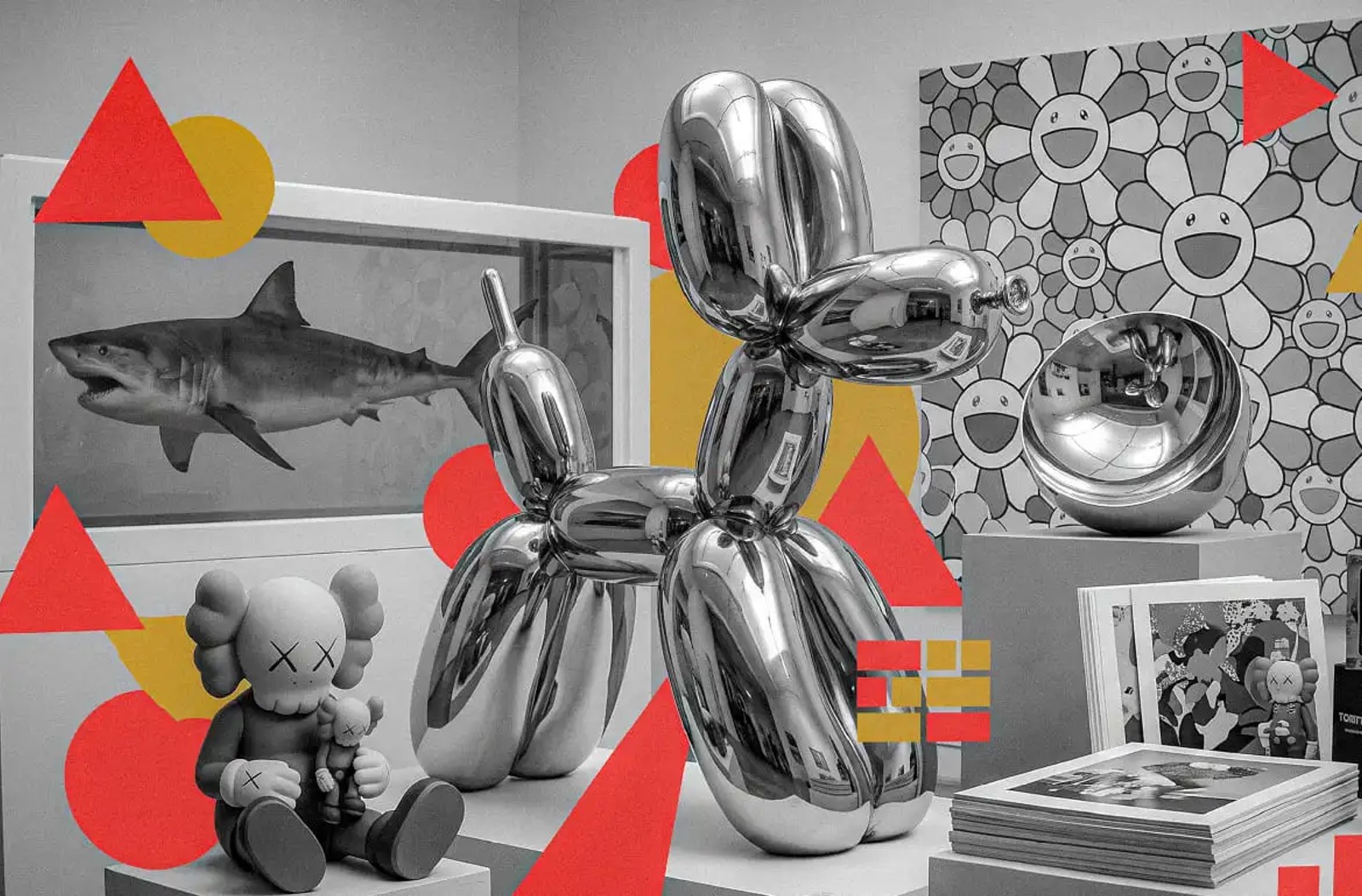
The Richest Contemporary Artists in the World
Jeff Koons holds the auction record for a living artist, yet no serious estimate of his personal fortune has ever appeared in print. The same is true for most names on lists of the richest artists. In this ranking, only Damien Hirst and Anish Kapoor have a number from a reliable source. Both are more than five years old.
No living artist publishes a full balance sheet. Much of what circulates online comes from websites that never explain their calculations. This guide leaves those numbers out. The ranking below lists a wealth estimate only when a credible one exists and pairs every artist with a documented sale. Auction prices measure demand for the work, while net worth depends on costs, taxes and private assets.
Who Are the Richest Contemporary Artists in the World?
The richest living contemporary artists include Damien Hirst, Anish Kapoor and Jeff Koons, followed by Gerhard Richter, Banksy, Takashi Murakami and KAWS. Their wealth comes from artwork sales, studio production, editions, licensing and brand deals. Exact fortunes are unknown, because artists rarely disclose their finances and only two have a credible published estimate.
In this guide, a contemporary artist is someone alive and still working whose pieces sell at the major auction houses. Richest means the largest estimated personal net worth, not the biggest auction total. The ranking was reviewed on October 21, 2026.
Artists with a Sunday Times estimate come first. The others are ordered by their auction records:
| Rank | Artist | Reported net worth | Main sources of wealth | Market indicator |
|---|---|---|---|---|
| 1 | Damien Hirst | £315 million ($384 million), Sunday Times Rich List, 2020 | Original works, editions, digital projects | £111 million ($198 million) from his 2008 Sotheby’s sale |
| 2 | Anish Kapoor | £135 million ($182 million), Sunday Times Rich List, 2018 | Sculpture and public commissions | £1.95 million ($3.87 million) auction record (2008) |
| 3 | Jeff Koons | No credible published estimate | Sculpture, studio production, brand deals | $91.1 million for Rabbit (2019) |
| 4 | Gerhard Richter | No credible published estimate | Paintings and editions | £30.4 million ($46.3 million) for Abstraktes Bild (2015) |
| 5 | Banksy | No credible published estimate | Works sold through Pest Control, merchandise | £18.6 million ($25.4 million) for Love Is in the Bin (2021) |
| 6 | Takashi Murakami | No credible published estimate | Art, his company Kaikai Kiki, brand deals | $15.16 million for My Lonesome Cowboy (2008) |
| 7 | KAWS | No credible published estimate | Art, collectible figures, brand deals | $14.8 million for The KAWS Album (2019) |
How We Ranked the Richest Artists?
A fair ranking compares estimated personal net worth using the same rules for every artist. Auction records and total sales reveal how strong a market is, but they cannot measure a fortune. Costs, commissions, taxes, property and other private assets stay hidden from public view.
What Counts as Contemporary Art?
This list covers living artists only. Two names that often appeared in similar rankings are missing. David Hockney died at his home in London on June 11, 2026. Yayoi Kusama passed away in Tokyo on August 14, 2026. Their work sells at the highest level, but a fortune held by an estate is a different matter from one an artist is still building.
How Reliable Are Artist Net Worth Estimates?
The Sunday Times Rich List is the most established public source, though it only includes people based in the United Kingdom. No artist made the 2022 edition. Fortune websites list far more names, but their estimates for the same person can be several times the Sunday Times figure. Koons, Richter, Banksy, Murakami and KAWS have no reliable estimate at all.
Net Worth Versus Auction Records and Total Sales
Auction results measure what one collector paid another. The artist earns nothing from most resales. In the United Kingdom, living artists receive a resale royalty that starts at 4% of the price and is capped at £12,500 per sale. The United States has no national equivalent. The $91.1 million spent on Koons’s Rabbit in 2019 went to its seller.
The 7 Richest Contemporary Artists and Their Fortunes
The richest living artists follow different business models. Hirst and Koons combine high-priced originals with editions and studio production, Banksy controls his own sales, and Murakami and KAWS reach millions of buyers through brand deals. Those differences explain why wealth and auction records rarely line up.
1. Damien Hirst
The Sunday Times Rich List 2020 estimated Hirst’s wealth at £315 million ($384 million), unchanged from the year before. He is best known for animals preserved in formaldehyde, spot paintings and the diamond skull For the Love of God. In September 2008 he bypassed his galleries and sold new work at Sotheby’s in London for £111 million, about $198 million at the time. His publisher HENI produces his prints and editions. In 2021 it released The Currency, 10,000 NFTs at $2,000 each. The 2020 estimate is six years old. His auction market has also not fully recovered from the 2008 crash.
2. Anish Kapoor
In 2018 the Sunday Times put Kapoor’s wealth at about £135 million, or $182 million at the time. He is known for large mirrored and pigment-covered sculpture, including Cloud Gate in Chicago. In 2016 he took exclusive artistic rights to Vantablack, one of the darkest materials ever made. His auction record, £1.95 million ($3.87 million) for an alabaster Untitled at Sotheby’s London in 2008, is low for this list, a sign that most of his money comes from first sales and commissions.
3. Jeff Koons
No reliable estimate of Koons’s wealth has been published. His polished balloon animals and inflatable toys are built by studio assistants following his designs. In May 2019 his stainless steel Rabbit (1986) sold for $91.1 million at Christie’s, still the highest auction price for a work by a living artist. Koons has also worked with Louis Vuitton, which launched his Masters bags in 2017. His market depends on a small number of very expensive sculptures.
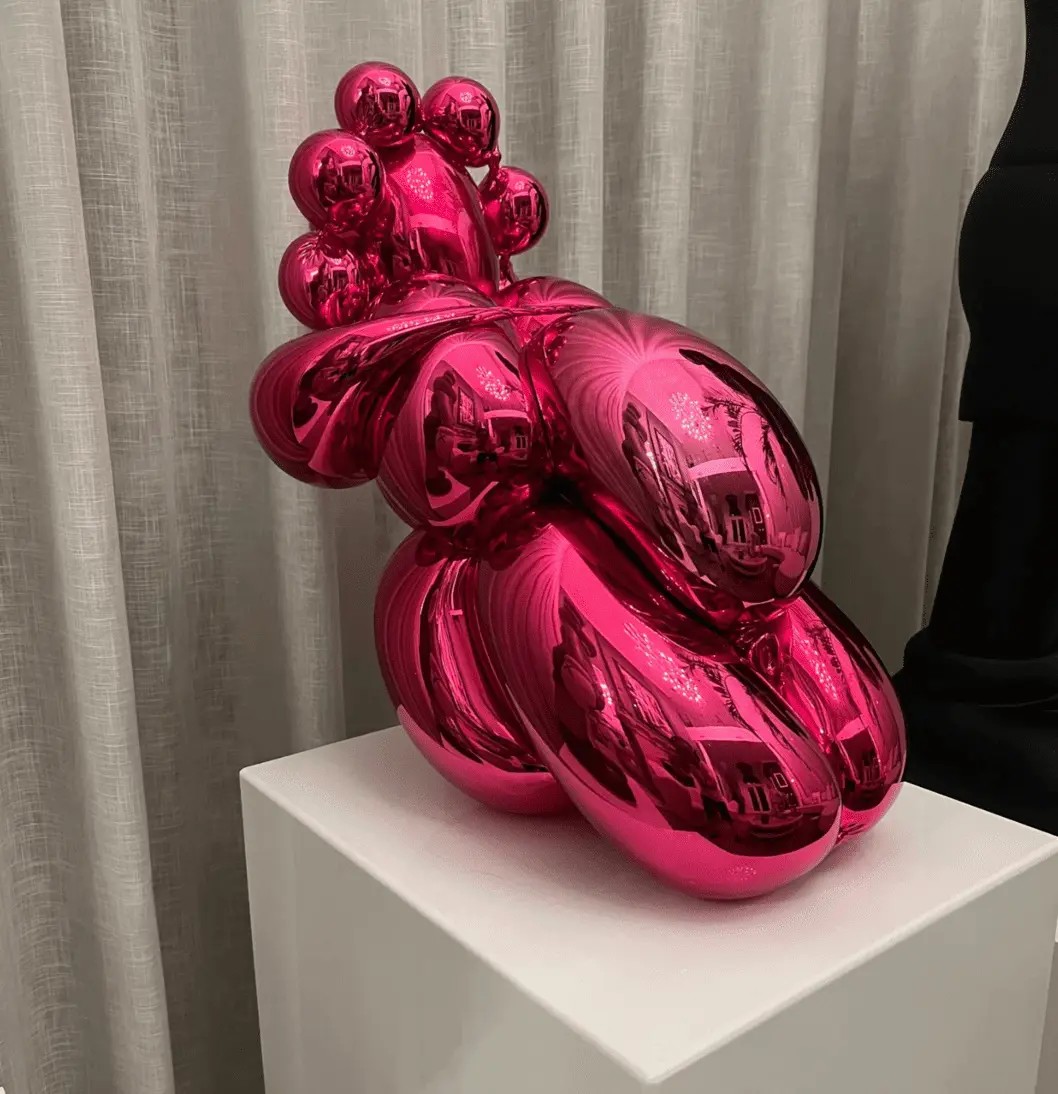
Jeff Koons’ Dom Pérignon Balloon Venus, from an edition of 650 plus 40 artist’s proofs, presented on a custom-built display pedestal, is available for immediate purchase through our online gallery.
4. Gerhard Richter
Richter’s place on this list rests on his market alone, since his wealth has never been estimated by a reliable source. The German painter, born in 1932, is known for blurred photo-paintings and big abstract canvases made with a squeegee. His record is £30.4 million ($46.3 million) for Abstraktes Bild (1986) at Sotheby’s London in February 2015. Unique paintings sold through his galleries over six decades are his main income. In 2020 he told the dpa news agency he had stopped painting, which limits the supply of new canvases.
5. Banksy
No one has reliably estimated Banksy’s wealth. He controls his primary market through Pest Control, his authentication service and the sole point of sale for new work. In 2019 he opened an online shop, Gross Domestic Product, with prices from £10 to £850. His auction record is £18.6 million ($25.4 million) for Love Is in the Bin, the painting that shredded itself in 2018 and was resold at Sotheby’s in 2021.
ArtLife offers a wide selection of Banksy prints for sale, featuring iconic works and sought-after editions. Explore our collection to discover available pieces, learn more about individual artworks, and enquire with our team about purchasing a Banksy print for your collection.
6. Takashi Murakami
Murakami’s fortune is just as unclear. He runs Kaikai Kiki, a company that produces his paintings, sculptures, merchandise and animation and also represents other artists. His work with Louis Vuitton began in 2003. The brand brought it back for a re-edition in 2025. His auction record is $15.16 million for My Lonesome Cowboy (1998) at Sotheby’s New York in 2008. His market has slowed since. Artprice reports his auction turnover fell 67% from 2022/23 to 2024/25, even though more than 1,000 of his lots sold in the latest season.
While the decline in auction turnover may signal a cooling market, it could also create an opportunity for collectors to acquire Takashi Murakami’s artwork at more attractive prices, with potential for long-term value as market conditions evolve.
7. KAWS
KAWS, the name used by Brian Donnelly, has no reliable wealth figure either. He started as a graffiti artist and built a business around Companion, a cartoon figure that appears in paintings, monumental sculpture and collectible toys. Clothing collections with Uniqlo have spread his work further. In April 2019 The KAWS Album sold for HK$115.9 million ($14.8 million) at Sotheby’s Hong Kong, almost 15 times its high estimate. His prices have dropped since that peak. Artprice notes a 2013 work that fetched $371,500 in Tokyo in May 2025, while comparable pieces reached up to $1.5 million in 2019.
A softer market for authentic KAWS vinyl figures, collectible toys and art prints could create opportunities for collectors to acquire sought-after pieces at more attractive prices, with long-term value depending on rarity, condition, provenance and evolving demand.
Avery Andon, chief executive of ArtLife Gallery, sees the same pattern behind every name on the list: “The artists at the top built a business around the work. Hirst, Koons and Murakami run studios, publishing arms and brand deals that keep earning between exhibitions. That’s why their fortunes can grow in years when their auction prices don’t. A collector is in a different position. You’re buying one object, not a share of the business.”
How Contemporary Artists Build Their Wealth
Living artists build wealth through original works, commissions, limited editions, licensing and brand collaborations. The weight of each channel varies from one career to another. Revenue is not the same as profit either. Studios, fabrication, staff and gallery commissions take a large share before the money reaches the artist.
Original Artworks and Major Commissions
Unique paintings and sculptures earn the most per piece but also cost the most to make. Large steel or bronze works can need engineers, foundries and months of fabrication. Public commissions such as Cloud Gate bring a fee and years of visibility.
Limited-Edition Prints and Multiples
Editions let one image reach many buyers at lower prices. HENI and Murakami’s Kaikai Kiki both publish prints in volume. More sheets bring in more revenue. They also create more competition for each owner who later wants to sell.
Licensing, Collaborations and Commercial Partnerships
Fashion and product deals reach buyers who may never visit a gallery. Koons and Murakami have both worked with Louis Vuitton, and KAWS has released clothing with Uniqlo. These partnerships pay the artist and spread the name, though they do not lift the value of every original work.
Studio Operations and Secondary-Market Demand
Big studios let an artist produce at scale, with heavy fixed costs in staff and space. Strong resale prices help indirectly. They support what galleries can ask for new work, even though the artist rarely earns from those later sales.
The Difference Between the Richest Artists and the Most Valuable Artists
The richest artist is not always the one with the highest auction record. Net worth includes property, investments and debts, while a sale price reflects one work sold on one day. Strong results at auction point to demand. They say nothing direct about an artist’s profits or about where prices will go next.
Personal Wealth Versus Auction Records
Banksy’s record for a single work ranks third on this list, behind Koons and Richter, yet nobody can say with any confidence what he is worth. Richter is in the same position, with no credible estimate of his wealth. Hirst earned his largest single payday by selling directly at auction in 2008, when the money went to him.
Why Some Artists Achieve Higher Prices
Prices rise with rarity, provenance, condition, historical importance and museum recognition. Competition between bidders does the rest. Two determined buyers can take a work far past its estimate, as happened with The KAWS Album.
What Auction Turnover Reveals About a Market
High turnover means a lot of trading, whether from many cheap sales or a few expensive ones. It can also rise while prices for most works fall. The share of lots sold and the price trend for similar pieces over several years are better guides to the health of a market.
What Collectors Can Learn From the World’s Wealthiest Artists
An artist’s fortune reflects a business. It does not set the value of a single work. Collectors should judge each piece on its authenticity, provenance, condition, comparable sales and costs, along with their own goals. Fame helps when you resell, but it does not guarantee a fair price or a gain.
Check these points before you buy work by a famous name:
- Recognition: A famous name attracts buyers without proving the price is fair.
- Rarity and condition: Unique works and small editions in good shape hold up better than common prints with damage.
- Provenance: Paperwork from the artist’s gallery or studio, such as a Pest Control certificate for Banksy, protects resale value.
- Costs and liquidity: Fees, insurance and storage reduce returns. Some works take months to sell.
- Strategy: Buy what you like within a set budget and spread your money across several artists.
Nico Hayes, senior director at ArtLife, separates the artist’s payday from the buyer’s: “A big edition can make an artist very rich and still be a poor buy. When thousands of the same print are out there, the artist has already been paid, and resale prices depend on how many owners want out at the same time. I’d take one strong piece from a small run over ten from an edition everybody owns.”
For a step-by-step approach to building a collection, read our guide to collecting and investing in art.
Frequently Asked Questions
Who is the richest contemporary artist in the world?
Damien Hirst has the strongest claim among living artists. The Sunday Times estimated his wealth at £315 million ($384 million) in 2020, the most recent reliable figure for anyone on this list. Jeff Koons may be richer, but no serious estimate of his worth exists.
How do contemporary artists become millionaires?
Most combine high-priced original works with income that repeats. Editions, licensing, brand collaborations and studio production let them sell to far more people. Direct control of sales helps too, as Banksy has through Pest Control. Even so, staff and fabrication absorb much of the revenue.
Is an artist’s net worth based on their auction records?
Auction records reflect what one collector paid another, and the artist rarely receives that money. Net worth depends on primary sales, licensing income, property, investments, taxes and debts. Strong auction prices can raise what galleries charge for new work, which helps the artist only indirectly.
Who is the most commercially successful living artist?
Jeff Koons holds the auction record for a living artist, $91.1 million for Rabbit in 2019. Damien Hirst raised £111 million ($198 million) in a single 2008 sale of his own work. Takashi Murakami and KAWS reach the widest audience through toys, clothing and brand deals.
Are the richest artists’ works good investments?
Fame alone does not make a work a good investment. Many prints by wealthy artists were issued in large editions and now trade below their peak, as KAWS prices since 2019 suggest. Judge each piece on rarity, condition, provenance, recent comparable sales and your full costs before buying.
Ready to Start Your Collection?
Success in this market hinges on insight and access. ArtLife delivers both. We source investment-grade prints and blue-chip canvases that build real portfolio value. Contact ArtLife today to access our private inventory and acquire your next asset.