Street Art Investment Guide: Start Collecting Art That Holds Value
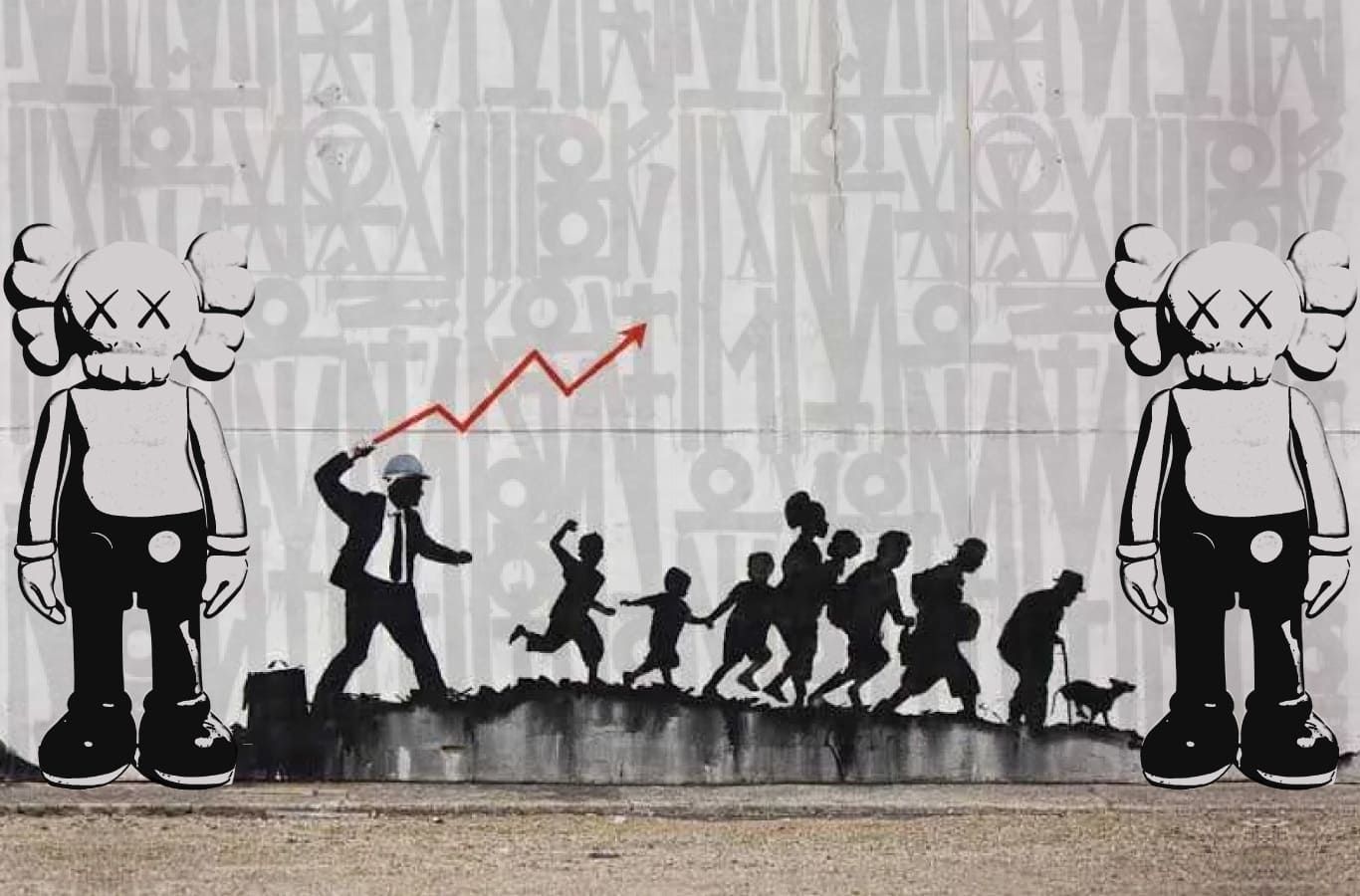
Street art investment guide from ArtLife
The movement that began on subway cars and city walls now anchors major contemporary auctions. For collectors today, the question is no longer if street art belongs in a serious portfolio, but which works offer long-term stability.
Navigating this market requires looking beyond the hype. While the aesthetic originates in the streets, the mechanics of valuation—provenance, condition, and rarity—remain strictly traditional.
What Is Street Art and Why Is It Collectible?
Street art represents the evolution of public graffiti into investment-grade artworks, transforming ephemeral interventions into tangible assets like prints and canvases.
It is collectible because it captures the raw social commentary of contemporary culture while delivering verified scarcity through limited editions. Institutional validation has redefined the genre. Works once viewed as fleeting rebellion now operate as stable, high-value assets within serious art portfolios.
Defining the Market
Strictly speaking, street art refers to ephemeral and site-specific interventions—murals, tags, and illegal installations on public property. These works exist to decay; you cannot collect them, only document them.
The investable asset is technically Urban Art, which refers to the studio output of these artists: canvases, prints, and sculptures created specifically for private acquisition. Distinguishing between the two is vital for valuation. Public murals build the artist’s fame, yet the studio work captures that value in a tradeable format.
Pop Art largely mirrored mass media imagery, but contemporary street art retains a subversive edge—it acts as direct social commentary. Modern collectors invest specifically in that raw, critical energy, securing a piece of history that critiques the very market it inhabits.
The Valuation Shift
Major institutions have recalibrated their view on the medium, treating top-tier street art with the same rigor and financial respect as post-war abstraction. Museums and critics now recognize these works not as vandalism, but as the most significant art movement of the last fifty years.
Jean-Michel Basquiat and Keith Haring set the precedent in the 1980s. They demonstrated that the raw energy of graffiti could translate successfully onto canvas without losing its power. Today, you can buy Keith Haring signed prints and Jean-Michel Basquiat artworks curated and authenticated by ArtLife, offering access to some of the movement’s most influential pieces.
Their commercial success created the roadmap for today’s blue-chip names—like Banksy and RETNA—validating the genre as a high-performance and stable investment category. Institutional support safeguards long-term value, ensuring that what began as a temporary act of rebellion is now preserved as a permanent cultural asset.
Is Street Art a Good Investment?
Street art becomes a resilient investment vehicle when collectors focus on blue-chip assets. This sector diversifies portfolios and has historically delivered solid returns over ten-year cycles, despite short-term market corrections.
Profitability hinges on distinguishing investment-grade works from speculative trends. The market hierarchy dictates risk: proven icons ensure wealth preservation, while emerging artists promise high growth but carry significant volatility.
The Blue-Chip Safety Net
The “old masters” of street art operate with lower risk due to deep institutional validation—museum retrospectives, documented scholarship, and consistent auction records. Collecting these figures centers on wealth preservation rather than speculation.
Data supports this stability. A watershed moment occurred in 2017 when a Basquiat canvas sold for $110.5 million at Sotheby’s, solidifying the genre’s status alongside Impressionist and Modern masterpieces.
Global brand recognition ensures an active resale market; buyers exist for prime examples regardless of broader economic conditions. KAWS follows this trajectory, bridging the gap between fine art and pop culture dominance with consistent seven-figure results.
Evaluating Risk: Emerging vs. Established
A successful investment strategy balances security with growth potential. The asset's behavior changes drastically depending on the artist's career stage.
- Established / Blue-Chip: Provides stability and gradual appreciation. You pay a premium for certainty, similar to acquiring large-cap stocks. The breadth of the collector base minimizes downside risk.
- Emerging / Mid-Career: Offers higher potential returns but carries higher volatility. These artists may have strong street cred but often lack the secondary market history to guarantee resale value. Selling becomes harder here; finding a buyer during a downturn is difficult without a track record to support the price point.
Auction Market Maturity
The era of street art appearing only in niche, urban-focused sales is over. Major auction houses like Christie’s, Sotheby’s, and Phillips have fully integrated these works into their prestige ‘Evening Sales’ alongside Warhols and Rothkos.
Global hedge funds and institutions now drive the bidding, replacing the specialized collectors of the past. Market analysis indicates the segment has seen year-over-year growth in turnover since 2010. The financial sector accepts street art as a legitimate asset class within the global economy rather than a passing trend.
3 Key Principles for Investing in Street Art
Success in street art investment is grounded in strict due diligence. The genre’s informal origins make technical verification even more critical than in traditional fine art sectors. Investors must scrutinize the documentation, the stability of the materials, and the tradability of the image itself. Neglecting these pillars turns a potential asset into a financial liability.
1. Authenticity is Binary
In this market, a work represents either a fully documented asset or a worthless decoration. Because street artists operate quickly and often anonymously, fakes permeate the secondary market. A generic Certificate of Authenticity (COA) from a third-party gallery holds zero credibility without the artist’s official seal.
The 2022 FBI raid on the Orlando Museum of Art illustrates the severity of this risk. Federal agents seized 25 works attributed to Jean-Michel Basquiat, which the investigation later revealed as forgeries painted on cardboard containing FedEx typeface stamps that did not exist during the artist’s lifetime.
You must insist on ironclad proof of title. For Banksy, this means a Pest Control Certificate; for others, it requires a direct, unbreakable paper trail to the artist’s studio.
2. Material Condition & “Inherent Vice”
Street artists utilize non-traditional mediums—spray paint on cardboard, reclaimed wood, or industrial metal. Conservators refer to the tendency of these materials to self-destruct as ‘inherent vice.’ Without climate control, aerosol lacquers crack and acidic substrates turn brittle.
Collectors prioritize the stability of the substrate over the romance of the ‘street object.’ A pristine limited edition print printed on archival Somerset paper consistently outperforms a damaged original canvas in the resale market. Valuation reports deduct significantly for condition issues; a single crease in a print can reduce its hammer price by 30% to 50% depending on the severity.
3. Iconic Imagery
The market favors recognizability. Resale speed correlates with immediate visual identification. Works featuring an artist’s signature motif—Haring’s radiant baby, Banksy’s rats, or RETNA’s brimstone script—command higher premiums than obscure or experimental pieces.
Auction results confirm this bias. In 2021, Banksy’s Love is in the Bin sold for $25 million at Sotheby’s, setting a record for the artist. This sale demonstrated mass cultural visibility drives valuation more than obscurity. Investors safeguard their capital by acquiring the images that made the artist famous, rather than their ‘B-side’ experiments.
What to Buy: Which Street Artists Should Beginners Start With?
Beginners should prioritize artists with verified auction histories to minimize risk. The market divides into two primary tiers: blue-chip legends, who provide wealth preservation through institutional validation.
The other is contemporary crossover stars, who deliver higher growth potential based on current cultural momentum. Building a balanced portfolio involves selecting assets from both categories to blend security with speculative appreciation.
Blue-Chip Legends
This tier consists of the genre’s foundational figures—artists whose historical significance is institutionally solidified and whose secondary markets are fully mature.
Banksy and Invader exemplify this category. They hold blue-chip status because their works maintain consistent transaction volumes at Christie’s and Sotheby’s, ensuring transaction volume comparable to traditional equities. Signed prints typically trade above $20,000, while original studio works frequently command prices exceeding $500,000 depending on the scale and period.
- Pros: Maximum security and consistent demand. Investors leverage these works as safe havens to lock in value.
- Cons: Extremely high entry price. Percentage growth is steady but rarely explosive.
Contemporary & Crossover Stars
Figures such as KAWS, Alec Monopoly, Shepard Fairey, and RETNA represent the ideal targets for growth-focused portfolios. Browse and buy KAWS original sculptures and signed prints at ArtLife.
Blurring the line between fine art and global branding, they generate value through mass cultural visibility and commercial collaborations. Constant exposure keeps their names relevant, directly fueling appetite for studio output. New capital finds an accessible pathway here, with signed editions often trading between $1,500 and $8,000. ArtLife offers collectors the chance to buy Alec Monopoly artworks and Retna canvases with full authentication and expert guidance.
- Pros: High visibility and cultural relevance. These assets tend to see rapid appreciation during peak trend cycles.
- Cons: Higher volatility. Value is tied to the artist maintaining brand momentum and market presence.
How Much Does It Cost to Start? What Should You Buy First?
Capital commitment ranges from $1,000 for verified editions to over $500,000 for blue-chip canvas works. Smart entry strategies focus on limited-edition prints to secure ease of resale while managing risk. Transparent pricing defines standardized editions, whereas unique originals deliver maximum scarcity for high-net-worth portfolios. Strategic allocation must align the asset tier with available funds.
Originals: Scarcity & High Value
Unique works represent the market apex. Whether executed on canvas, reclaimed doors, or industrial metal, these one-of-a-kind assets command the highest premiums due to absolute scarcity. Ownership confers exclusivity, but the financial outlay remains substantial.
Valuation here becomes subjective; a unique Basquiat or Stik piece relies on specific collector activity during a sale cycle rather than the predictable daily trading volume of prints. Consequently, selling a unique asset involves a consignment period of months rather than days. Investors must tolerate longer sales cycles in exchange for the potential of explosive, singular returns.
The Mid-Tier: Signed & Numbered
Investing in limited edition prints strikes an optimal risk-reward ratio. These works bear the artist’s hand-signature and strict limitation—typically under 300 copies—preventing inflationary devaluation. The signature itself carries immense financial weight. Unverified ‘after’ prints trade for a fraction of signed counterparts.
Savvy collectors also look for Artist Proofs (APs). Numbered separately from the main run, APs might appreciate faster due to their closer association with the creator’s personal archive.
Prints: Accessibility & Market Efficiency
Fine art editions drive the sector’s daily transaction volume. Standardization allows for fast price discovery; if one print from an edition sells for $5,000, the remaining 99 instantly reprice to that benchmark.
Market mechanics here mimic the stock market, allowing investors to track real-time value. High turnover creates immediate trading power, enabling collectors to exit positions quickly without the long wait times associated with unique canvases. For new investors, prints provide immediate portfolio diversification without tying up capital in a single, hard-to-sell asset.
How to Invest: Where Should You Buy Street Art?
Securing investment-grade street art involves navigating three channels: primary galleries, secondary auctions, and digital marketplaces. Galleries provide the highest security for provenance, while auction houses determine market value through competitive bidding. Online platforms grant access but carry significant authentication risks. Success comes from balancing price transparency with the absolute necessity of verifying the chain of title.
Established Galleries
Primary galleries control the most secure entry point for serious acquisition. Institutions like Perrotin (Paris/New York) or Lazinc (London, historically linked to Banksy) work directly with artists, validating provenance without question. They also manage the artist’s career longevity, protecting the value of your purchase.
- Pros: Access to primary market prices (in general 30-40% lower than auction spikes) and guaranteed authenticity. Buyers establish a direct line of communication with the source.
- Cons: Intense competition for top-tier names creates exclusivity barriers. Galleries enforce a ‘Right of First Refusal,’ legally binding you to resell the work back to them rather than flipping it publicly.
Therefore, it is the safest route for building a core collection. If you’re looking to buy street art internationally, building a relationship with a reputable dealer constitutes the standard first step.
Auction Houses
Secondary market auctions establish total price transparency. Major houses like Phillips, Sotheby’s, and Christie’s have dedicated Urban & Contemporary departments that vet every lot. You know exactly what the market is willing to pay at a specific moment.
- Pros: Access to vintage, sold-out works no longer available in galleries. This channel facilitates the acquisition of historic pieces from the 1980s or early 2000s.
- Cons: Transaction costs run high. The ‘Buyer’s Premium’ adds roughly 26% or more on top of the hammer price. Furthermore, if a work fails to sell publicly (known as being “bought-in”), it becomes ‘burned,’ creating a market stigma that hurts its future valuation.
Online Marketplaces
Aggregators and peer-to-peer platforms enable volume and convenience but carry the highest risk profile. Distinctions matter here: vetted platforms host renowned gallery inventories, whereas open markets like eBay lack oversight.
- Pros: Instant availability and a wide range of price points.
- Cons: Minimal vetting on open platforms. Digital images frequently hide handling creases or UV damage that decimates value upon physical inspection. Most critically, the risk of forgery grows exponentially outside of regulated channels, demanding independent verification before funds transfer.
4 Common Mistakes Beginner Collectors Make
Avoiding costly errors starts with prioritizing due diligence over impulse. New investors risk capital by chasing temporary hype, neglecting physical condition reports, or acquiring undocumented works.
Success depends on rigorous research into comparable sales and absolute verification of authenticity. Smart collecting separates calculated investment from mere accumulation, safeguarding the portfolio against the volatility of unproven trends or damaged assets.
1. Chasing Hype Over Substance
Purchasing based on social media trends rather than artistic merit guarantees poor returns. Buzz evaporates; historical significance remains. New investors confuse Instagram metrics with market stability. An artist might generate millions of likes but lack the institutional support necessary for long-term value retention.
For instance, while artists like KAWS transitioned from vinyl toys to the Brooklyn Museum, many viral street artists from the 2018 boom have seen their secondary market prices collapse.
Building a portfolio on viral moments creates volatility, whereas basing it on museum exhibitions and critical scholarship builds stability. Invest in the artist who changed the conversation, not the one who simply copied the style.
2. Ignoring Condition
A flawless work commands a premium, while a damaged one becomes a liability. Beginners compromise on quality to secure a lower entry price, failing to realize that minor handling creases or faint foxing (brown spots caused by humidity) can slash resale value by 40% to 50%.
Professional collectors request a Condition Report from a third-party conservator before buying high-value items. In the resale market, original condition drives the hammer price; restoration, no matter how skilled, is always disclosed and always penalized.
3. Overlooking Provenance
Acquiring work without a paper trail equals financial suicide. A work attributed to Banksy without a Pest Control certificate holds zero value at Sotheby’s or Christie’s, regardless of the seller’s reputation. Similarly, secondary market pieces often require validation from specific estate boards or foundations.
Never trust solely on a gallery’s internal Certificate of Authenticity (COA) if an official artist body exists. You must require the definitive document that links the object directly to the creator’s studio. Without this “chain of title,” the asset is effectively unsellable in reputable channels.
4. Overpaying Without Research
Pricing is opaque, yet data exists. Neglecting to check comparable sales leads to purchasing above market value. A gallery might list a print for $10,000, while the same edition recently sold at auction for $6,000.
Verifying the fair market value prevents the common error of paying retail prices for assets that trade significantly lower on the secondary market. Smart buyers analyze the last three auction results for a specific edition before finalizing any transaction.
Final Advice from the Gallery
Successful collecting is built on patience and discipline. Financial upside drives decisions, but resilient portfolios balance data analysis with aesthetic passion.
Our advice is to scale up slowly, using accessible prints to master market mechanics before targeting major works. Furthermore, vetting sources through reputable dealers mitigates the forgery risks inherent in this unregulated sector.
Buy With Your Eye, Not Just a Calculator
A purely speculative collection is a fragile one. Markets correct and trends shift. If the financial value dips, you should still desire the work hanging on your wall. The strongest collections blend investment potential with genuine aesthetic appreciation.
Strategy Over Speed
There is no need to acquire a museum-quality canvas on day one. High-quality prints allow you to enter the market, understand the logistics of storage and insurance, and refine your taste with manageable capital exposure. Scale up as your knowledge deepens.
Your Dealer Is Your Filter
The unregulated nature of street art makes expert guidance non-negotiable. Cultivating a relationship with a reputable primary gallery grants you priority access to new releases and, more importantly, protection against forgeries.
Frequently Asked Questions
Is street art a good investment for beginners?
Yes, provided you focus on validated names with auction history. The sector adds diversification and proven resilience, but it demands strict due diligence regarding authenticity and condition.
Who are the best street artists to collect first?
Focus on liquidity. Banksy, Keith Haring, and KAWS represent the highest security. For growth potential, consider solidified crossover names like RETNA or Alec Monopoly.
How much money do I need to start collecting street art?
Entry points vary. Limited edition prints by major artists generally trade between $1,000 and $10,000. Original canvases typically start in the five-figure range and climb significantly higher depending on the artist’s tier.
Should I buy original street art or prints?
Prints provide high liquidity and fast exit options due to standardized pricing. Originals grant absolute scarcity and generally higher appreciation ceilings, though they require longer periods to find the right buyer during resale.
How can I tell if street art is authentic?
Documentation is mandatory. Require a Certificate of Authenticity (COA) from the artist’s official certifying body (e.g., Pest Control for Banksy) or a clear provenance chain from the primary gallery.
Where is the safest place to buy street art in the USA?
Trustworthy primary galleries maintain the highest security guarantees. Buying investment-grade street art directly from a reputable dealer or established Galleries, such as ArtLife, ensures authenticity and provides recourse that anonymous online marketplaces cannot match.
How to care for and display street art?
Professional framing is essential to preserve value. Ensure the work is protected from direct sunlight and humidity to maintain its condition over time.
Ready to Start Your Collection?
Success in this market hinges on insight and access. ArtLife delivers both. We source investment-grade prints and blue-chip canvases that build real portfolio value. Contact ArtLife today to access our private inventory and acquire your next asset.